
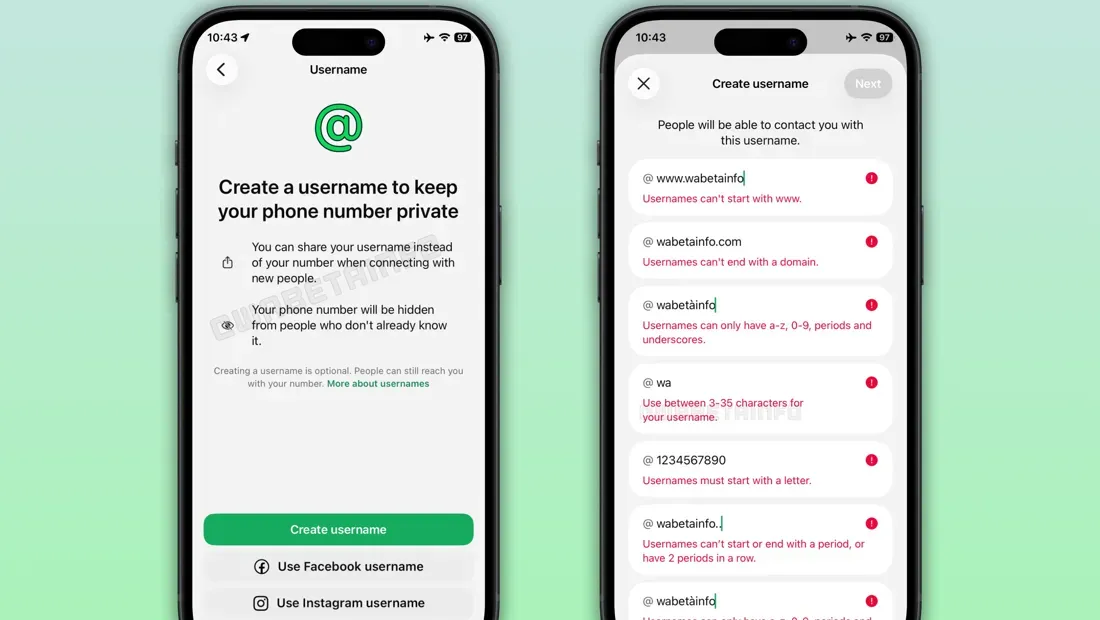
The Indian government has formally requested WhatsApp, the widely popular messaging platform owned by Meta, to delay the highly anticipated launch of its new username feature. This significant intervention stems from profound concerns that the introduction of usernames could dramatically exacerbate the already rising tide of online crime, particularly identity theft and financial fraud, within the country. The government’s apprehension was reportedly intensified by the observation, initially highlighted by technology publication TechCrunch, that several usernames closely resembling those of prominent Indian public figures, such as ‘indiamodi’ and ‘shahrukh.actor,’ had appeared during early testing or conceptualization phases. These examples immediately triggered alarms, suggesting a potent new avenue for fraudsters to impersonate high-profile individuals, including Prime Minister Narendra Modi and acclaimed actor Shah Rukh Khan, thereby eroding public trust and facilitating malicious activities without the immediate traceability offered by traditional phone numbers.
The Nexus of Concern: Anonymity and Deception
The core of the Indian government’s anxiety lies in the potential for usernames to grant an unprecedented degree of anonymity to malicious actors. Unlike the current system where users primarily connect and are identified by their registered phone numbers—which are inherently linked to a verifiable identity in India through mandatory Know Your Customer (KYC) norms for SIM card registration—usernames could allow individuals to create and operate accounts with a veneer of plausible deniability. This shift, from a direct, traceable phone number to a user-chosen alphanumeric identifier, is perceived as a significant loophole that could be exploited by scammers. They could easily craft variations of well-known names, public institutions, or even financial entities, making it exceedingly difficult for the average user to discern authenticity. The prospect of fraudsters operating under pseudonyms, engaging in phishing scams, spreading misinformation, or executing financial frauds without displaying their actual phone numbers, presents a formidable challenge to law enforcement and cybersecurity agencies in a nation already grappling with a high volume of digital crimes.
India’s Digital Landscape and Regulatory Scrutiny
India stands as WhatsApp’s largest market globally, boasting over 500 million users. This massive penetration underscores the platform’s integral role in the daily lives of millions, from personal communication to business transactions and public information dissemination. This immense user base also makes India a critical jurisdiction for digital policy and regulation. The Indian government, particularly through the Ministry of Electronics and Information Technology (MeitY), has adopted an increasingly assertive stance on regulating social media and digital platforms. This proactive approach is shaped by several factors: the imperative to combat misinformation, especially during politically sensitive times; the need to protect citizens from online fraud and exploitation; and a broader commitment to digital sovereignty. Recent legislative frameworks, such as the Information Technology (Intermediary Guidelines and Digital Media Ethics Code) Rules, 2021, highlight the government’s intent to hold platforms accountable for content moderation, user safety, and data privacy. The current request concerning WhatsApp’s username feature is thus not an isolated incident but rather a continuation of India’s broader strategy to ensure a secure and responsible digital ecosystem for its citizens.
WhatsApp’s Proposed Feature and Its Intended Benefits
WhatsApp’s move towards introducing usernames aligns with a broader trend seen across many messaging and social media platforms, such as Telegram, Signal, and X (formerly Twitter). The feature is designed to allow users to connect with others using a unique, user-selected identifier rather than having to share their phone number. This offers several potential benefits:
- Enhanced Privacy: Users can share a username without revealing their personal phone number, thereby adding a layer of privacy, especially in public or semi-public interactions.
- Ease of Connection: It simplifies connecting with new contacts, particularly for businesses, public figures, or individuals who frequently interact with new people without necessarily exchanging phone numbers.
- Competitive Parity: It brings WhatsApp in line with competitors that already offer similar functionality, preventing user migration to platforms perceived as offering better privacy controls.
- Brand Identity: Businesses and public figures could establish a recognizable and easily discoverable identity on the platform.
However, these benefits are precisely what the Indian government fears could be weaponized by malicious actors. The perceived trade-off between user convenience/privacy and enhanced security risks is at the heart of the current dispute.
WhatsApp’s Counter-Arguments and Security Protocols
In response to these burgeoning concerns, WhatsApp, through its parent company Meta, has issued reassurances. As reported by TechRadar, WhatsApp clarified that claims of popular or famous usernames being easily "squatted" or reserved by unauthorized individuals are unfounded. The platform explicitly stated, "This is not true, only legitimate account owners can reserve the names of famous public figures." This statement, reiterated by Meta when contacted by TechCrunch, suggests that WhatsApp has implemented a mechanism to prevent impersonation of high-profile individuals. This likely involves:
- Verification Processes: A system to verify the authenticity of accounts claiming to represent public figures or official entities before allowing them to claim associated usernames.
- Reserved Names List: A pre-emptive list of names, variations, and identities associated with prominent personalities, government bodies, and well-known brands that are blocked from general registration.
- Algorithmic Detection: Advanced algorithms designed to detect and flag suspicious username registrations or attempts to impersonate.
Despite these assurances, a critical ambiguity remains: the exact scope and efficacy of this protective mechanism. It is unclear how many variations of famous names, common misspellings, or combinations with numbers and additional words are covered by this block. The inherent challenge for any platform is to create a robust system that can anticipate and neutralize all potential permutations of deceptive usernames. As cybersecurity experts frequently point out, sophisticated fraudsters constantly innovate, finding new ways to circumvent existing security measures.
The Broader Challenge of Impersonation Across Digital Platforms
The issue of username-based impersonation is not unique to WhatsApp; it is a pervasive challenge across the entire social media landscape. Platforms like Instagram, Facebook (also owned by Meta), X, and even professional networking sites like LinkedIn continually battle against fake profiles, parody accounts, and outright identity theft. However, the context of WhatsApp introduces a distinct layer of risk. WhatsApp’s primary function as a direct, private messaging service often involves more intimate and sensitive communications, including financial discussions and sharing of personal data. The potential for a scammer to initiate a direct, one-on-one conversation under the guise of a trusted entity or public figure can be far more convincing and dangerous than a public post on a social media feed. This direct connection, which is a core strength of WhatsApp, also makes it a more potent tool for targeted fraud.
Timeline of Events (Inferred and Projected)
- Pre-2024: WhatsApp’s internal development of the username feature, driven by competitive pressures and user feedback for enhanced privacy.
- Early-to-Mid 2024: Details about the upcoming username feature begin to surface in tech media or developer circles, indicating its imminent rollout. Testing phases might reveal early instances of username reservation attempts.
- Late 2024 / Early 2025: Indian government and cybersecurity agencies become aware of the feature and begin to assess its potential risks, especially concerning impersonation of public figures and fraud. Reports or observations of ‘indiamodi’ or ‘shahrukh.actor’ like usernames during testing phases raise red flags.
- Present (as of original article’s implied date of July 18, 2026, interpreted as current discussion): The Indian government formally communicates its request to WhatsApp/Meta to delay the launch of the username feature, citing heightened risks of online crime.
- Immediate Response: WhatsApp/Meta issues a public statement, reassuring users and governments of robust security measures, particularly for public figures, and reiterates their commitment to user safety.
- Ongoing Discussions: Anticipated diplomatic and technical discussions between MeitY and Meta representatives to address the specific concerns, potentially leading to modifications in the feature’s design or rollout strategy for the Indian market.
- Future (Uncertain): The feature might be delayed globally or launched with country-specific adaptations for India, or WhatsApp might proceed with its original plan while strengthening its security protocols in response to feedback.
Statements from Related Parties and Inferred Expert Analysis
While direct quotes from specific Indian government officials regarding this particular request are not widely available in the provided context, the stance is clear: a proactive delay is necessary. Officials from MeitY would likely emphasize the government’s duty to protect its vast digital citizenry from evolving cyber threats. They would point to the increasing sophistication of online fraudsters and the potential for a new feature, however well-intentioned, to inadvertently create new attack vectors.
Cybersecurity experts, if polled, would likely offer a nuanced perspective. They would acknowledge the technical complexities involved in managing a global username system for a platform of WhatsApp’s scale. They might suggest that while WhatsApp’s efforts to protect public figures are commendable, the sheer volume of potential fraudulent variations makes comprehensive blocking an almost impossible task. "The challenge isn’t just blocking ‘indiamodi’," an expert might infer, "but also ‘narendermodi,’ ‘modi.pm,’ ‘india.govt,’ and countless other permutations that could be used for phishing. It’s a game of whack-a-mole where the moles are constantly evolving." Digital rights advocates, on the other hand, might voice concerns about potential government overreach, stressing the importance of balancing security with user privacy and freedom of expression. They might argue that overly stringent controls could stifle legitimate pseudonymity or lead to censorship, emphasizing the need for transparent appeal mechanisms for users whose accounts might be mistakenly flagged.
Supporting Data: The Scale of Online Fraud in India
The Indian government’s concerns are underpinned by alarming statistics on cybercrime. According to reports from the National Crime Records Bureau (NCRB) and the Indian Computer Emergency Response Team (CERT-In), India has witnessed a significant surge in cybercrime cases, particularly financial fraud and identity theft. In recent years, thousands of crores of rupees have been lost to online scams, with phishing, vishing (voice phishing), and smishing (SMS phishing) being common modus operandi. Scammers frequently impersonate bank officials, government employees, or even celebrities to trick victims into divulging personal information or transferring funds. The introduction of an easily manipulable username system on a platform as ubiquitous as WhatsApp could potentially supercharge these existing threats, making it easier for criminals to establish initial contact and build false credibility. The government’s proactive stance reflects an understanding of this escalating threat landscape.
Broader Impact and Implications
The Indian government’s request to WhatsApp carries several significant implications:
- Regulatory Precedent: This incident reinforces India’s growing assertiveness in regulating global tech platforms within its borders. It sets a precedent that feature rollouts, especially those impacting user identity and security, may face intense scrutiny and potential delays if deemed risky by national regulators.
- Global Feature Rollout Challenges: For Meta, this highlights the complexities of launching global features in diverse regulatory environments. What works well in one market might pose unforeseen risks in another, necessitating localized adaptations or even market-specific delays.
- Platform Responsibility: It underscores the increasing expectation from governments worldwide that tech platforms bear significant responsibility for the safety and security of their users, extending beyond content moderation to feature design itself.
- Future of Digital Identity: The debate over WhatsApp usernames is part of a larger global conversation about digital identity—the balance between anonymity, pseudonymity, and verifiable identity online. As digital interactions become more central to life, the mechanisms by which users identify themselves and connect will remain a critical area of policy and technological innovation.
- User Trust: Ultimately, how WhatsApp responds to India’s concerns will influence user trust in the platform’s ability to protect their safety and privacy, particularly in its largest market. A perceived failure to address these risks could lead to a erosion of confidence.
- Technological Adaptation: WhatsApp may be compelled to invest further in AI-driven fraud detection, identity verification mechanisms, and perhaps even a multi-tiered username system that differentiates between verified public figures and general users more explicitly.
In conclusion, the Indian government’s intervention regarding WhatsApp’s username feature is a critical development reflecting the intricate balance between technological innovation, user privacy, and national security in the digital age. As WhatsApp navigates this regulatory challenge, its response will not only shape the future of its username feature but also set a significant precedent for how global tech giants engage with national governments in safeguarding their digital citizens. The outcome of these discussions will undoubtedly have far-reaching implications for digital identity and online security across one of the world’s largest and most dynamic internet markets.

