
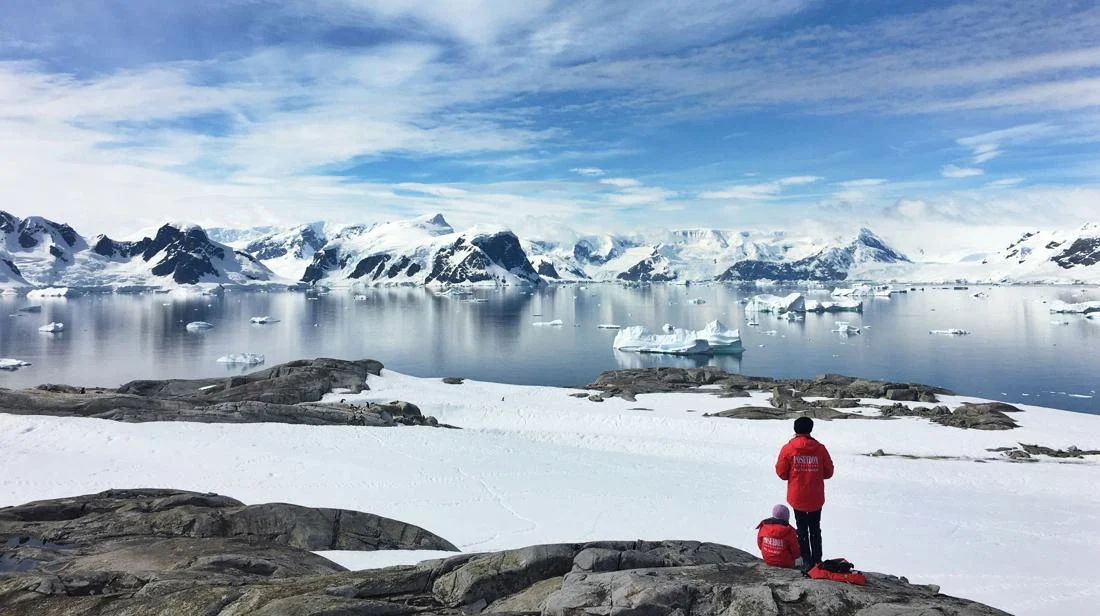
Jakarta – A groundbreaking discovery in the frigid waters of Antarctica, initially identified in 2021, has been thoroughly re-examined and confirmed by an autonomous underwater vehicle (AUV), revealing the existence of the largest known fish breeding colony on Earth. Situated beneath the ice-covered expanse of the Weddell Sea, this colossal aggregation of icefish nests, estimated to number around 60 million, stretches across an astounding 240 square kilometers, an area comparable in size to the entire island nation of Malta. The confirmation of this vast deep-sea ecosystem underscores the immense biodiversity hidden within the Antarctic realm and intensifies global calls for enhanced marine protection in the region.
Unveiling a Hidden World: The Initial Discovery
The initial astonishing finding occurred in February 2021 during an expedition aboard the German research icebreaker RV Polarstern, operated by the Alfred Wegener Institute Helmholtz Centre for Polar and Marine Research (AWI). Scientists on this mission were conducting routine surveys of the seabed near the Filchner Ice Shelf, a massive floating ice platform on the southern edge of the Weddell Sea. Their primary tool for this survey was the Ocean Floor Observation and Bathymetry System (OFOBS), a specialized camera and sonar sled designed to be towed approximately 1.5 meters above the seafloor.
What began as a standard data collection exercise quickly turned into a moment of scientific awe. For four continuous hours during the first dive, the OFOBS cameras relayed images not of the expected barren Antarctic seabed, but an endless expanse of precisely constructed fish nests. Autun Purser, a marine biologist at AWI and the lead researcher on the initial study, recounted the surprise, stating, "We only expected to see the typical Antarctic seafloor, but during the first four hours of the dive, all we saw was fish nest after fish nest." This unprecedented visual data allowed the team to record over 10,000 individual nests, situated at depths ranging from 420 to 535 meters. Based on the observed density and the extensive area covered, researchers extrapolated that the colony likely comprised an astonishing 60 million active nests.
The Extraordinary Inhabitants: Jonah’s Icefish
The architects of this underwater metropolis are Jonah’s icefish (Neopagetopsis ionah), a species endemic to the extremely cold waters of the Southern Ocean. These fascinating creatures possess a unique physiological adaptation that sets them apart from nearly all other vertebrates: they lack hemoglobin, the red pigment protein responsible for oxygen transport in blood. This absence gives their blood a nearly transparent appearance, earning them the moniker "white-blooded fish."
This extraordinary evolutionary trait is a testament to the extreme environment in which they thrive. In the oxygen-rich, sub-zero waters of Antarctica, dissolved oxygen levels are significantly higher than in warmer seas. Jonah’s icefish have evolved enlarged hearts and highly efficient circulatory systems to pump oxygen-rich plasma directly throughout their bodies, circumventing the need for hemoglobin. They also produce natural antifreeze proteins in their blood, preventing the formation of ice crystals in their tissues, a crucial survival mechanism in waters that can drop below freezing point. Each nest, typically about 15 centimeters in diameter and 3 centimeters deep, contains an estimated 1,700 to 2,500 eggs, meticulously guarded by a parent icefish, likely the male, ensuring their survival in this harsh environment.
Technological Marvels: LASSIE and OFOBS in Action
The initial discovery by the OFOBS system provided an incredible snapshot, but the sheer scale of the colony necessitated more prolonged and detailed observation. This led to the deployment of LASSIE (Low-Altitude Survey System for Icefish), an advanced autonomous underwater vehicle (AUV). Unlike the towed OFOBS, LASSIE operates independently, programmed to navigate specific transects and collect data without direct human intervention from the surface vessel.
LASSIE’s mission involved a sustained 48-hour patrol of the seafloor directly above the icefish colony. Equipped with high-resolution cameras and an array of sophisticated environmental sensors, the AUV meticulously gathered data on critical parameters such as water temperature, salinity, oxygen content, and ocean currents. This technological capability allowed scientists to not only confirm the continued presence and activity of the colony but also to gain deeper insights into the environmental conditions that support such a massive breeding ground. The deployment of AUVs like LASSIE represents a significant leap in deep-sea research, enabling long-duration, non-intrusive monitoring of fragile ecosystems that are otherwise challenging to access and study. The precise mapping capabilities of these robots contribute invaluable data for understanding spatial distribution, population dynamics, and the overall health of these hidden communities.
Scale and Significance: A Megalopolis Beneath the Ice
The confirmed scale of this icefish colony is truly staggering. Covering an area of approximately 240 square kilometers, it represents an unprecedented aggregation of a single fish species for breeding purposes. To put this into perspective, the colony is larger than many major cities and stands as the most extensive fish breeding site ever recorded globally. The sheer density of the nests, with each fish meticulously constructing its own breeding ground, points to a highly organized and successful reproductive strategy.
The immense biomass represented by these 60 million nests, each containing thousands of developing embryos, has profound implications for the wider Antarctic ecosystem. It signifies a colossal energy transfer point, converting primary productivity into a vast food source for higher trophic levels. This discovery fundamentally alters our understanding of deep-sea biological hotspots and reinforces the notion that even the most extreme environments can harbor life on an unimaginable scale.
An Antarctic Ecosystem Cornerstone
The presence of such an enormous breeding colony unequivocally establishes Jonah’s icefish as a critical component of the Weddell Sea food web. This region is renowned for its rich biodiversity, supporting a variety of iconic Antarctic species. Among the most prominent beneficiaries of this icefish abundance are Weddell seals (Leptonychotes weddellii), a common and robust pinniped species found throughout the Antarctic.
Research involving satellite-tagged Weddell seals has revealed a striking correlation between their foraging behavior and the location of the icefish colony. An impressive 90% of the diving activities recorded from these tracked seals occurred directly within or in close proximity to the active nesting grounds. This compelling data illustrates the tight ecological linkage between the icefish colony and its predators, highlighting the colony’s role as a vital hunting ground and a crucial energy subsidy for the seals. Beyond seals, the colony likely supports other deep-sea predators, scavengers, and a host of benthic invertebrates, forming a complex and interconnected ecosystem. Its stability and productivity are therefore integral to the health and functioning of the entire Weddell Sea biome.
The Warming Current: A Delicate Balance
One of the key environmental findings from LASSIE’s monitoring was the identification of a specific hydrological condition that appears to facilitate the existence of this massive colony. The icefish nests are situated in a region that is consistently bathed by a deep-water mass that is slightly warmer than the surrounding frigid Antarctic waters. While still remarkably cold, typically hovering just above the freezing point, this subtle thermal anomaly is believed to provide a stable and suitable environment for the icefish to lay their eggs and for the embryos to develop.
This "warmer" deep water likely originates from specific oceanographic processes, such as the upwelling of modified circumpolar deep water or localized geothermal activity, though further research is needed to pinpoint its exact source and dynamics. The stability of this thermal regime is paramount; even minor fluctuations in temperature could have significant consequences for the delicate developmental stages of the icefish embryos. The continuous monitoring by LASSIE and future expeditions will be crucial in tracking any changes to these vital environmental parameters, particularly in the context of a rapidly changing global climate.
A Call for Conservation: Protecting the Weddell Sea
The discovery and subsequent confirmation of this monumental icefish breeding colony have significantly bolstered arguments for establishing a Marine Protected Area (MPA) in the Weddell Sea. Marine Protected Areas are geographically defined zones where human activities, particularly fishing and resource extraction, are strictly regulated or prohibited to conserve biodiversity and ecosystem health.
The Alfred Wegener Institute explicitly states that the enormous biomass concentrated in this region makes it one of the most important ecosystems in the Weddell Sea and undoubtedly the largest known fish breeding ground. This unique and vulnerable habitat requires robust protection from potential future anthropogenic impacts, including overfishing, habitat destruction, and disturbances from shipping or research activities. International efforts to designate an MPA in the Weddell Sea have been ongoing for years under the auspices of the Commission for the Conservation of Antarctic Marine Living Resources (CCAMLR), an international commission with 26 Members (25 countries and the European Union) responsible for conserving Antarctic marine life. The scientific evidence provided by the AWI’s expeditions provides compelling justification for fast-tracking the establishment of such a protected zone, ensuring the long-term survival of this extraordinary deep-sea community.
Climate Change: The Overarching Threat
While the icefish colony currently appears stable, the shadow of global climate change looms large over the Antarctic environment. The data collected by LASSIE, including water temperature, salinity, and oxygen levels, provides a baseline for understanding the current conditions. However, the long-term implications of rising ocean temperatures, changes in ocean currents, and the accelerating melting of ice shelves, such as the Filchner Ice Shelf adjacent to the colony, are a profound concern.
Antarctic ecosystems are particularly sensitive to even slight changes in temperature and ocean chemistry. Increased meltwater from ice shelves could alter salinity and stratification, impacting the unique "warmer" deep-water current that sustains the colony. Furthermore, ocean acidification, caused by the absorption of excess atmospheric carbon dioxide, poses a threat to many marine organisms, though its specific impact on Neopagetopsis ionah requires further investigation. The need for sustained, long-term monitoring, as enabled by autonomous technologies like LASSIE, is more critical than ever to track these potential changes and inform adaptive conservation strategies. This colony serves as a powerful indicator of the health of the broader Southern Ocean and its vulnerability to global environmental shifts.
Pioneering Polar Science: The Alfred Wegener Institute’s Role
The Alfred Wegener Institute stands at the forefront of polar and marine research, consistently pushing the boundaries of scientific exploration in Earth’s extreme environments. Their expeditions, utilizing advanced research vessels like RV Polarstern and cutting-edge autonomous technologies, are instrumental in unraveling the mysteries of the Arctic and Antarctic. The discovery and subsequent monitoring of the Weddell Sea icefish colony exemplify AWI’s commitment to understanding the intricate workings of polar ecosystems and their crucial role in the global climate system. Their work not only expands fundamental scientific knowledge but also provides essential data for informing international policy and conservation efforts, safeguarding these pristine yet vulnerable regions for future generations.
The confirmation of this gigantic icefish breeding colony is a testament to the enduring power of scientific curiosity and technological innovation. It underscores that even in the most thoroughly explored corners of our planet, vast and complex ecosystems remain hidden, awaiting discovery. As humanity faces unprecedented environmental challenges, such findings serve as a powerful reminder of the biodiversity we stand to lose and the urgent imperative to protect the natural wonders of our world. The Weddell Sea icefish colony, a bustling metropolis beneath the ice, now stands as a symbol of both the resilience of life and the critical need for global conservation action.

