
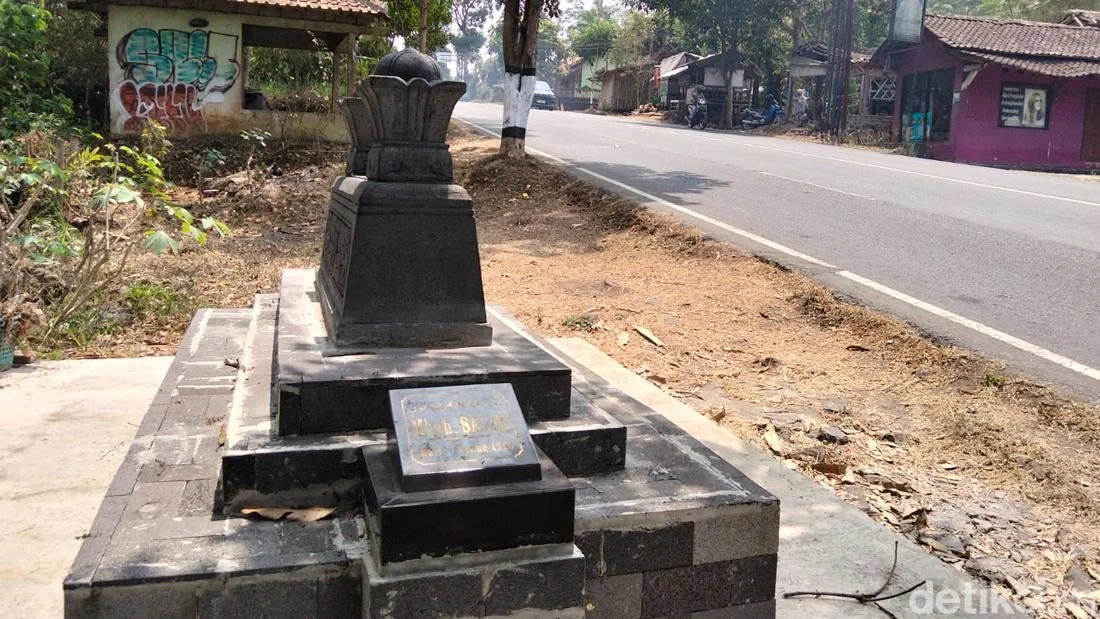
The intersection of local folklore, infrastructural evolution, and roadside tradition remains a fascinating facet of rural sociology in contemporary Southeast Asia. Along the bustling Magelang-Purworejo thoroughfare in Central Java, motorists navigating a specific stretch in Sabrang Hamlet, Margoyoso Village, Salaman Subdistrict, Magelang Regency, have long practiced a peculiar ritual. As vehicles pass a modest roadside burial site locally known as the "Ki Angkong" grave, drivers routinely toss coins or paper currency out of their windows. According to deeply entrenched local lore, this act of charitable offering—known locally as sedekah—acts as a mystical toll that guarantees a safe and unhindered journey.
However, beneath the layers of supernatural myths, phantom roads, and flying banknotes lies a complex historical reality involving forgotten pioneers, colonial-era figures, shifting topographies, and a community-driven safety net that transforms roadside superstition into a source of localized sustenance.
Unraveling the Identity of Ki Angkong: History Versus Folklore
For generations, travelers passing through Margoyoso have referred to the site simply as the Makam Ki Angkong. To the uninitiated, Ki Angkong conjures images of a singular, perhaps mythical guardian spirit or supernatural entity tied to the asphalt ribbon of the state highway. Local residents, however, are quick to dismantle the spectral anonymity surrounding the moniker.
Miswati, a 62-year-old resident who operates a local fried rice stall directly across from the burial site, clarifies that Ki Angkong is merely a colloquial spatial descriptor rather than the name of a singular interred entity. Historical and community accounts reveal that the ground holds the remains of revered early figures, most notably Kiai Basiron and Kiai Ahwak. These venerable local elders were laid to rest decades ago, originally positioned beneath a sprawling banyan tree that once stood closer to the natural terrain before environmental erosion reshaped the landscape.
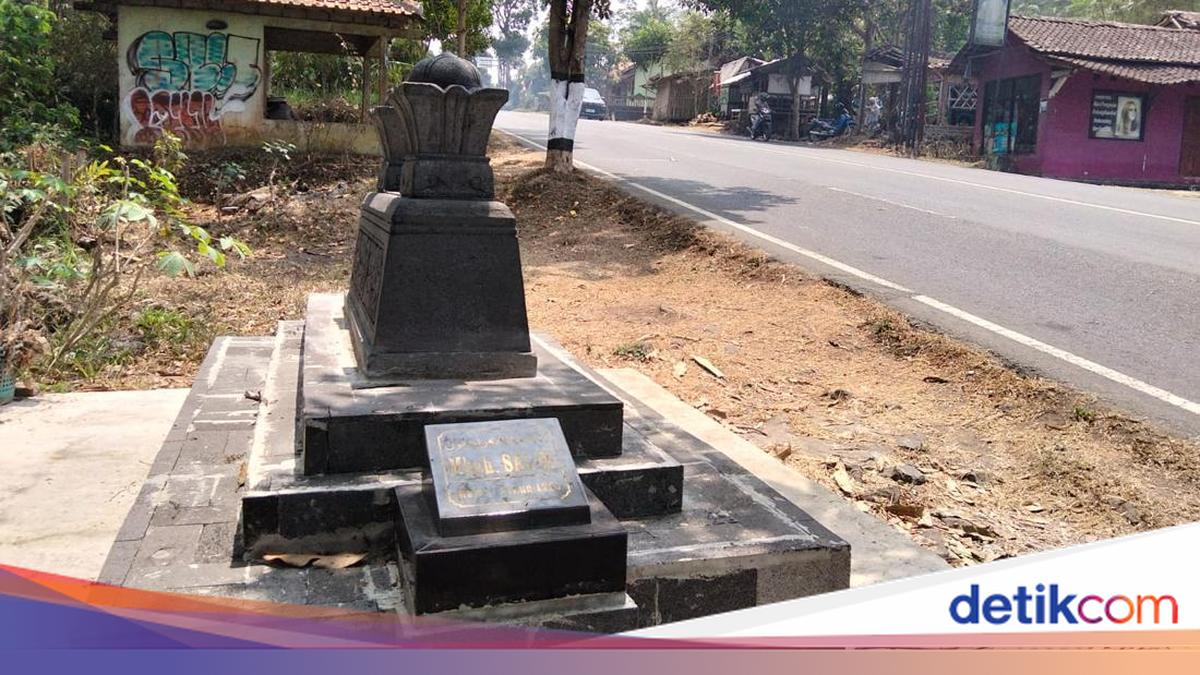
Compounding the historical layers of the site is another tomb marker bearing the name Mbah Salim, an ethnic Manadonese individual who migrated to Margoyoso during an earlier era and worked as a local market ticket collector. Following his passing, Salim was buried within the same enclave. While his resting place was severely damaged when a reversing truck inadvertently collided with the enclosure, it has since been restored through the philanthropy of an anonymous donor from Cilacap who provided a brand-new headstone in 2025.
According to Zarkoni, the 60-year-old Head of Tlogosari Dusun, the historical lineage of the site extends even further back into the colonial epoch. Zarkoni identifies the primary historical figures interred in the area as Wali Awak and Wali Ahmad, spiritual pioneers who passed away during the Dutch colonial administration. Due to historical landslides and shifting soil, the exact resting place of Wali Ahmad has become obscured beneath the terrain, leaving Kiai Basiron, Kiai Ahwak, and Mbah Salim as the visible focal points of the precinct.
The Mechanics and Lore of the Roadside Offering
The practice of casting money toward the gravesite operates on a psychological and sociological mechanism deeply rooted in Javanese syncretism. Drivers navigating the Magelang-Purworejo route—ranging from local motorcyclists to long-haul bus drivers—voluntarily toss monetary offerings as they pass. The denominations vary wildly; while individual commuters might throw loose coins or modest banknotes ranging from IDR 1,000 to IDR 10,000, passing pilgrimage buses have occasionally been known to cast entire plastic bags stuffed with over IDR 100,000 onto the roadside sanctuary.
This continuous stream of financial offerings does not sit indefinitely in the dust. A community-managed collection system ensures that the discarded funds are gathered and put to practical use. During daylight hours, local residents or passing individuals are permitted to collect the scattered bills and coins. To secure the area during the vulnerable hours of darkness, local villagers institute a nightly watch rotation from 10:00 PM until dawn, ensuring the offerings are safeguarded.
Far from being regarded as illicit or exploitative, the collection of these monetary offerings is embraced by local community leaders as a legitimate form of grassroots charity. Zarkoni notes that the funds collected from the roadside essentially function as financial assistance for local families, particularly helping households cover educational expenses for their school-aged children. Because the practice relies on voluntary offerings rather than coercion, community members view the collection of the discarded currency as entirely permissible and morally sound.
Evolution of Infrastructure and the Decline of Road Accidents
To understand why generations of motorists felt compelled to appease the spirits of Margoyoso, one must examine the infrastructural history of the Magelang-Purworejo highway. Decades ago, the stretch of road flanked by the burial site was notoriously hazardous. Zarkoni recalls that during earlier decades, severe traffic accidents occurred with alarming frequency—sometimes as often as once a week.
In the absence of modern highway engineering, adequate street lighting, and warning signage, drivers attributed the high frequency of collisions to supernatural elements. The mythos expanded organically: those who performed the ritual act of charity by throwing money onto the gravesite were granted safe passage, while those who neglected the custom or forgot to pay their metaphorical respects risked vehicular mishaps, mechanical failures, or mystical disorientation.
Adding to the rich tapestry of local legends, Margoyoso Village Head Adi Daya Perdana shares another variation of the myth that has circulated among travelers for generations. According to village lore, motorists who fail to throw a coin or piece of loose change as they pass the site risk experiencing a visual illusion where the road ahead appears to mysteriously split into multiple branching paths, leading drivers astray.
However, modern infrastructural improvements have steadily dismantled the material conditions that birthed these legends. In recent years, the Magelang-Purworejo corridor has undergone significant modernization. Pavement quality has improved drastically, lane markings have been standardized, and municipal lighting has illuminated previously dark stretches of the highway. Consequently, the incidence of traffic accidents along this specific corridor has plummeted dramatically. Local leaders openly acknowledge that the reduction in road mishaps is primarily the result of better road engineering and visibility rather than the appeasement of roadside spirits.
Cultural Preservation and Community Stewardship
Despite the modernization of the surrounding infrastructure and the natural erosion of superstitious beliefs among younger generations, village authorities actively maintain the cultural and historical integrity of the site. Adi Daya Perdana emphasizes that the local administration views the legends not as literal truth, but as a cultural touchstone interwoven with the identity of Margoyoso Village.
Rather than erasing the tradition, the village community actively engages in cultural preservation through nguri-uri budaya—the conscious preservation of ancestral heritage. Twice a year, coinciding with the traditional Javanese nyadran rituals preceding the holy month of Ramadan, local residents gather to conduct comprehensive community clean-ups of the burial ground and its surrounding environment. This communal maintenance ensures that regardless of how the exterior myths evolve, the historical resting places of Margoyoso’s early pioneers remain clean, respected, and integrated into the social fabric of the village.
Implications and Sociological Analysis
The phenomenon of the Ki Angkong gravesite offers a compelling case study in the intersection of infrastructure, cultural anthropology, and socioeconomic adaptation in rural Indonesia. From a functionalist perspective, the ritual serves a dual purpose. Historically, it provided motorists traveling through a dangerous, unlit corridor with a psychological coping mechanism—a sense of agency and divine protection in an unpredictable environment.
Sociologically, the tradition has evolved into an informal welfare mechanism. By converting the anxiety of travelers into monetary donations, the site creates a sustainable economic feedback loop that directly benefits lower-income families within Sabrang Hamlet. The communal management of the funds—overseen by village elders and protected by nightly security shifts—prevents social conflict and ensures equitable distribution of the resources.
Ultimately, while the supernatural claims of branching roads and vengeful spirits belong firmly to the realm of folklore, the enduring legacy of the Ki Angkong site highlights how local communities successfully harmonize historical reverence with practical community welfare. As the Magelang-Purworejo highway continues to modernize, the roadside sanctuary stands not as a relic of fear, but as a living monument to community resilience, ancestral memory, and the enduring human desire for safe passage.

