
Studying abroad in the United States remains a coveted aspiration for thousands of Indonesian students each year, offering world-class academic opportunities, cross-cultural immersion, and global career pathways. However, the pathway from dreaming of an international education to sitting in a lecture hall across the Pacific is paved with rigorous administrative hurdles, strict regulatory frameworks, and unforgiving deadlines. Far too often, prospective international students underestimate the complexity of the bureaucratic process, resulting in severe delays, compromised timelines, or, in the worst-case scenarios, outright visa denials and dashed academic dreams.
This critical vulnerability in the international student pipeline was recently brought to the forefront by senior diplomatic officials. Addressing prospective scholars and their families, United States authorities have issued stern warnings regarding the persistent pitfalls that derail Indonesian applicants. Chief among these concerns is the dangerous tendency to procrastinate on essential immigration milestones, coupled with seemingly minor clerical errors—such as name discrepancies—that trigger catastrophic processing bottlenecks. As international student mobility continues to rebound and reach new heights following global shifts in education trends, understanding the nuances of the US visa application ecosystem is more vital than ever for Indonesian scholars aiming to secure their future abroad.
The Anatomy of a US Student Visa Application: A High-Stakes Timeline
Securing an F-1 or M-1 student visa for the United States is not a transaction that can be successfully executed at the eleventh hour. It is a multi-layered, chronological procedure that begins months—and sometimes over a year—before the first day of classes. The journey officially commences the moment a student receives an official acceptance letter from a Student and Exchange Visitor Program (SEVP)-certified institution, which then issues the crucial Form I-20 (Certificate of Eligibility for Nonimmigrant Student Status).
Once the Form I-20 is in hand, applicants must pay the mandatory I-901 SEVIS fee, complete the Online Nonimmigrant Visa Application (Form DS-160), pay the visa application fee, and finally, schedule an in-person interview at the US Embassy or Consulate. It is at this final juncture—scheduling and preparing for the consular interview—that many Indonesian students stumble.
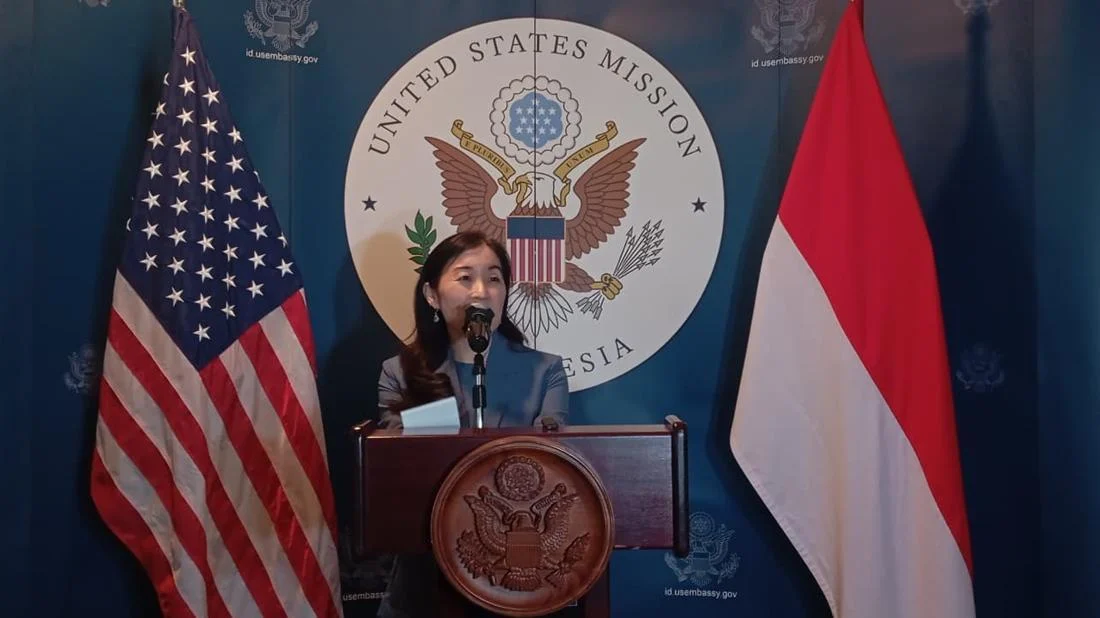
Speaking at the EducationUSA Indonesia Fall Fair held at Hotel Le Meridien in Jakarta, US Chargé d’Affaires Joy Sakurai addressed these recurring systemic challenges directly. Emphasizing the meticulous nature of the process, Sakurai issued a stark warning against the cultural habit of last-minute preparation, noting that the physical mechanics of printing visas, processing biometric data, and clearing security checks require a substantial and non-negotiable allocation of time.
"So students should not procrastinate. They must plan and organize it carefully," Sakurai stated during the educational expo, underscoring that institutional support from organizations like EducationUSA is designed precisely to help students navigate this complex timeline.
The cascading effect of a delayed interview schedule cannot be overstated. If an applicant schedules their consular interview merely weeks or days before their program’s mandatory check-in date in the United States, any administrative processing hold, technical glitch, or document verification request can instantly push the travel date past the university’s allowable late-arrival threshold. Consequently, students risk forfeiting their enrollment for the semester, losing housing deposits, and enduring profound psychological and financial distress.
The Perils of the Pen: Name Discrepancies and Document Consistency
While scheduling delays represent a temporal threat to prospective students, clerical errors represent an administrative landmine. According to consular observations shared by Sakurai, Indonesian applicants frequently fall victim to document rejections or processing halts due to how their names are entered across various digital and physical platforms.
Cultural naming conventions in Indonesia often feature rich linguistic diversity, resulting in full names spanning three, four, or even more distinct words. This stands in sharp contrast to the standard Western naming convention, which typically features a simple binary structure consisting of a given name and a family name. When Indonesian students interact with US immigration forms—which are historically designed around Western naming templates—confusion inevitably arises regarding fields designated for "First Name," "Last Name," "Surname," and "Given Name."
This structural mismatch leads many applicants to inadvertently alter the formatting or completeness of their names when transitioning from one form to another. A student might write their full four-word name on their national identity card (KTP), abbreviate it on their university application, utilize only their first and last words on the DS-160 visa application, and present a passport that reflects yet another stylistic variation.
"They must use all the information that is available in their passport. So, they need their passport and use the name that has been generated on every form," Sakurai explained, emphasizing the absolute necessity of uniformity.
The US Department of State relies heavily on automated database cross-referencing and biometric verification. When the biographical data on a student’s passport does not match the data inputted on the DS-160, the SEVIS database, and the appointment confirmation system character-by-character, the system flags the profile. Consular officers are then forced to manually untangle the discrepancies, consuming precious interview time and occasionally requiring the applicant to correct forms and reschedule their appointments entirely.
"Even when they make an appointment for their visa, they must use the name listed. If they don’t do it, sometimes we will have trouble because we cannot check who you are, if your ID and your passport and your application do not have the exact same name," Sakurai warned.
Broader Implications for Indonesian Outbound Mobility
The insights shared by US diplomatic leadership highlight a broader systemic issue within the landscape of Indonesian outbound student mobility. Indonesia remains one of the vital source countries for international talent in the United States, with thousands of students contributing to academic diversity on American campuses every year. Programs funded or supported by the US government, such as EducationUSA, Fulbright, and various institutional partnerships, strive to bridge the information gap and provide equitable access to higher education advisory services.
However, the transition from local secondary education or undergraduate studies to a highly regulated foreign academic environment requires a distinct shift in administrative literacy. For many young Indonesians, the US visa application is their first encounter with high-stakes international bureaucracy. The meticulous attention to detail required—ranging from financial proof documentation and academic transcripts to passport validity and biographical consistency—serves as an early litmus test for the organizational skills necessary to thrive in an independent, cross-cultural academic setting.
Experts in international education note that institutions and advisory bodies must place an equal emphasis on "bureaucratic preparedness" alongside traditional academic preparations like standardized testing (TOEFL, IELTS, SAT, GRE) and essay writing. When students are adequately trained to view administrative compliance as an integral part of their academic journey, the rate of preventable visa denials drops significantly.
A Step-by-Step Strategic Blueprint for Prospective Applicants
To mitigate these risks and ensure a seamless transition from acceptance letter to campus arrival, education specialists and consular representatives recommend a structured, phased approach for Indonesian students targeting the United States:
Phase 1: The Research and Readiness Window (9 to 12 Months Prior)
Prospective applicants should begin researching target universities, admission deadlines, and specific visa requirements nearly a year before their intended departure. During this phase, students must meticulously examine their passport validity. Under US regulations, a passport must generally be valid for at least six months beyond the applicant’s intended period of stay in the United States. Furthermore, students must establish a master biographical document—a digital template that mirrors their passport exactly—to be used for every single application form going forward.
Phase 2: The Documentation and Verification Stage (6 to 9 Months Prior)
Upon receiving the Form I-20, students must immediately review every line of data for accuracy, including name spellings, date of birth, major field of study, and financial support details. Any discrepancy found on the I-20 must be reported to the university’s international student office (DSO) for immediate correction before proceeding further. Simultaneously, students should gather financial sponsorship letters, bank statements, and academic transcripts, ensuring that all financial documents clearly demonstrate the liquid assets required to cover tuition and living expenses for at least the first academic year.
Phase 3: Application Submission and Fee Management (4 to 6 Months Prior)
Filling out the Form DS-160 requires absolute precision. Applicants are advised to utilize online tutorial resources provided by official entities, such as the US Embassy’s website and EducationUSA advising centers, rather than relying on unverified third-party forums or hearsay. Once the DS-160 is submitted, applicants should pay the SEVIS fee and the visa application fee promptly, keeping physical and digital receipts of all transactions.
Phase 4: Interview Scheduling and Preparation (3 to 4 Months Prior)
As soon as the visa fee payment is registered in the scheduling system, students must book their consular interview without delay. Booking should ideally occur at least 90 to 120 days before the program start date. This provides an essential buffer period to accommodate any unexpected administrative processing, document requests, or logistical delays. Leading up to the interview, applicants should conduct mock interview sessions, organize their documents in a clean, professional folder, and verify that their appointment confirmation matches their passport data down to the final letter.
Conclusion: Organization as the Cornerstone of Success
Studying in the United States is a transformative endeavor that demands intellectual rigor, adaptability, and exceptional organizational discipline. While the academic challenges of an American university are substantial, the administrative hurdles of the initial visa process often catch unprepared students off guard.
By heeding the warnings and guidance of diplomatic officials like US Chargé d’Affaires Joy Sakurai, Indonesian students can sidestep the common pitfalls of procrastination and clerical carelessness. Ensuring that visa interviews are scheduled well in advance and that biographical data remains impeccably consistent across every document are not merely bureaucratic formalities; they are the foundational steps of a successful international academic career. With careful planning, thorough research, and meticulous attention to detail, Indonesian scholars can ensure that their journey to the United States begins not with administrative panic, but with confidence, clarity, and peace of mind.

