
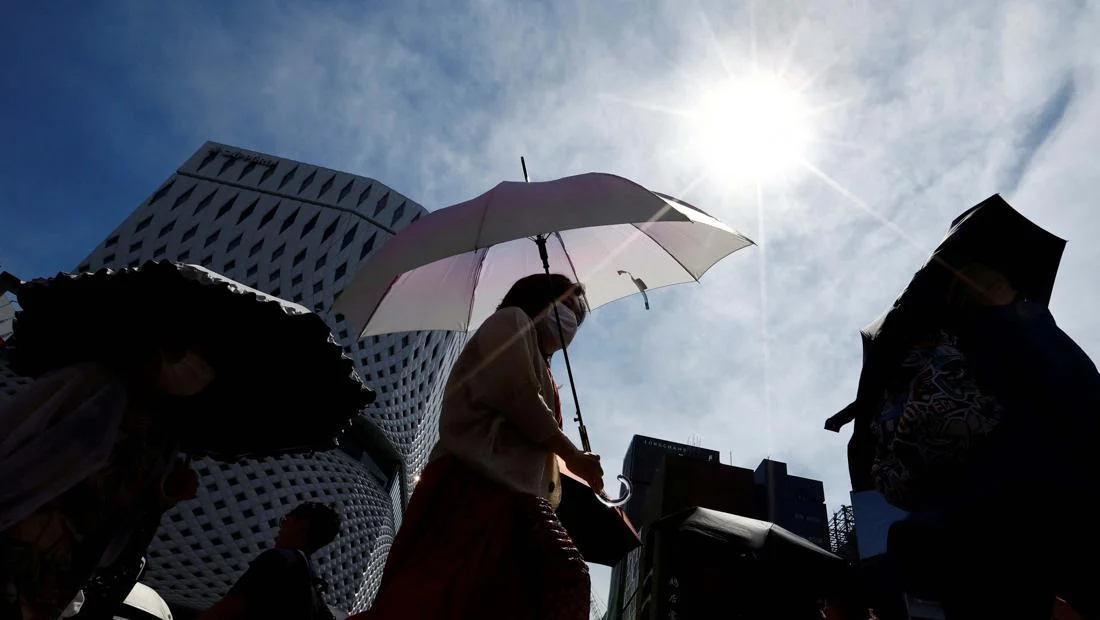
Global climate dynamics are undergoing a profound transformation that extends far beyond the gradual upward creep of planetary temperatures. According to a landmark study examining four and a half decades of climate data, extreme heat events are not merely intensifying in severity; their temporal footprint is expanding dramatically. Researchers have discovered that hazardous heatwaves are increasingly breaching traditional seasonal boundaries, manifesting well before the onset of summer or lingering deep into autumn across roughly half of the Earth’s landmass.
This temporal shift presents unprecedented challenges for global populations, public infrastructure, and natural ecosystems. Historically, society has relied on rigid calendar-based assumptions to prepare for thermal extremes, deploying cooling centers, issuing health advisories, and scheduling emergency responses aligned with conventional summer months. However, the modern climate regime is rewriting these temporal boundaries, catching communities off-guard during transitional seasons when physiological acclimatization and municipal readiness are typically at their lowest.
The Mechanics of Expanding Heat Seasons
The comprehensive study, published in the scientific journal AGU Advances, analyzed global climate data spanning a 45-year period. Led by Catherine Ivanovich, a climatologist at the NASA Goddard Institute for Space Studies (GISS) affiliated with the Columbia Climate School, the research team sought to answer a critical gap in climate science. While prior research thoroughly documented how average temperatures rise and how traditional summer weather windows lengthen—expanding by roughly six days per decade in mid-latitudes since 1990—very few studies had investigated the precise timing of acute extreme heat events.
Working alongside co-authors Benjamin Cook from GISS and Sonali Shukla McDermid from New York University, Ivanovich initially hypothesized that anthropogenic global warming would cause temperature thresholds of dangerous heat to be crossed relatively uniformly throughout the calendar year. Instead, the empirical data revealed a far more complex and fragmented geographical reality.
To capture the full spectrum of thermal stress, the researchers analyzed data across six inhabited continents, comparing baseline conditions from the 1980–1989 decade with contemporary observations from 2015–2024. Extreme heat was statistically defined as days where temperatures breached the 95th percentile of all daily readings. Crucially, the team utilized two distinct analytical lenses: dry heat, measured via standard thermometers, and wet-bulb globe temperature, a sophisticated metric that accounts for ambient temperature, relative humidity, and solar radiation to gauge the actual physiological strain placed on the human body.
Divergent Regional Realities and Chronological Shifts
The comparative analysis demonstrated that extreme heat events have expanded across slightly more than half of the world’s land area when evaluated through dry heat measurements, and just under half when assessed via wet-bulb globe temperature. However, this geographical expansion is profoundly asymmetrical.
"In some places, the expansion of the extreme heat period is happening more prominently in the spring, before the traditional summer starts. In other places, the expansion is running away much faster into the fall," Ivanovich explained.
Geographic mapping of the data highlights distinct regional patterns. In the western United States, eastern China, northern Africa, and eastern Europe, extreme heat events are increasingly clustering in the two months immediately following the traditional peak heat season. Conversely, in western regions of Europe, southern Africa, and northwestern India, the seasonal creep occurs primarily in the two months leading up to the historically expected window.
A vivid illustration of this phenomenon is found in Phoenix, Arizona. During the 1980s baseline decade, Phoenix recorded 183 days of extreme dry heat. By the 2015–2024 observation window, that figure skyrocketed to 338 days. More telling than the sheer frequency is the chronological migration: in the 1980s, the city recorded zero extreme heat events after the core summer window closed. In the contemporary dataset, approximately six percent of all extreme heat events occurred after that traditional boundary. Furthermore, the median date for dry heat extremes in Phoenix shifted ten days later into the calendar year, while wet-bulb extremes shifted 5.5 days earlier. The severity of this shift was starkly demonstrated in 2024, when Phoenix endured 113 consecutive days with temperatures exceeding 100 degrees Fahrenheit (37.8 degrees Celsius), followed immediately by a record-shattering 21-day streak of tied or broken daily high temperature records stretching from late September into mid-October.
Methodological Rigor and Attribution Challenges
To ensure the integrity of their findings and rule out dataset-specific anomalies, the research team replicated their entire analytical framework using two independent climate data repositories: one maintained by NASA and another by the European Centre for Medium-Range Weather Forecasts (ECMWF). Both datasets yielded consistent patterns, confirming that the temporal expansion of extreme heat is a robust geophysical signal.
Nevertheless, the researchers urge scientific caution, categorizing these findings as an early diagnostic of a shifting climate system. Because extreme heat events are naturally rare occurrences, studying their out-of-season manifestations yields smaller sample sizes, complicating definitive statistical attribution. When the team tested whether standard uniform warming could explain the observed shifts, climate models successfully accounted for mid-season intensification but failed to fully replicate the disproportionate expansion observed at the shoulders of the seasons.
"We cannot definitively say how much of that signal is driven by climate change using observational data alone," Ivanovich noted, while firmly emphasizing that anthropogenic climate disruption remains a primary driver behind the broader systemic transformation. Future research phases will incorporate sophisticated climate simulations and numerical modeling to test various emissions scenarios and determine whether simulated models mirror the observational out-of-season anomalies.
Socioeconomic Implications and Compound Disasters
The migration of extreme heat into spring and autumn carries profound implications for public health, agriculture, and emergency management. The nature of the thermal threat dictates its impact: dry heat places severe physiological pressure on agricultural yields, soil moisture, and natural ecosystems, while humid heat poses an immediate and lethal danger to human physiology by impairing the body’s ability to cool itself through perspiration. Consequently, municipal mitigation strategies optimized for dry heat are frequently inadequate when confronted with high-humidity thermal loads.
Furthermore, the temporal shifting of heat extremes creates dangerous overlaps with other seasonal natural hazards. In the western United States, unseasonal autumn heatwaves routinely coincide with the tail-end or expansion of the catastrophic wildfire season. In the southeastern United States, overlapping thermal anomalies can compound the dangers posed by active tropical storm and hurricane seasons. When multiple severe weather phenomena occur concurrently or in rapid succession, the cascading impacts on emergency services, healthcare infrastructure, and energy grids far exceed the cumulative damage of individual disasters occurring in isolation.
As scientific inquiry continues to decode the mechanics of out-of-season thermal extremes, the findings serve as a critical wake-up call for global policymakers. Moving beyond calendar-based adaptations will require flexible, real-time public health responses, resilient infrastructure design capable of withstanding prolonged thermal stress, and a fundamental reassessment of how modern societies define and prepare for the changing seasons.

