

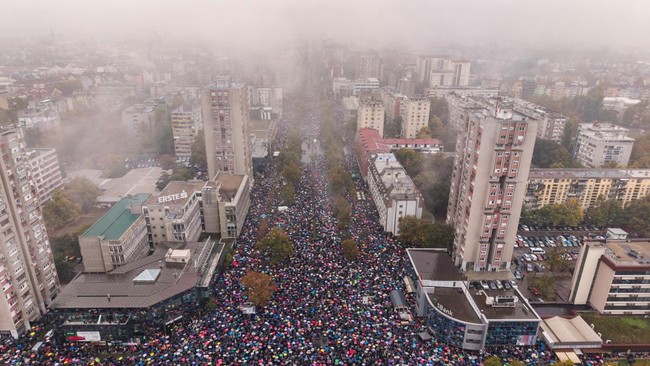
Novi Sad, Serbia, became the epicenter of a somber national commemoration on November 1, 2026, as tens of thousands of citizens gathered at the city’s central railway station to mark the second anniversary of a catastrophic infrastructure failure that claimed 16 lives. The event, which occurred on November 1, 2024, when a heavy concrete canopy collapsed, has long since transcended the boundaries of a localized tragedy, evolving into a potent symbol of systemic corruption and institutional negligence that ultimately dismantled the long-standing political regime of President Aleksandar Vucic.
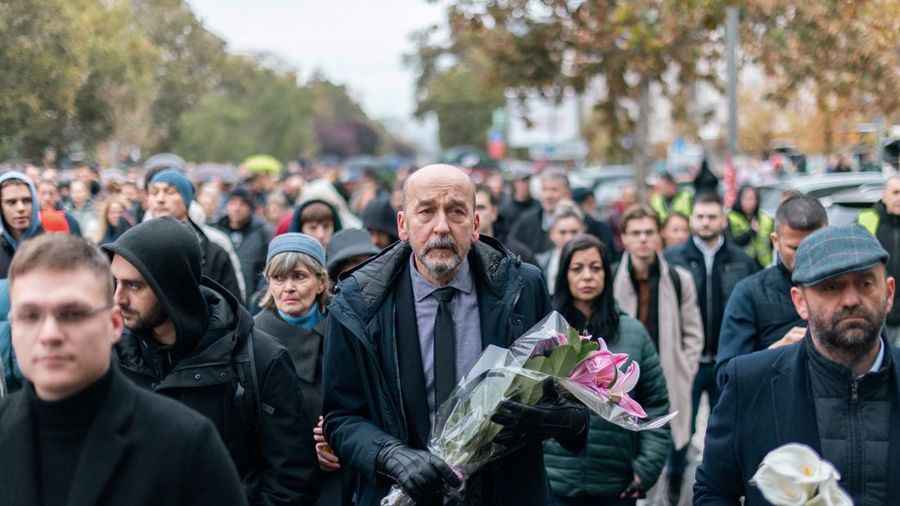
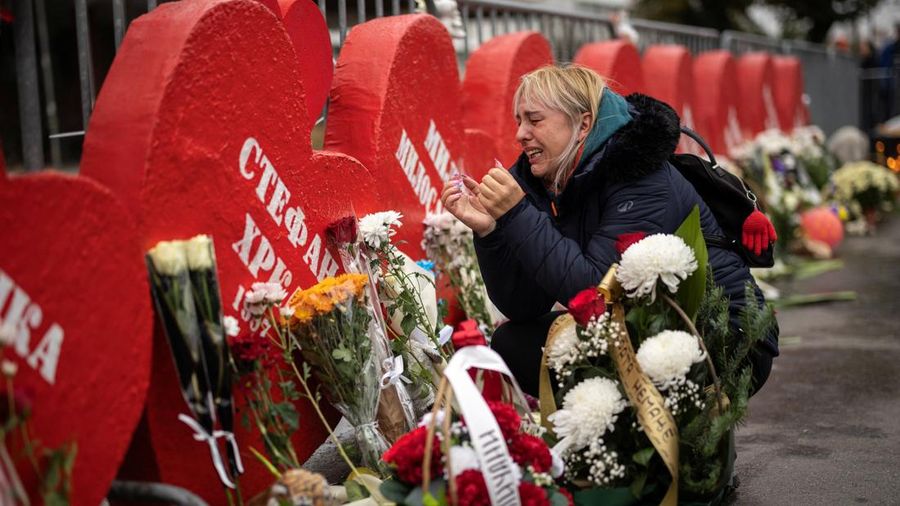
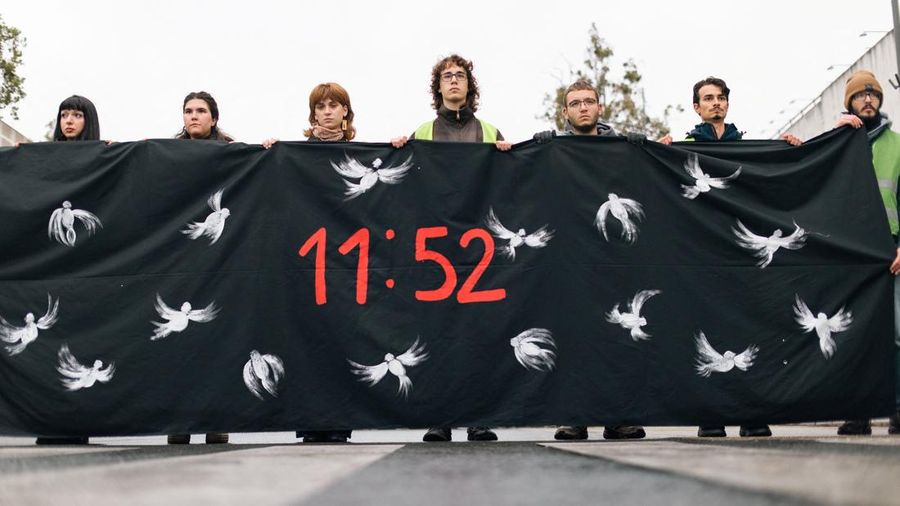
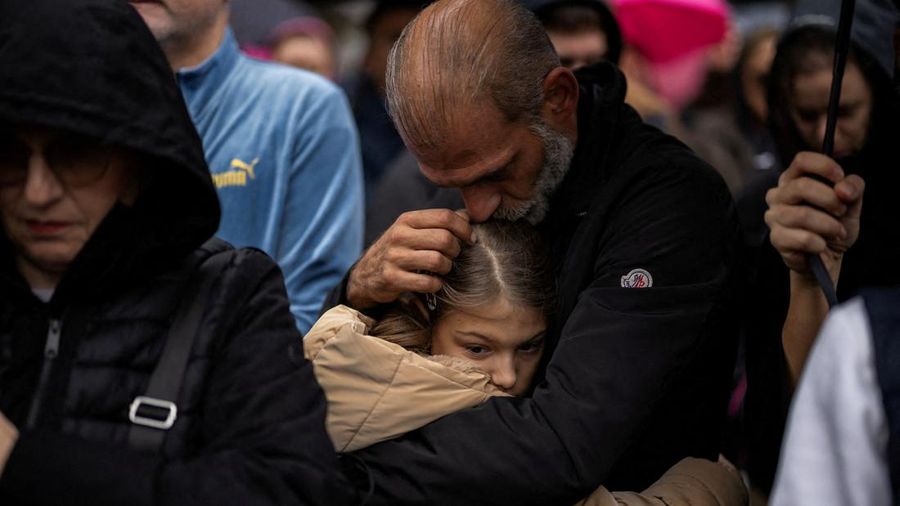
The atmosphere at the station was heavy with grief and collective resolve. Participants observed a poignant 16-minute silence—one minute for each life lost in the disaster—before laying flowers, lighting candles, and placing personal tokens of remembrance at the site. The presence of such a massive crowd, two years after the fact, underscores the deep-seated trauma that continues to resonate within the Serbian public consciousness.
Chronology of the Disaster and its Aftermath
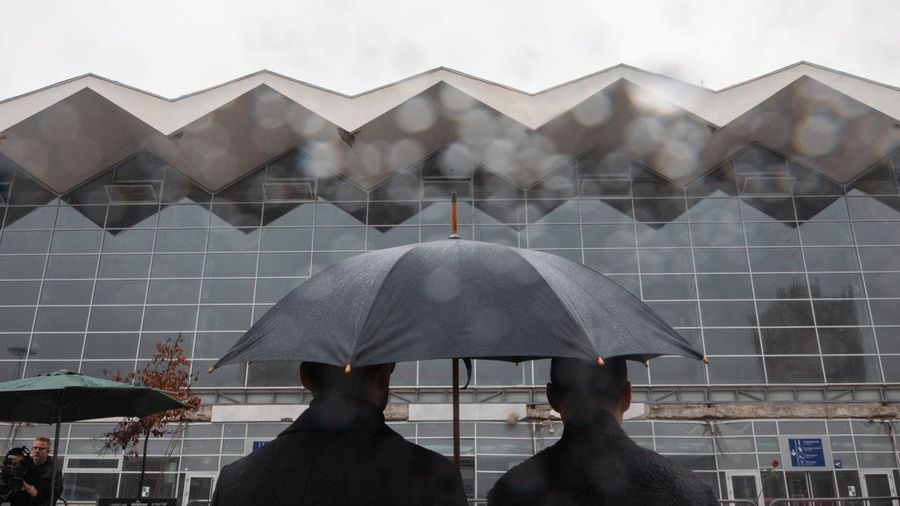
The collapse of the Novi Sad station canopy occurred during a period of high-profile infrastructure projects in Serbia, many of which were supported by significant international investment, particularly from China. The station had recently undergone a series of renovations as part of an ambitious, government-led high-speed rail initiative. When the concrete structure suddenly detached and crushed victims waiting below, it immediately sparked public outrage.
In the immediate aftermath, citizens and activists began questioning the quality of the construction materials, the transparency of the bidding process, and the rigor of safety inspections. As the death toll reached 16, the initial mourning rapidly transitioned into widespread protests. The disaster became a flashpoint for anti-government sentiment, as demonstrators alleged that the rush to complete high-visibility projects had led to the cutting of corners, the bypassing of safety protocols, and the enrichment of political cronies through inflated contracts.
Throughout 2025 and early 2026, the movement grew from local protests in Novi Sad to nationwide demonstrations. The public’s demand for accountability was met with various government responses, including the resignation of the Minister of Construction, yet this failed to quell the burgeoning political unrest. The persistent pressure from the streets eventually forced the government to concede to early parliamentary and local elections, setting the stage for the political shift that culminated in late October 2026.
The Rise of the Student List and the Shift in Power
The political fallout of the Novi Sad tragedy was finalized during the general elections held on October 25, 2026. A grassroots coalition known as the "Student List"—an eclectic group comprising academics, professionals, farmers, actors, and civil society activists—emerged as the primary challenger to the established political order.
According to preliminary results, the Student List secured 141 out of the 250 available seats in the Serbian parliament. This unexpected victory represents a seismic shift in the nation’s political landscape. Former President Aleksandar Vucic, who had sought to transition into the role of Prime Minister following the expiration of his presidential term, was forced to concede defeat. His exit marks the end of an era that had been increasingly defined by claims of democratic backsliding and institutional decay.
The electoral success of the Student List is widely viewed by political analysts as a direct mandate from the people to address the culture of impunity that characterized the previous administration. The victory is not merely a change in leadership but a rejection of the status quo that allowed the Novi Sad tragedy to happen in the first place.
Legal and Institutional Challenges
Despite the political change, the path to justice for the victims’ families remains complex and fraught with delays. The office of the public prosecutor has indicted 13 individuals in connection with the collapse, ranging from engineering supervisors to lower-level government officials involved in the project’s oversight. However, the trial proceedings have been marked by significant procedural hurdles and postponements, frustrating the families of the victims who seek clear answers regarding the chain of command that led to the approval of the flawed design.
All 13 defendants have maintained their innocence, denying any culpability in the incident. Legal experts point out that the complexity of the case, involving multiple layers of subcontracting and regulatory oversight, makes for a lengthy judicial process. For survivors and the families of the deceased, the slow pace of the legal system is a painful reminder of the systemic issues that continue to plague Serbia’s institutions.
"I hope that we finally realize that we should not be waiting years to change something that is fundamentally wrong, especially when that negligence costs human lives," said Jelena Trajkovic, a 32-year-old academic from Novi Sad who attended the commemoration. Her sentiment echoes a broader desire for a reformed judicial system that operates independently of political influence.
Socio-Political Implications and Future Outlook
The collapse in Novi Sad served as a mirror for the Serbian public, reflecting the broader issues of corruption and mismanagement. The project, which was touted as a hallmark of progress and modernization, became a symbol of the dangers of centralized, non-transparent governance. As the nation looks toward the next presidential election, expected to take place before the end of 2026, the new parliamentary majority faces the monumental task of restoring public trust.
The victory of the Student List has sparked hope among the youth and civil society, but it also brings the weight of high expectations. The coalition must navigate a fractured political environment while addressing the urgent need for infrastructure reform, anti-corruption legislation, and institutional transparency. International observers are closely watching how the new government will handle the transition and whether it can effectively disentangle the web of interests that previously governed the state’s infrastructure sector.
Furthermore, the impact of the tragedy on Serbia’s international standing cannot be understated. Foreign investors and development partners are likely to reassess their involvement in Serbian infrastructure projects, demanding higher standards of accountability and transparency. The "Novi Sad effect" has effectively raised the bar for governance and public safety in the region.
A Legacy of Remembrance and Change
The commemoration on November 1, 2026, was more than a mourning ritual; it was a testament to the power of public memory and the resilience of a citizenry that refused to be silenced by the passage of time or the obfuscation of the authorities. As the sun set over the station, the sea of people served as a reminder that the 16 individuals who perished were not just statistics in a failed construction project, but catalysts for a democratic awakening.
The challenge for the incoming government is to ensure that the memory of the tragedy remains a guiding principle for policy-making. The transition of power from the old guard to a movement rooted in the aftermath of a national tragedy suggests that the Serbian public is entering a new chapter, one where accountability is not an option but a requirement.
In the coming weeks, as the final results of the October election are certified and the new government takes shape, the focus will inevitably turn to the prosecution of those responsible for the 2024 collapse. The families of the victims have made it clear that they will not rest until full justice is served, and the newly elected officials have pledged to prioritize these legal proceedings.
Ultimately, the story of the Novi Sad station is a sobering reminder that infrastructure is the physical manifestation of political integrity. When that integrity fails, the consequences are literal, tangible, and devastating. For Serbia, the road ahead will be long, but the events of the past two years have proven that the citizenry is fully committed to the arduous journey of rebuilding their nation on a foundation of truth, transparency, and justice. The ghosts of the 16 victims now serve as the silent guardians of a new political era, ensuring that the mistakes of the past are never repeated in the pursuit of a modern, democratic Serbia.

