
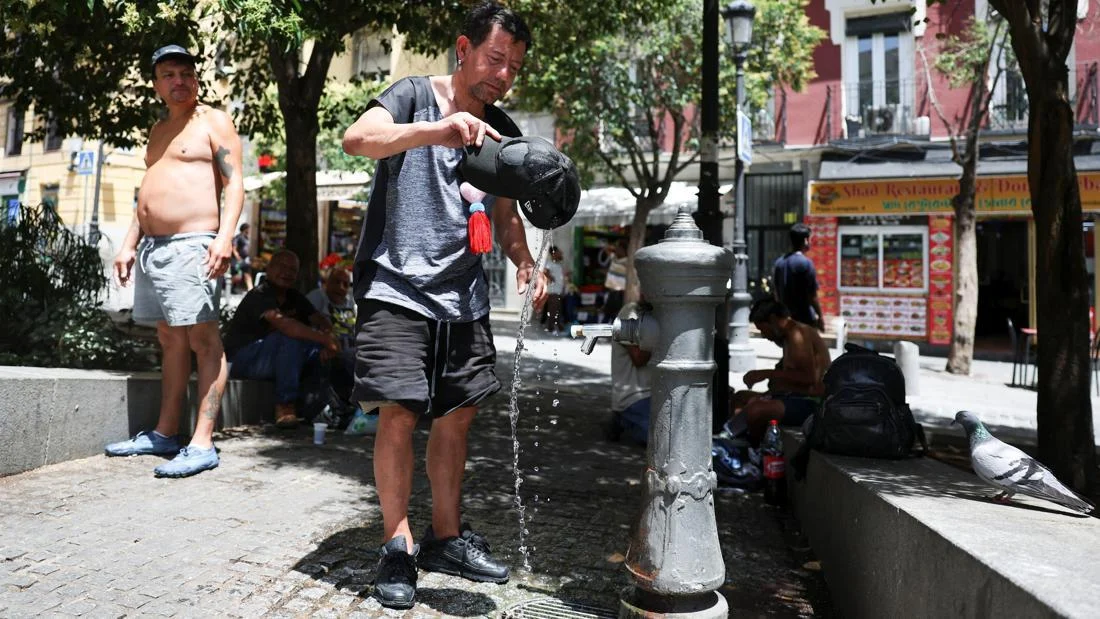
Spain is bracing for its third intense heatwave of the summer season, with meteorological agencies forecasting temperatures to exceed 40 degrees Celsius across various regions starting Tuesday, July 21st. In some areas, the mercury is predicted to climb beyond a scorching 45 degrees Celsius, signaling a critical intensification of the ongoing extreme weather event.
The Spanish National Meteorological Agency (AEMET) attributes this relentless heat to a persistent high-pressure system dominating the Iberian Peninsula. This atmospheric configuration acts as a cap, trapping hot and dry air masses originating from North Africa and forcing temperatures to rise dramatically over several consecutive days. The situation is expected to reach its zenith on Thursday, July 23rd, marking the peak of this particular heatwave, with a significant potential for temperatures to surpass the already alarming 45-degree Celsius threshold in select locations.
AEMET has issued a stark warning to the public, urging extreme caution, particularly for individuals venturing outdoors during the peak daylight hours. Vulnerable populations, including the elderly, young children, and those with pre-existing health conditions, are identified as being at a heightened risk of suffering adverse health effects due to the extreme climatic conditions. "The danger level will be significant during the midday hours, especially for outdoor activities and vulnerable groups," the agency stated in its advisory.
A Summer of Unprecedented Heat: Three Heatwaves Grip Spain
This latest onslaught marks the third significant heatwave to afflict Spain during the current summer. The nation previously endured a severe heatwave in late June, which shattered temperature records across much of Europe, followed by another intense period of extreme heat in early July. The cumulative effect of these events has pushed Spain into a climate of persistent and record-breaking warmth.
Data released by AEMET paints a concerning picture of the summer’s thermal profile. The mainland of Spain has recorded its hottest first half of summer since meteorological records began in 1961. The average temperature between June 1st and July 15th registered a staggering 24.5 degrees Celsius. This figure represents a substantial deviation, being 3.3 degrees Celsius higher than the reference average of 21.2 degrees Celsius for the 1991-2020 period. This significant anomaly underscores the unprecedented nature of the current heat conditions.
The Specter of Climate Change: Amplifying Heatwaves and Their Consequences
The scientific consensus increasingly points to human-induced climate change as a primary driver behind the escalating frequency, intensity, and duration of heatwaves globally. This phenomenon exacerbates existing climatic patterns, leading to more prolonged periods of extreme heat and contributing to the drying of vegetation. The heightened dryness of natural landscapes significantly elevates the risk of wildfires, a danger that has already manifested with tragic consequences in Spain.
Earlier in July, a devastating wildfire in the southeastern province of Almeria claimed the lives of 13 individuals. This tragic incident stands as the deadliest wildfire to occur in Spain in recent years, starkly illustrating the amplified threat posed by extreme heat and drought conditions amplified by climate change. The confluence of high temperatures, dry vegetation, and human activity creates a volatile environment ripe for rapid fire propagation.
Understanding the Meteorological Phenomenon
The current heatwave is characterized by the influx of hot air from the Sahara Desert. This air mass, laden with heat and dryness, is being transported northward by prevailing wind patterns. The high-pressure system acts as a lid, preventing cooler air from displacing the superheated air mass. This stagnant atmospheric condition allows temperatures to build relentlessly day after day.
Key Meteorological Factors:
- High-Pressure System: A dominant area of high atmospheric pressure over the Iberian Peninsula is central to the heatwave. These systems are associated with clear skies and stable atmospheric conditions, which prevent cloud formation and allow solar radiation to heat the ground intensely.
- Advection of Hot Air: The prevailing winds are drawing hot, dry air from North Africa, specifically the Sahara Desert. This air mass has been heated over vast arid landmasses, and its arrival in Spain significantly elevates ambient temperatures.
- Subsidence: Within a high-pressure system, air tends to sink (subsidence). As air sinks, it compresses and warms adiabatically, further intensifying the heat at ground level.
- Lack of Moisture: The air mass originating from North Africa is characteristically dry. The absence of moisture in the atmosphere means that there is less evaporative cooling, a process that can help to moderate temperatures.
Historical Context and Trends
The occurrence of multiple, severe heatwaves within a single summer season is not an isolated incident but rather a symptom of a broader climatic trend. Climate change projections have consistently warned of an increase in extreme heat events. The data from Spain, indicating the hottest first half of summer on record, aligns with these global predictions.
Timeline of Recent Heatwaves in Spain:
- Late June Heatwave: This period saw record-breaking temperatures across Europe, with Spain experiencing significant heat stress. Temperatures in some Spanish cities exceeded 40 degrees Celsius, leading to widespread public health advisories and increased strain on emergency services.
- Early July Heatwave: Following closely, another heatwave gripped the nation. This period contributed to the overall elevated average temperatures for the summer.
- Late July Heatwave (Current): This latest event, beginning on July 21st, is predicted to be the most intense so far, with temperatures potentially exceeding 45 degrees Celsius in certain regions.
The persistence of these extreme events is a cause for considerable concern for scientists and policymakers alike. The frequency with which these events are occurring suggests a shift in the baseline climate, where what was once considered an exceptional heat event is becoming more commonplace.
Official Responses and Public Health Measures
In response to the escalating threat, Spanish authorities are implementing a range of measures to mitigate the impact of the heatwave. Public health campaigns are being intensified to educate citizens on how to stay safe during periods of extreme heat. These campaigns typically emphasize hydration, avoiding strenuous outdoor activities during the hottest parts of the day, and seeking cool environments.
Key Public Health Recommendations:
- Stay Hydrated: Drink plenty of water, even if not feeling thirsty. Avoid sugary drinks, alcohol, and excessive caffeine.
- Seek Cool Environments: Spend time in air-conditioned spaces, such as public buildings, shopping centers, or shaded parks.
- Protect Yourself from the Sun: Wear lightweight, loose-fitting clothing, a wide-brimmed hat, and sunglasses. Use sunscreen with a high SPF.
- Avoid Strenuous Activity: Limit physical exertion, especially during the hottest hours of the day (typically between 11 AM and 4 PM).
- Check on Vulnerable Individuals: Regularly check on elderly relatives, neighbors, and those with chronic illnesses.
- Recognize Symptoms of Heat Illness: Be aware of the signs of heat exhaustion and heatstroke, such as dizziness, nausea, headache, rapid pulse, and confusion. Seek immediate medical attention if these symptoms occur.
Emergency services are on heightened alert, with plans in place to manage potential increases in heat-related illnesses and accidents. Hospitals are preparing for a surge in admissions related to heatstroke, dehydration, and exacerbation of pre-existing conditions.
Broader Implications: Environmental and Economic Impacts
The sustained high temperatures have profound implications beyond immediate public health concerns. The prolonged dryness of the landscape significantly increases the risk of wildfires, posing a threat to life, property, and biodiversity. The devastating Almeria wildfire serves as a grim reminder of this danger.
Environmental Consequences:
- Increased Wildfire Risk: Dry vegetation becomes highly flammable, leading to an increased likelihood and intensity of wildfires.
- Water Scarcity: High temperatures accelerate evaporation, exacerbating drought conditions and straining water resources for agriculture, industry, and domestic use.
- Impact on Ecosystems: Extreme heat can stress plant and animal life, leading to reduced agricultural yields, damage to natural habitats, and potential species loss.
Economic Repercussions:
- Agricultural Losses: Crops can be damaged or destroyed by extreme heat and drought, leading to significant economic losses for farmers and potential increases in food prices.
- Tourism Impact: While some tourists may seek warmer climates, extreme heat can deter visitors, impacting the vital tourism sector in Spain. Outdoor activities become less appealing, and infrastructure may be strained.
- Energy Demand: Increased reliance on air conditioning leads to a surge in electricity demand, potentially straining power grids and increasing energy costs.
- Healthcare Costs: The rise in heat-related illnesses and injuries places a greater burden on healthcare systems, leading to increased costs.
The Role of Climate Change in Intensifying Heatwaves
The recurring nature and severity of these heatwaves underscore the tangible impacts of climate change. Scientific studies consistently demonstrate a link between rising global temperatures and an increase in the frequency and intensity of extreme heat events. The Intergovernmental Panel on Climate Change (IPCC) has repeatedly highlighted that heatwaves are becoming more frequent and more intense across most land regions.
The phenomenon observed in Spain is not an isolated incident but part of a global pattern. Similar extreme heat events are being recorded in other parts of the world, further solidifying the scientific understanding of climate change’s influence. The drying of vegetation, a direct consequence of prolonged high temperatures and reduced rainfall, creates a feedback loop that amplifies the risk of wildfires. This interconnectedness of climatic factors presents a complex challenge for mitigation and adaptation strategies.
Looking Ahead: Adaptation and Mitigation
The current situation in Spain serves as a critical wake-up call regarding the urgent need for both adaptation and mitigation strategies to address climate change. Adaptation measures focus on adjusting to the current and future effects of climate change, such as improving early warning systems for heatwaves, developing heat-resilient infrastructure, and promoting water conservation. Mitigation efforts aim to reduce greenhouse gas emissions to limit the extent of future warming.
The intensity of the third heatwave, coupled with the historical data of record-breaking temperatures, compels a re-evaluation of climate action plans. The long-term implications for Spain, a country already vulnerable to climate impacts, are significant. The resilience of its communities, ecosystems, and economy will depend on a concerted and sustained effort to confront the challenges posed by a warming planet. The relentless heat over Spain is not merely a weather event but a clear indicator of a changing climate, demanding a comprehensive and urgent response.

