
Jakarta, CNBC International — In a decisive and hawkish pivot, the United States Federal Reserve announced a 25 basis point increase in its benchmark interest rate, lifting the target range to 3.75%–4.00%. The unanimous vote by the Federal Open Market Committee (FOMC) marks the first rate hike by the U.S. central bank in over three years, signaling an aggressive renewed campaign to stamp out stubborn inflationary pressures fueled by volatile energy prices, geopolitical tensions, and ongoing tariff adjustments.
The policy shift comes after months of relative monetary stability and follows a multi-year cycle that saw rates peak before undergoing a series of cuts throughout 2025. With the latest decision, delivered after a rigorous two-day policy meeting, Federal Reserve Chair Kevin Warsh underscored that price stability remains the absolute cornerstone of sustainable long-term economic growth. The central bank’s aggressive stance highlights a growing consensus among policymakers that supply-driven inflation, if left unchecked, risks embedding itself deeper into consumer expectations and broader economic sectors.
A Historic Policy Turn After Years of Holding Patterns
To understand the weight of the Federal Reserve’s latest decision, one must look at the trajectory of U.S. monetary policy over the preceding years. Throughout 2025, the central bank maintained a cautious posture, holding benchmark borrowing costs steady at an elevated range of 4.25%–4.50% through the month of August. As economic indicators began to show signs of cooling, the Fed initiated a series of rate cuts in September, October, and December of 2025, bringing the federal funds rate down to 3.50%–3.75%.
Following that easing cycle, the central bank opted for a prolonged pause, holding rates steady through the first seven months of 2026. However, the persistence of consumer price pressures ultimately forced the FOMC’s hand. Headline inflation hovered at 3.4% year-on-year as of August 2026, remaining stubbornly above the Fed’s official 2% target.
The decision to reverse course and tighten policy was adopted with a unanimous 12-0 vote among FOMC members. In its official policy statement, the central bank emphasized the necessity of the move: "Inflasi masih berada di level tinggi. Kebijakan yang diambil hari ini diharapkan dapat mendukung kembalinya inflasi ke target The Fed sebesar 2% secara lebih cepat," reflecting the urgent priority placed on accelerating the timeline for price normalization.
Chair Kevin Warsh Emphasizes Price Stability
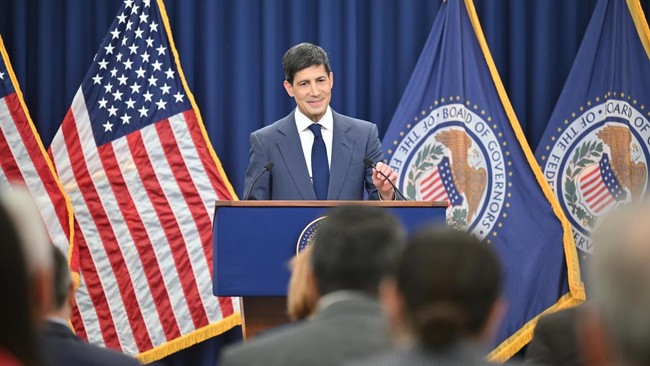
During the post-meeting press conference, Federal Reserve Chair Kevin Warsh delivered a resolute message regarding the central bank’s overarching mandate. Warsh noted that inflation has remained excessively high for far too long, eroding consumer purchasing power and complicating corporate planning.
"We must be confident that underlying inflation is moving toward our target clearly and with sufficient speed. Today, the FOMC decided that standard has not been met," Warsh told reporters, citing commentary published by CNBC International.
Warsh further stressed that price stability is not merely a secondary objective, but the foundational bedrock upon which robust economic expansion must be built. Historically, the Federal Reserve rarely executes isolated, one-off rate adjustments when dealing with persistent inflation. Policymakers typically avoid incremental actions if they assess that price growth is deeply entrenched or if economic demand requires aggressive intervention. While financial markets had partially anticipated a tightening move, the underlying rationale—moving past transitory supply-chain shocks to address second-round inflationary effects—proved unusual by modern central banking standards.
Dot Plot Projections Point Toward Further Tightening
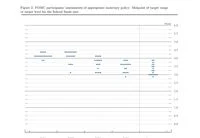
The release of the Fed’s updated quarterly economic projections and dot plot graphic revealed a decidedly hawkish outlook for the remainder of the year. According to the dot plot data, 16 out of 18 Fed officials project at least one additional 25 basis point rate increase before the conclusion of 2026. Among them, four policymakers foresee the possibility of two further hikes, while only two officials believe the central bank should pause after the current adjustment.
For the longer term, the dot plot indicates a flat trajectory before potential monetary easing resumes. Projections suggest a single rate cut in 2028, followed by at least one additional reduction in 2029.
Concurrently, the Fed revised its macroeconomic forecasts. The Personal Consumption Expenditures (PCE) Price Index—the central bank’s preferred inflation gauge—was revised upward to 3.7% for the year, compared to the 3.6% projection issued during the June meeting. Consequently, the Federal Reserve now anticipates that inflation will not return to its 2.0% target until 2029, pushing back the timeline by an entire year compared to earlier estimates.
Despite the tighter monetary conditions, real economic resilience remains visible in other macroeconomic indicators. The FOMC slightly upgraded its projection for U.S. economic growth to 2.3%, up from the previous estimate of 2.2%. Meanwhile, the unemployment rate is now projected to finish the year at 4.1%, marking a 0.2 percentage point downward revision from the June forecast of 4.3%.
Shifting Focus From Supply Shocks to Second-Round Risks
The pivot in Fed policy also highlights a tactical shift in how central bankers evaluate external economic shocks. Traditionally, monetary authorities tend to look past inflationary spikes caused by temporary supply disruptions, such as energy price surges stemming from Middle Eastern conflicts or ongoing international trade tariff disputes.
However, in the lead-up to the September meeting, Federal Reserve officials increasingly weighed the cumulative costs of ignoring prolonged commodity inflation. With the domestic labor market remaining exceptionally strong and unemployment trending lower, policymakers grew deeply concerned that sustained high energy costs would bleed into broader wage demands and service sector pricing, thereby unanchoring long-term inflation expectations.
Brad Conger, Chief Investment Officer at Hirtle & Co., highlighted the structural implications of this environment for corporate decision-making. "Inflasi merupakan kekhawatiran yang meluas dan ketidakpastiannya menghambat pengambilan keputusan di berbagai perusahaan," Conger remarked, pointing to the paralyzing effect that runaway price volatility has on capital expenditure and strategic planning.
Immediate Repercussions Across Global Financial Markets
Financial markets reacted swiftly and sharply to the Federal Reserve’s hawkish pivot. On Wall Street, major equity indices absorbed heavy losses as investors recalibrated portfolios for a higher-for-longer interest rate environment. The Dow Jones Industrial Average plummeted 631.21 points, or 1.21%, to settle at 51,461.90, pressured significantly by steep declines in banking heavyweights such as Goldman Sachs. The broader S&P 500 index retreated 0.45%, finishing the session at 7,551.81.
In the foreign exchange market, the U.S. dollar index surged approximately 0.65% immediately following the announcement, bolstered by expectations of higher yield differentials. Treasury markets experienced heightened volatility; yields on the two-year U.S. Treasury note advanced by 6 basis points as traders priced in the high probability of another rate hike before year-end. Yields on the benchmark 10-year Treasury note hovered near the 5.01% threshold.
Precious metals faced immediate downward pressure from the strengthening dollar and elevated bond yields. Gold futures dropped 1.2%, diminishing the non-yielding asset’s appeal relative to fixed-income instruments.
Consumer borrowing costs also felt the immediate strain. The average rate on a 30-year fixed mortgage climbed to 7.19%, reflecting an increase of roughly 38 basis points since Chair Warsh’s speech at Jackson Hole and sitting more than a full percentage point higher than levels recorded twelve months prior. Nevertheless, late-session adjustments in Treasury yields suggested that some institutional investors ultimately found solace in the Fed’s aggressive defense of price stability, interpreting the bold action as a necessary step to secure long-term macroeconomic equilibrium.
As the Federal Reserve navigates this delicate balancing act between subduing inflation and maintaining labor market health, global markets will remain hyper-sensitive to incoming economic data and rhetoric from central bank officials ahead of the final FOMC meetings of the year.

