
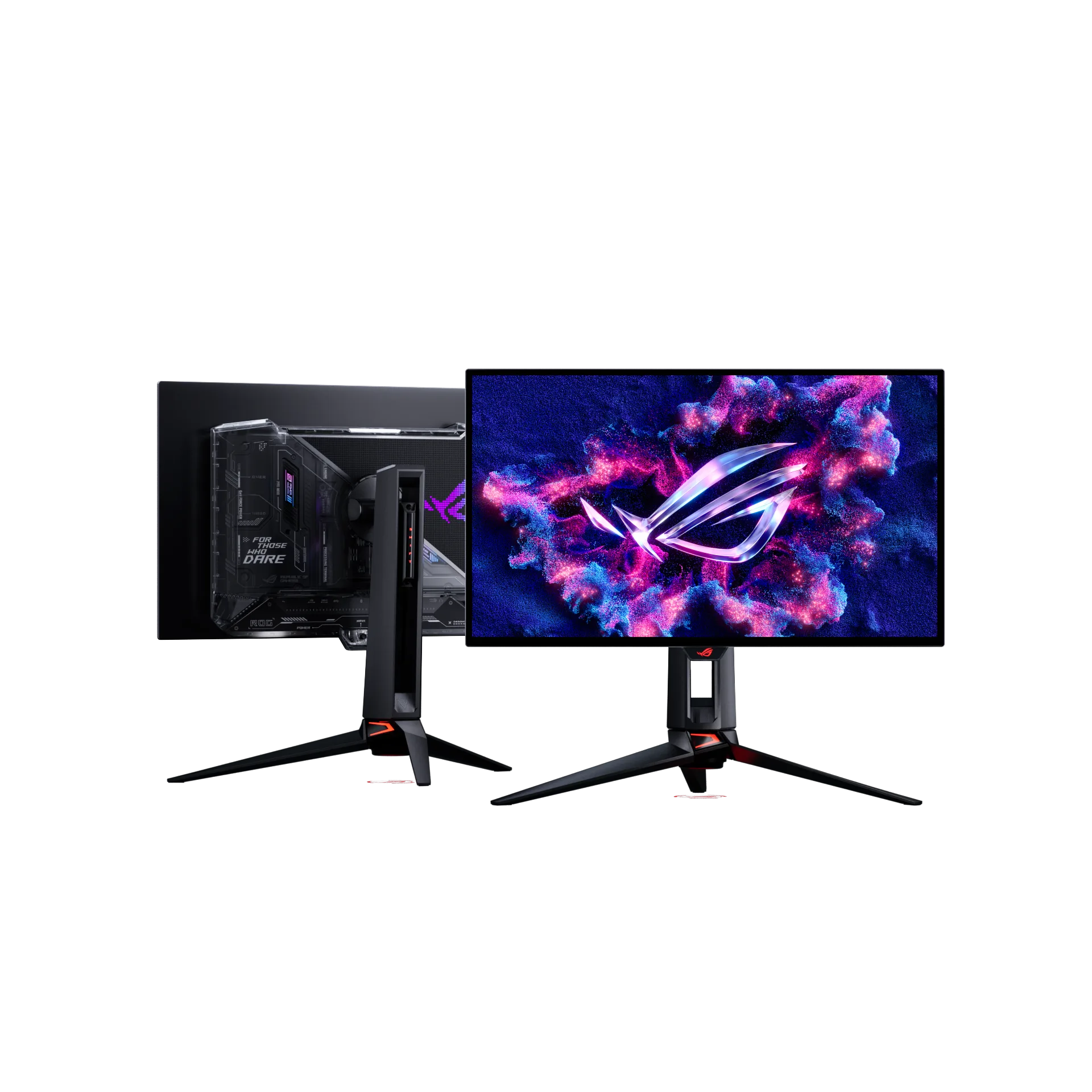
ASUS Republic of Gamers (ROG) has officially announced the launch of its latest premium gaming monitor lineup in the Indonesian market, featuring the ROG Swift OLED PG27UCWM and the ROG Swift OLED PG32UCWM. These two state-of-the-art visual display units represent a significant leap forward in display technology, integrating a 4K True Tandem RGB OLED panel architecture that promises unprecedented levels of contrast, color saturation, and power efficiency, far surpassing conventional display technologies. This innovation directly addresses a long-standing dilemma faced by competitive gamers and content creators: the compromise between high resolution and rapid refresh rates. With the integration of an advanced anti-static layer, innovative thermal management solutions, and artificial intelligence capabilities, ASUS aims to deliver absolute balance and uncompromising performance within a single, flagship device, solidifying its position at the forefront of the high-performance display market.
A Deep Dive into the True Tandem RGB OLED Technology
The primary allure of both the ROG Swift OLED PG27UCWM and PG32UCWM lies in their pioneering use of the True RGB Stripe OLED structure, meticulously paired with a TrueBlack Glossy™ display layer. This technical architecture marks a pivotal departure from standard WOLED (White OLED) panels, which typically incorporate an additional white (W) subpixel. While WOLED panels offer impressive brightness, the inclusion of the white subpixel can sometimes dilute color accuracy and vibrancy, particularly at higher brightness levels, as the white subpixel contributes to luminance without adding color information.
By eliminating this white subpixel, ASUS’s True RGB Stripe OLED design ensures that each pixel generates its own red, green, and blue light components directly. This fundamental shift yields several profound visual advantages for the user:
- Pristine Color Accuracy and Purity: Without the dilution of a white subpixel, colors are rendered with exceptional fidelity, appearing richer, more vibrant, and true to life. This is particularly crucial for content creators who demand precise color representation for professional work in graphic design, video editing, and digital art. For gamers, this translates to more immersive and visually stunning game worlds, where every shade and hue is displayed as intended by the developers.
- Unparalleled Contrast and True Blacks: OLED technology is inherently superior in contrast due to its ability to achieve perfect blacks by individually turning off pixels. The True RGB Stripe further enhances this by ensuring that dark areas remain devoid of any light bleed, leading to an infinite contrast ratio. This makes details in shadows more discernible and adds a profound sense of depth to images, creating a more dynamic and engaging viewing experience.
- Enhanced Brightness Uniformity and Clarity: The precise control over individual RGB subpixels contributes to superior brightness uniformity across the entire screen. This means consistent illumination without noticeable hot spots or dim areas, which is vital for both competitive gaming, where every pixel counts, and for professional tasks requiring an unblemished visual canvas. The TrueBlack Glossy™ layer further optimizes this by minimizing reflections and enhancing perceived contrast, ensuring that the visual benefits of the OLED panel are fully realized even in brightly lit environments.
These superior visual qualities are complemented by an almost instantaneous response time of just 0.03ms (Gray-to-Gray). This near-zero latency effectively eradicates motion blur and ghosting artifacts, which are often problematic in fast-paced action sequences found in competitive gaming or high-speed video content. The result is crystal-clear motion clarity, providing a significant competitive edge for gamers where split-second reactions depend on precise visual feedback.
Unrivaled Performance for Elite Gamers and Creators
The ROG Swift OLED PG27UCWM and PG32UCWM are engineered to cater to the most demanding users: competitive gamers and professional content creators. These demographics have historically been forced to choose between the immersive detail of high-resolution displays and the fluid responsiveness of high refresh rate monitors. ASUS’s new monitors decisively resolve this dilemma by delivering 4K resolution alongside refresh rates that ensure buttery-smooth visuals. While specific refresh rates are not detailed in the original context, premium ROG Swift OLED monitors typically offer 240Hz or higher at 4K, a benchmark that few displays can achieve without compromise. This combination means gamers can experience unparalleled visual fidelity without sacrificing the responsiveness crucial for competitive play, while content creators benefit from expansive screen real estate for intricate detail work and accurate previews of their high-resolution projects.
For competitive gamers, the combination of 4K resolution, ultra-low 0.03ms response time, and high refresh rates translates into several tangible advantages:
- Enhanced Situational Awareness: Higher resolution allows for greater detail across the screen, making it easier to spot distant enemies or subtle environmental cues.
- Superior Motion Clarity: The rapid response time eliminates ghosting and smearing, ensuring that fast-moving objects, such as crosshairs or opponents, remain sharp and distinct, improving aiming precision.
- Reduced Input Lag: While response time refers to pixel transition speed, the overall architecture of these monitors is designed to minimize end-to-end input lag, providing a more direct connection between user input and on-screen action.
- Immersive Experience: For single-player titles or graphically intensive games, the vibrant colors and deep blacks of OLED technology, combined with high resolution, create an incredibly immersive and lifelike experience.
Content creators, on the other hand, will find these monitors indispensable for tasks requiring color accuracy and detail:
- Precision Color Grading: The True RGB Stripe OLED ensures colors are rendered with professional-grade accuracy, essential for video editing, photography, and graphic design.
- Expanded Workspace: 4K resolution on a 27-inch or 32-inch panel offers vast screen real estate, allowing multiple applications or extensive timelines to be viewed simultaneously without excessive scrolling.
- HDR Content Creation: OLED’s inherent ability to display true blacks and high peak brightness makes these monitors ideal for working with High Dynamic Range (HDR) content, accurately reflecting the creator’s vision.
Mitigating OLED Concerns: ASUS’s Comprehensive Burn-in Prevention
One of the most significant concerns historically associated with OLED panel technology, particularly in monitors, has been the risk of "burn-in" or permanent image retention, primarily caused by static images displayed for prolonged periods at high brightness. ASUS has proactively addressed this challenge with a multi-faceted approach, combining revolutionary hardware design with sophisticated software solutions.
At the hardware level, ASUS has completely re-engineered the power module, integrating cutting-edge GaNFET (Gallium Nitride Field-Effect Transistor) technology. GaNFETs are semiconductor devices that offer superior efficiency compared to traditional silicon-based transistors, especially in high-frequency and high-power applications. In the context of these monitors, this revolutionary material dramatically boosts power efficiency, leading to a substantial reduction in heat generation—up to 35 percent less heat production—and a corresponding 10 percent decrease in ventilation temperatures. This reduction in operating temperature is critical, as excessive heat is a primary accelerator of OLED degradation and burn-in. By keeping the panel cooler, ASUS significantly extends the lifespan and maintains the performance integrity of the OLED display. This is a crucial step towards making OLED a viable long-term solution for desktop monitors, where static UI elements are common.
Beyond hardware, these monitors are equipped with the latest generation of ASUS’s proprietary OLED Care Pro software. This intelligent suite of features actively works in the background to prevent burn-in and maintain optimal panel health:
- Pixel Shift: This feature subtly shifts the entire displayed image by a few pixels at regular, imperceptible intervals. This prevents any single pixel from being continuously illuminated for too long, distributing wear evenly across the panel.
- Static Logo Detection and Dimming: The software intelligently identifies static elements on the screen, such as operating system taskbars, game HUDs, or application logos, and automatically dims their brightness to reduce the risk of burn-in in those specific areas. The dimming is adaptive and designed to be unobtrusive to the user experience.
- ASUS Uniform Brightness: This feature ensures consistent luminance across the entire screen, preventing areas from being disproportionately brighter and thus more susceptible to wear.
- Pixel Cleaning: A user-activated or scheduled maintenance cycle that runs when the monitor is idle. It performs a refresh process on the pixels to correct any minor image retention that might have occurred, effectively "cleaning" the screen.
- Screen Saver Activation: Prompts users to activate a screen saver after a period of inactivity, further protecting the panel from static image display.
These hardware and software innovations collectively provide a robust defense against burn-in, offering users peace of mind and demonstrating ASUS’s commitment to the longevity and reliability of its premium OLED offerings.
The Era of Intelligent Displays: AI Agent Control
Stepping into the future of display technology, the ROG Swift OLED series is designed to be "AI agent-ready." This groundbreaking feature, facilitated through the integrated ASUS Display Control CLI (Command Line Interface) and Agent Skill, empowers users to control and customize their monitor settings using natural language commands. This marks a significant paradigm shift from traditional on-screen display (OSD) navigation, which can often be cumbersome and time-consuming.
The practical implications of this AI integration are vast and enhance user convenience significantly:
- Personalized Profiles: Users can, for instance, instruct the Artificial Intelligence (AI) system to create a "Morning Profile" that automatically increases screen brightness and disables blue light filters, optimizing the display for daylight viewing and productivity. Conversely, a "Night Profile" could be activated with a simple voice command, automatically adjusting the color temperature to 4000K, reducing eye strain and promoting better sleep hygiene in the evening.
- Dynamic Adaptation: The AI can learn user preferences and adapt settings based on ambient lighting conditions, time of day, or even the type of content being displayed (e.g., automatically switching to a gaming profile when a game is launched).
- Streamlined Workflows: For professionals, this means quickly toggling between color spaces, adjusting gamma curves, or activating specific calibration profiles without interrupting their workflow, simply by speaking their commands.
- Accessibility: Natural language processing can also improve accessibility for users who might find traditional button-based OSDs challenging to navigate.
This AI Agent Control functionality positions the ROG Swift OLED monitors not just as high-performance displays but as intelligent companions that seamlessly integrate into a smart ecosystem, anticipating user needs and simplifying complex adjustments. It underscores ASUS’s vision for a more intuitive and user-centric computing experience.
Connectivity for the Future: DisplayPort 2.1a and USB-C Power Delivery
As premium displays designed for cutting-edge performance, the ROG Swift OLED PG27UCWM and PG32UCWM boast robust and future-proof connectivity options. A standout feature is the inclusion of DisplayPort 2.1a, which offers a staggering bandwidth of 80Gbps. This massive data throughput is crucial for uncompressed 4K resolution at very high refresh rates, ensuring that the visual data from powerful graphics cards can be transmitted to the monitor without any form of visual compression (like Display Stream Compression – DSC), which, while efficient, can sometimes introduce minor latency or artifacts. DisplayPort 2.1a is essential for supporting the rendering capabilities of current and next-generation graphics cards, ensuring that these monitors remain relevant and high-performing for years to come.
Beyond DisplayPort 2.1a, the monitors also feature a USB-C port with 90-watt power delivery. This versatile connection offers multiple benefits:
- Single-Cable Solution: For laptop users, a single USB-C cable can simultaneously transmit video, audio, data (for the integrated USB hub), and charge the laptop with up to 90W of power. This significantly declutters the workspace and simplifies connectivity.
- Enhanced Productivity: The integrated USB hub (likely including multiple USB-A ports) allows users to connect peripherals such as keyboards, mice, and webcams directly to the monitor, turning it into a central docking station.
- Future-Proofing: USB-C is rapidly becoming a universal standard, making these monitors compatible with a wide range of devices and ensuring longevity.
While not explicitly detailed in the source, it is highly probable that these premium monitors also include HDMI 2.1 ports, which are standard for supporting 4K high refresh rates from consoles and other multimedia devices. The comprehensive connectivity suite ensures minimal cable clutter and maximum compatibility, ready to handle the demanding requirements of high-end gaming rigs and professional workstations.
Strategic Market Positioning and Industry Impact
The introduction of the ROG Swift OLED PG27UCWM and PG32UCWM in Indonesia is more than just a product launch; it signifies ASUS ROG’s unwavering commitment to pushing the boundaries of display technology and solidifying its leadership in the premium gaming and professional monitor segment. These monitors are strategically positioned at the pinnacle of the market, targeting discerning consumers who prioritize uncompromising visual quality, unparalleled performance, and cutting-edge features.
ASUS ROG has long been synonymous with innovation in the gaming hardware space, and these OLED monitors further reinforce that reputation. By addressing key historical challenges of OLED technology, such as burn-in and perceived trade-offs between resolution and refresh rate, ASUS is not only catering to an elite niche but also paving the way for broader adoption of OLED in desktop monitors. Industry analysts suggest that ASUS’s comprehensive approach to OLED care and performance optimization will likely set new benchmarks for competitors, driving further innovation across the display market.
The availability of these monitors in Indonesia reflects the growing demand for high-performance computing and gaming hardware in the region. As the Indonesian gaming community continues to expand and professional content creation gains traction, the market is ripe for advanced display solutions that meet the evolving needs of its users. ASUS ROG’s timely launch positions them as a key player in shaping the future visual experiences for this dynamic market. These monitors are not merely an upgrade; they represent an investment in a future-proof, immersive, and highly responsive digital interface, designed to empower both gamers and creators to achieve their full potential.

