

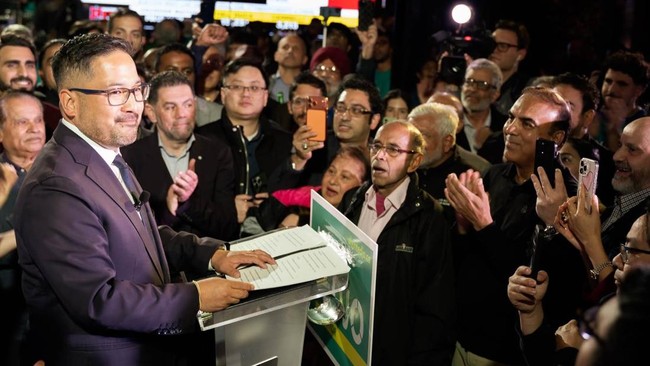
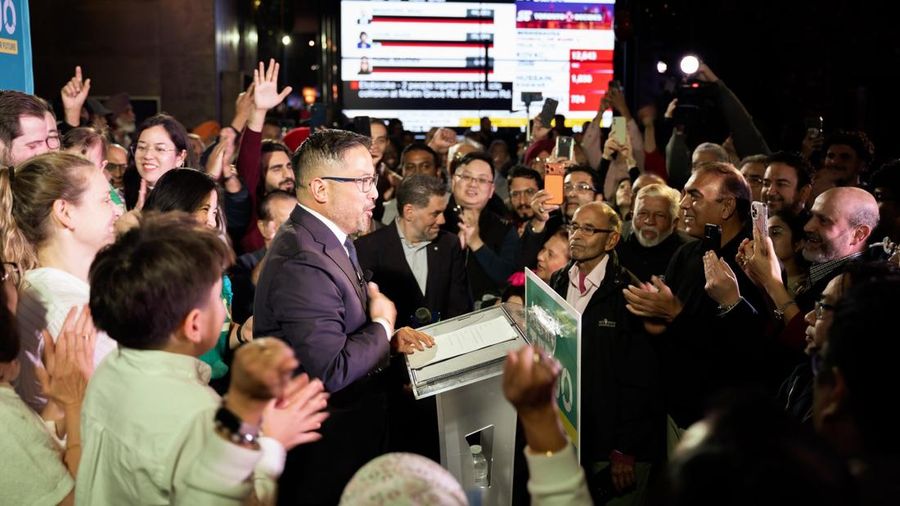
In a landmark political development for the Indonesian diaspora, Alvin Tedjo has been elected as the Mayor of Mississauga, Ontario, Canada, following a hard-fought electoral contest concluded this Monday. The victory marks a significant milestone, as Tedjo, who possesses deep roots in the Minangkabau region of West Sumatra, Indonesia, successfully surpassed veteran political figures to secure the city’s top executive office. His election not only signals a shifting demographic landscape in Canadian local governance but also highlights the increasing influence of second-generation immigrant communities in the nation’s political theater.
A Historic Electoral Victory
The mayoral race in Mississauga was characterized by high stakes and a crowded field of experienced contenders. Tedjo’s path to victory was far from straightforward, as he faced off against established political heavyweights, including the former mayor and long-time political fixture Bonnie Crombie, as well as the incumbent mayor, Carolyn Parrish. Despite the formidable political machinery supporting his opponents, Tedjo managed to consolidate support across a diverse electorate, leveraging his local roots and a platform centered on pragmatic governance and community-based solutions.
According to reports from the Toronto Times on Wednesday, October 28, 2026, the victory represents a culmination of years of grassroots organizing. For many residents of Mississauga—a city known for its cultural diversity—Tedjo’s triumph is seen as a validation of the city’s multicultural fabric. His victory margin, while narrow, underscored a clear mandate for change, reflecting the voters’ desire for a fresh approach to the city’s persistent challenges in urban planning, housing affordability, and infrastructure development.
The Minangkabau Connection and Early Life
Alvin Tedjo’s personal narrative is deeply intertwined with the immigrant experience. Born to parents who emigrated from Padang, West Sumatra, Tedjo moved to Mississauga at the tender age of four. Growing up in the heart of the city, his formative years were spent in a residence that overlooked the Mississauga City Hall, a symbolic proximity that would later define his professional trajectory.
The influence of his Minangkabau heritage, combined with the struggles often faced by immigrant families in a new country, instilled in him a unique perspective on public service. In a 2025 podcast interview, Tedjo reflected on his upbringing, stating, "I have witnessed the systemic challenges and the socioeconomic hurdles that stem from the immigrant experience. It is not just about observing these issues; it is about taking direct action when you see something that needs to be addressed." This philosophy of proactive engagement became the cornerstone of his political identity.
Chronology of a Political Journey
Tedjo’s ascent to the mayoralty was not a sudden emergence but the result of a long, deliberate climb through the ranks of the Canadian political system. His interest in civic affairs was evident as early as his high school years, during which he served as the president of the student council and became an active member of the youth advisory committee to the mayor.
His early promise was recognized in the mid-1990s when he received the "Young Citizen of the Year" award. During the ceremony, he crossed paths with the legendary former Mayor of Mississauga, Hazel McCallion. McCallion, a towering figure in Canadian municipal politics, famously encouraged the young, driven teenager to pursue a career in public service.

Following his education, Tedjo’s professional path included:
- Early 2000s–2010s: Serving as a political staffer and advisor at the Ontario Ministry of Colleges and Universities, gaining vital experience in provincial-level policy and governance.
- Government Relations: Spending four years at Sheridan College, where he refined his skills in stakeholder management and public advocacy.
- Academic Leadership: Managing high-level strategy and communications for the Toronto Metropolitan University, which broadened his expertise in institutional management.
- 2018: An unsuccessful bid for a seat as a provincial legislator in Oakville North, Burlington, where he finished in third place.
- 2019: A campaign for the leadership of the Ontario Liberal Party, where he secured 2.7% of the vote, serving as a platform to articulate his views on climate change and education.
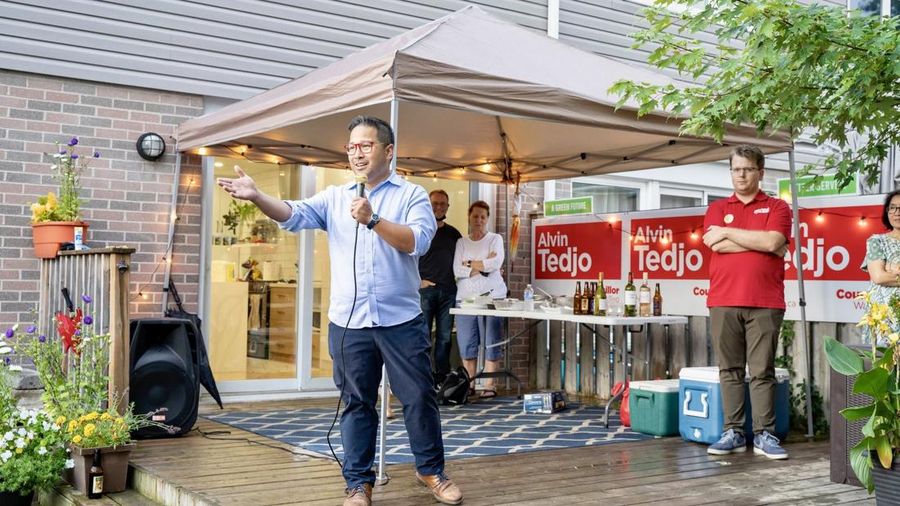
- 2022: A successful election as a member of the Mississauga City Council, providing him with the legislative experience required to understand the city’s complex budget and regulatory frameworks.
- 2024: A previous mayoral run against Carolyn Parrish, where he finished as the runner-up, an experience that proved crucial in refining his strategy for the 2026 campaign.
Policy Platform and Political Analysis
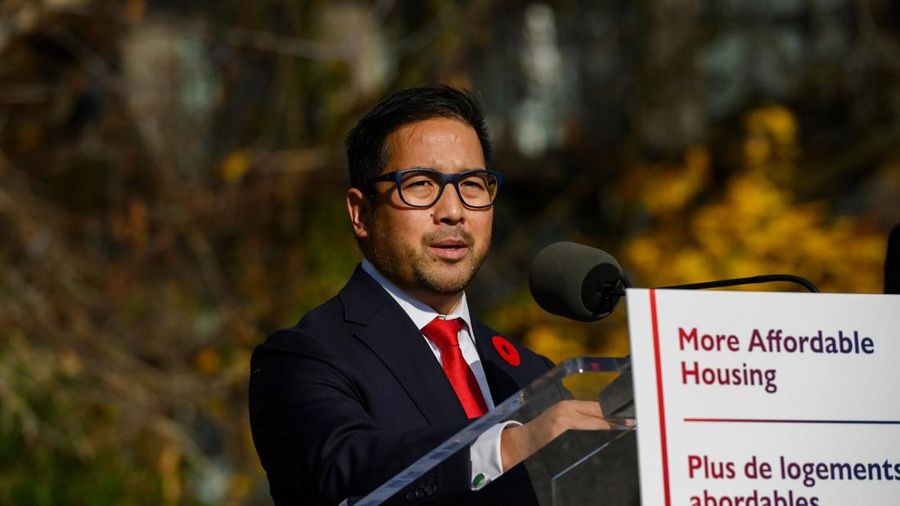
During his 2019 leadership bid for the Ontario Liberal Party, Tedjo distinguished himself as a forward-thinking candidate, particularly regarding climate policy and economic reform. He frequently criticized the then-incumbent government for its lack of preparedness in handling rapid urban growth and the rising cost of living—a theme that remained central to his 2026 mayoral platform.

Analysts note that Tedjo’s success in 2026 can be attributed to his pivot from a purely ideological candidate to a pragmatic municipal leader. While his opponents, particularly Crombie and Parrish, had previously questioned his depth of experience, Tedjo’s tenure on the City Council allowed him to demonstrate that he was not merely an idealist, but a capable administrator who understood the technicalities of municipal infrastructure and budget allocation.
The Implications for Mississauga
The election of Alvin Tedjo marks a transition for Mississauga, a city that has long been governed by long-standing political dynasties. The shift suggests that the electorate is increasingly prioritizing candidates who offer a balance of community engagement and technical policy competence.

For the Indonesian diaspora, Tedjo’s win is a point of immense pride. It serves as a testament to the success of Indonesian immigrants who have integrated into the Canadian mainstream while maintaining their cultural identity. His leadership will now be scrutinized for his ability to manage the city’s significant transit projects, the ongoing housing crisis in the Greater Toronto Area, and the need for sustainable environmental policies.
As Mayor-elect, Tedjo faces the immediate challenge of reconciling the differing visions of his political rivals. His ability to build consensus within the City Council will be the first true test of his leadership. If his past performance is any indicator, he is likely to adopt a collaborative approach, emphasizing transparency and long-term planning over short-term political gains.
Conclusion: A New Era
The rise of Alvin Tedjo is a narrative of resilience. From the son of Minangkabau immigrants to the chief executive of one of Canada’s largest cities, his story is one of persistence against the backdrop of an evolving political landscape. As he prepares to take office, the eyes of the public will be on him, not only because of his heritage but because of the high expectations placed upon him to lead Mississauga into a new era of growth and inclusivity.
The 2026 election will likely be studied by political scientists for years to come, as it exemplifies how persistent grassroots campaigning, combined with a clear vision for urban governance, can overcome the barriers of traditional political establishments. For the residents of Mississauga, the era of Mayor Tedjo is set to begin, promising a tenure defined by the same principles of action and advocacy that first led him to the steps of the city hall as a young student.

