
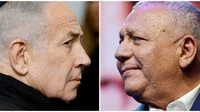
The latest electoral cycle in Israel has concluded with a decisive lack of clarity, as the preliminary count of ballots from the Tuesday, October 27, general election indicates that no single political bloc has achieved the 61-seat threshold required to command a majority in the Knesset. With over 99 percent of the votes processed as of Thursday, October 29, the legislative gridlock has plunged the nation into a period of intense uncertainty. This electoral impasse follows a period of unprecedented national trauma, marking the first time the Israeli public has gone to the polls since the devastating October 7, 2023, attacks by Hamas and the subsequent launch of large-scale military operations in the Gaza Strip.
Electoral Breakdown and Parliamentary Math
The current distribution of seats highlights a deeply fragmented political landscape. Prime Minister Benjamin Netanyahu’s right-wing bloc has secured 53 seats, falling significantly short of the majority needed to maintain his hold on power without external support. Conversely, the opposition bloc, spearheaded by former military chief Gadi Eisenkot, has captured 48 seats. The most significant anomaly in this election cycle is the performance of Arab-majority parties, which have collectively secured 19 seats—an unprecedented historical high that effectively makes them the kingmakers in any potential governing coalition.
The path to forming a stable government remains narrow and fraught with ideological obstacles. For Netanyahu, the shortfall necessitates a difficult negotiation process to bring smaller, potentially radicalized, or ideologically divergent factions into his fold. For the opposition, the hurdle is even more complex. Despite their stated campaign platforms, the opposition faces the mathematical reality that without the cooperation of Arab factions, the possibility of unseating the current administration is virtually non-existent.
Chronology of a Nation in Crisis
The backdrop of this election is inextricably linked to the events of the past year. The following timeline outlines the key developments leading to this political stalemate:
- October 7, 2023: Hamas militants carry out a massive, multi-pronged attack on Israeli border communities, resulting in the highest single-day loss of life in Israel’s history and the abduction of numerous hostages.
- October 8, 2023 – Ongoing: The Israeli government declares a state of war, launching a comprehensive military campaign in the Gaza Strip aimed at dismantling Hamas’s infrastructure.
- August 2024: Amidst growing civil unrest and criticism regarding the government’s handling of the war, the Knesset moves toward an early election, reflecting public fatigue and intense pressure from both domestic and international quarters.
- October 27, 2024: Israel holds a general election under high-security protocols, with voters grappling with the dual pressures of national security and economic stability.
- October 29, 2024: Vote counting nears completion, revealing the current parliamentary deadlock.
- November 4, 2024: The statutory deadline for the Central Elections Committee to certify and announce the final, official results.
High-Stakes Negotiations and Political Maneuvering
In the immediate wake of the preliminary results, the political machinery in Jerusalem has shifted into high gear. Reports from Ynet News indicate that Gadi Eisenkot has initiated high-level consultations, including a meeting with Benjamin Netanyahu. The purpose of these discussions, according to sources close to the matter, is to explore the feasibility of forming a government "as quickly as possible" to prevent a prolonged period of governance vacuum during an active conflict.
Simultaneously, Eisenkot has engaged in talks with Yair Golan, the leader of the Democratic Party and a pivotal figure within the opposition. Golan represents a faction that has signaled a willingness to engage with Arab parties, a move that is historically controversial within mainstream Israeli politics. Golan’s meeting with Mansour Abbas, leader of the Ra’am (United Arab) party, marks a significant departure from traditional political norms.
"This is a moment for action," Golan remarked in an interview with Al Jazeera. "Our responsibility is to not miss the opportunity for change and to save Israel from the current trajectory." However, analysts remain skeptical. Nour Odeh, a correspondent for Al Jazeera, noted that Eisenkot faces an uphill battle. As a former military commander, his public commitments against forming formal partnerships with Arab-Israeli parties present a significant ideological barrier. If he is to succeed in unseating Netanyahu, he must either abandon these campaign promises or convince the Israeli public that an emergency coalition is necessary for national survival.
Implications of the Arab Bloc’s Surge
The success of the Arab parties, which secured 19 seats, reflects a shifting demographic and political consciousness within Israel’s Arab minority. Mansour Abbas, who has successfully navigated the complexities of Israeli coalition politics in previous years, finds himself in a position of significant leverage. His party’s ability to mobilize voters during a time of extreme regional tension has surprised many pollsters.
This surge poses a fundamental question for the future of the Israeli state: Can the political system integrate these parties into a governing framework without triggering a collapse of the right-wing base? For the opposition, the inclusion of Arab parties is a strategic necessity. For the right-wing, it is an existential threat to their vision of the state.
Strategic and Economic Impacts
The economic implications of this stalemate are profound. Israel is currently grappling with the fiscal strain of an extended military conflict, rising inflation, and a disrupted labor market. Investors and international partners are watching the political process closely, as the lack of a stable government could hinder the passage of a national budget and the implementation of long-term economic recovery strategies.
Furthermore, the international community, particularly the United States and European allies, is monitoring the situation with concern. A weak or minority government, or conversely, a coalition comprised of ideologically extreme elements, could complicate ongoing diplomatic efforts regarding the status of Gaza and the broader regional security architecture.
Expert Analysis and Future Outlook
Political analysts suggest that the coming week will be characterized by "coalition arithmetic." The primary question is whether Netanyahu can offer enough concessions to lure smaller factions to reach 61, or whether the opposition can bridge its internal divisions.
"The fundamental issue is that the Israeli electorate is deeply divided, and the war has only served to exacerbate these fissures," said a senior policy analyst at a regional think tank. "The military necessity of a functioning cabinet is in direct conflict with the political reality of a fractured parliament. We are looking at a scenario where the next government, if formed, will be inherently unstable."
As the country awaits the final certification of the results on November 4, the pressure on party leaders to set aside partisan interests for the sake of national stability will intensify. The meetings occurring in Jerusalem this week are not merely tactical; they are foundational to the next chapter of Israeli governance. Whether the result is a grand coalition, a narrow right-wing government, or the possibility of yet another election, the path forward remains obscured by the very complexities that brought the country to this impasse.
For now, the citizens of Israel remain in a state of suspended animation, awaiting a resolution that reflects both the democratic will of the people and the pragmatic requirements of a nation at war. The final days of the counting process will be marked by intense scrutiny, as every individual ballot could potentially shift the balance of power, determining not just the next Prime Minister, but the direction of Israeli policy for the foreseeable future.

