
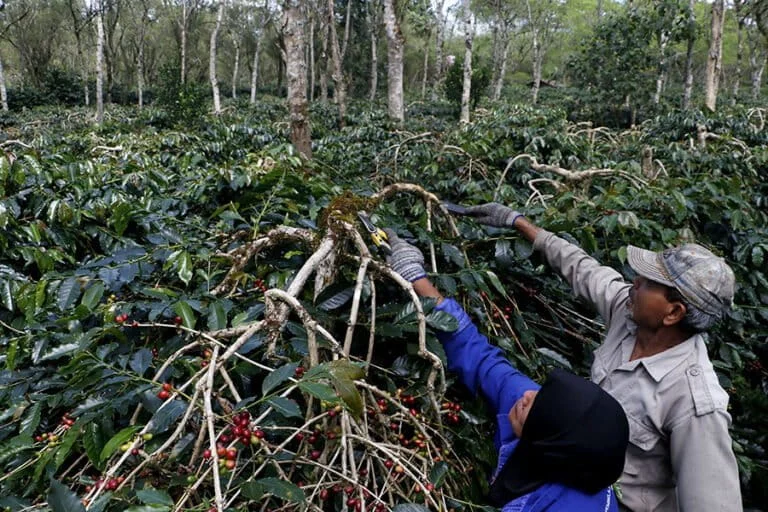
For billions of people across the globe, the day does not truly begin until the first sip of coffee. This daily ritual, characterized by the comforting aroma of roasted beans, is the final stage of a complex and fragile agricultural journey. Behind every cup lies the labor of millions of smallholder farmers who work from dawn, meticulously tending to a crop that demands a precise atmospheric equilibrium of temperature, rainfall, and humidity. However, this delicate balance is being systematically dismantled. The escalating climate crisis is no longer a distant theoretical threat; it is actively reshaping the geography of coffee production, threatening the stability of the industry in Indonesia and across the global "Coffee Belt."
Recent scientific projections paint a grim picture for the next quarter-century. Research suggests that within the next 25 years, approximately 80% of the world’s Arabica coffee production will be severely impacted by shifting weather patterns. The broader outlook is equally concerning, with the total productivity of both Arabica and Robusta varieties projected to decline by as much as 50% due to the diminishing availability of suitable land. As temperatures rise and weather patterns become increasingly erratic, certain wild coffee species—essential for genetic diversity and future breeding—face the risk of extinction, unable to adapt to environmental changes occurring at an unprecedented pace.
The Indonesian Crisis: A Paradox of Expansion and Decline
Indonesia, the world’s fourth-largest coffee producer, is currently on the front lines of this environmental upheaval. The impact is particularly visible in the highlands of Enrekang, South Sulawesi, a region famed for its high-quality beans. Data collected between 2021 and 2023 reveals a troubling trend: while the total area of coffee plantations in Enrekang increased by approximately 6.7%, the actual production yield plummeted by 8.8% during the same period.
This statistical anomaly highlights a "paradox of expansion." In an attempt to compensate for falling yields, farmers are clearing more land for cultivation. However, because the underlying climatic conditions—specifically a drastic reduction in annual rainfall and rising mean temperatures—are no longer favorable, the additional acreage fails to translate into higher harvests. The experience of local farmers like Agus, an Arabica grower in Enrekang, serves as a testament to this reality. Agus reports that his recent harvests have dropped by half, a devastating blow to his family’s financial security. Similarly, Nursam Arifuddin, a Robusta farmer, notes that the unpredictability of the seasons has made traditional farming calendars obsolete. When the rains fail to arrive during the critical flowering stage, the trees produce fewer "cherries," and those that do grow are often stunted or of inferior quality.
The Biological Vulnerability of the Coffee Plant
To understand why coffee is so susceptible to climate change, one must look at the biology of the plant itself. Coffee is a "Goldilocks" crop; it requires conditions that are "just right." Arabica, the more expensive and flavor-complex variety, thrives in cooler highland temperatures (18–21°C). Even a minor increase in average temperature can accelerate the ripening of the coffee cherry, leading to a loss of flavor complexity and acidity. Furthermore, excessive heat can cause "floral abortion," where the plant drops its flowers before they can be pollinated.
Beyond direct physiological stress, the warming climate has emboldened biological threats. Higher temperatures and altered humidity levels have facilitated the spread of the Coffee Berry Borer (CBB) and Coffee Leaf Rust (Hemileia vastatrix). Historically, these pests and diseases were confined to lower, warmer altitudes. However, as the highlands warm, these threats are migrating upward, invading previously "safe" Arabica territories. This forced migration of pests means that farmers must either invest in expensive and often environmentally harmful pesticides or watch their yields vanish.
Coastal Challenges: Saltwater Intrusion in Jambi
While highland farmers battle heat and drought, those in the lowlands face a different manifestation of the climate crisis. In the province of Jambi, Sumatra, growers of Liberika coffee—a hardy variety that thrives in peatlands—are facing the encroaching sea. Rising sea levels have led to increased saltwater intrusion into coastal freshwater systems.
For the coffee trees, this is a slow death sentence. As the salinity of the soil and groundwater rises, the plants undergo osmotic stress, losing the ability to absorb nutrients. Leaves turn yellow, growth is stunted, and eventually, the trees wither away. The situation in Jambi underscores that the climate crisis is multifaceted; it is not merely about "global warming" but about a fundamental disruption of the hydrological and geological systems that support agriculture.
The Socio-Economic Ripple Effect
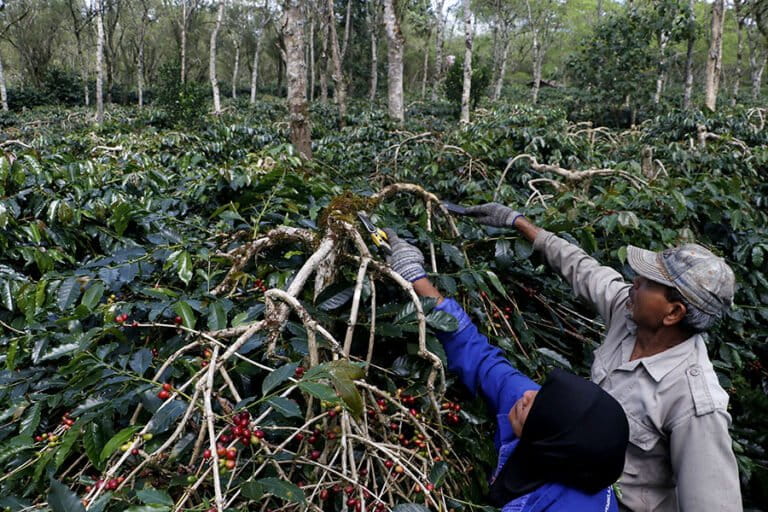
The threat to coffee is not merely an environmental or culinary concern; it is a profound humanitarian issue. Globally, an estimated 125 million people depend on the coffee value chain for their livelihoods. This includes approximately 25 million smallholder farmers who are responsible for 80% of the world’s coffee production.
The social dimensions of this crisis are deeply gendered. Approximately 70% of the global coffee labor force is comprised of women, who handle everything from planting and weeding to harvesting and sorting. Despite their central role, women hold only 20% to 30% of leadership or ownership positions within the industry. When yields fail due to climate change, these women are often the first to suffer from reduced wages and increased food insecurity. The lack of land ownership rights further complicates their ability to access credit or government aid intended for climate adaptation, creating a cycle of vulnerability.
The Market Paradox: High Demand, Low Returns
The global coffee market is currently characterized by a staggering disconnect between consumption and production. According to the International Coffee Organization (ICO), global coffee consumption continues to grow at a rate of 2% to 2.5% annually, driven by emerging markets and the "Third Wave" coffee culture in urban centers. Conversely, global production has seen a decline of roughly 1.7% since 2020.
Despite the high demand and the rising prices of premium lattes in New York, London, or Jakarta, the farmers at the origin of the chain remain impoverished. On average, a smallholder farmer receives less than one US dollar for every half-kilogram of coffee sold. This meager return leaves them with no financial cushion to invest in climate-resilient infrastructure, such as irrigation systems, shade trees, or drought-resistant cultivars. This economic fragility makes the industry highly susceptible to collapse; if the younger generation of farmers sees no future in coffee due to the dual pressures of climate change and poverty, they will migrate to cities, leading to a permanent loss of agricultural expertise.
Downstream Consequences: From Farm to Cafe
The impact of the production crisis is already being felt in the retail sector. Agil Valentino, a coffee shop owner in Makassar, South Sulawesi, has observed a tightening supply of Enrekang beans. Even though consumer demand for these specific local beans remains high, the inconsistency in supply and the rising costs of sourcing quality parchment are putting pressure on small businesses.
"When productivity at the farm level drops, the quality often becomes inconsistent," Agil explains. "As a business owner, I have to choose between raising prices for my customers or absorbing the cost and risking the sustainability of my shop. It’s a chain reaction that starts with a dry spell in the mountains and ends with an empty shelf in the city."
The Path Forward: Adaptation and Mitigation
The survival of the coffee industry depends on a rapid shift toward "Climate-Smart Agriculture" (CSA). This includes several key strategies:
- Agroforestry: Planting shade trees among coffee plants to regulate temperature, retain soil moisture, and provide a secondary source of income for farmers.
- Genetic Research: Developing and distributing hybrid varieties that are more resistant to heat, drought, and pests while maintaining the flavor profiles demanded by the market.
- Soil Management: Implementing regenerative farming techniques to improve soil health and carbon sequestration, which can help mitigate the broader effects of climate change.
- Economic Reform: Establishing fairer pricing models and "climate premiums" that ensure farmers have the capital necessary to adapt their farms.
The chronology of the last decade suggests that the window for intervention is closing. What was once a seasonal fluctuation has become a systemic decline. The data from Enrekang and Jambi serves as a localized warning of a global phenomenon. Without a concerted effort from governments, international organizations, and the private sector to support smallholder farmers, the world’s favorite morning beverage may soon become a luxury of the past, leaving behind a trail of economic devastation for the millions who call the coffee forests their home. The future of coffee is no longer just about the perfect roast; it is about the survival of an ecosystem and the dignity of the people who tend it.

