
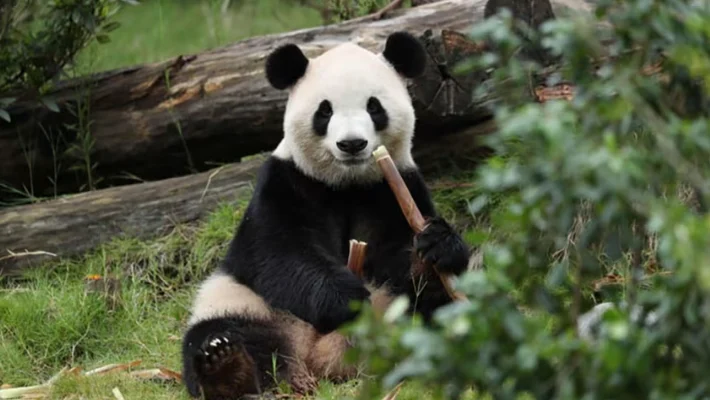
The skies above Sichuan, China, bore witness to a historic departure this weekend as two beloved giant pandas, Ping Ping and Fu Shuang, embarked on a critical trans-Pacific journey to their new home at Zoo Atlanta. Departing in the early hours of Saturday, September 27, 2026, the six-year-old duo represents far more than a simple wildlife transfer; they serve as living emissaries of a reinvigorated bilateral relationship between Beijing and Washington, signaling a deliberate thaw in what political analysts have dubbed "panda diplomacy."
The relocation of Ping Ping and Fu Shuang follows closely on the heels of a high-profile state visit to Washington by Chinese President Xi Jinping. The timing underscores the strategic importance both nations place on cultural and ecological exchanges, utilizing these charismatic ambassadors to mend diplomatic frictions that have characterized U.S.-China relations in recent years. As the heavy cargo aircraft carrying the pandas took off for the estimated 15-hour flight, government officials, conservationists, and wildlife enthusiasts alike watched closely, recognizing the profound symbolism embedded within the cargo hold.
Chronology of the Transfer: From Sichuan to Georgia
The intricate choreography of the pandas’ departure was months in the making, requiring meticulous coordination between the China Conservation and Research Center for the Giant Panda and Zoo Atlanta leadership.
Weeks prior to their flight, Ping Ping and Fu Shuang underwent a rigorous one-month quarantine protocol. During this period, dedicated handlers lived alongside the animals to monitor their health, while specialized training regimens accustomed the pandas to the confined spaces of their travel crates and the ambient noise levels of long-haul aviation.
On Saturday, September 27, at approximately 02:55 local time, footage broadcast by state media agency Xinhua captured the quiet departure from the research base in Sichuan. Enclosed in secure, customized transport boxes, the pandas were loaded onto transport vehicles amid an emotional gathering of fans, who waved farewell and displayed commemorative banners. The convoy then proceeded to the airport, where the crates were hoisted into the belly of the aircraft.
According to flight plans and logistical schedules coordinated by both institutions, the pandas are scheduled to land in Atlanta on Sunday morning local time. To ensure a seamless transition, the Chinese delegation arranged for experienced veterinarians and zookeepers to accompany the animals and remain on-site in Atlanta throughout their mandatory post-arrival quarantine period.
Meet the Pandas: Personalities and Backgrounds
The selection of Ping Ping and Fu Shuang was not arbitrary. The Chengdu Research Base of Giant Panda Breeding utilized a comprehensive evaluation framework, weighing age, genetic diversity, health status, and behavioral compatibility to choose the ideal pair.
Ping Ping, a male whose name translates to "peace," was born on March 17, 2020. Recognized by distinctive, large black patches surrounding his eyes and an exceptional penchant for climbing trees, Ping Ping has earned a reputation among his handlers for his gentle demeanor and strong responsiveness to training. According to animal care staff, Ping Ping is known to emit a soft whimpering vocalization when anticipating favored treats, such as fresh apples.
Fu Shuang, a female whose name signifies "double blessing," was born on October 18 of the same year, roughly eight months after Ping Ping. Characterized by a subtle tuft of fur atop her head, a slightly prominent forehead, and remarkable resourcefulness in foraging, Fu Shuang possesses a distinct personality and a noted preference for honey.
Li Mingxi, deputy director of the Chengdu research base, noted that the pairing was curated with a long-term conservation objective in mind. "They must be docile, compatible with one another, and ideally positioned to breed naturally in the future," Li explained during a statement to state television broadcaster CCTV.
Zoo Atlanta’s Comprehensive Preparations
For Zoo Atlanta, the arrival of Ping Ping and Fu Shuang represents a triumphant return to its rich history of giant panda stewardship. The facility is no stranger to hosting these rare ursids; between 2006 and 2016, the zoo successfully housed another renowned pair, Lun Lun and Yang Yang, who produced seven offspring during their tenure before eventually returning to Chengdu.
Recognizing the stringent standards required by Chinese wildlife authorities and modern zoological welfare guidelines, Zoo Atlanta initiated a comprehensive, year-long infrastructure overhaul. Sam Rivera, vice president of animal health at Zoo Atlanta, detailed the scope of the enhancements to Xinhua.
"What Zoo Atlanta has worked toward over the past year is upgrading our enclosures, making them significantly larger and better suited to the behavioral needs of giant pandas," Rivera stated.
In addition to expanding and modernizing the physical habitat, the zoo’s administration secured robust supply chains of fresh, high-grade bamboo to meet the substantial dietary demands of the animals. Furthermore, Zoo Atlanta assembled an elite team of experienced keepers specifically certified in giant panda husbandry, ensuring that the veterinary and daily operational standards meet international benchmarks.
Earlier this year, Zoo Atlanta leadership expressed profound enthusiasm for the prospect of hosting the pair, noting that the institution felt deeply honored to be chosen as a primary hub for contemporary panda diplomacy. By Saturday afternoon, the anticipation was visible on the zoo grounds, where staff unfurled a welcoming banner proudly declaring, "Future home of Ping Ping and Fu Shuang."
The Historical Evolution of Panda Diplomacy
The practice of gifting or loaning giant pandas to foreign nations dates back more than half a century. Originating as a formalized diplomatic tool under Chairman Mao Zedong in 1972, the initiative immediately followed historic geopolitical breakthroughs, including U.S. President Richard Nixon’s landmark visit to China after the Chinese Communist Party consolidated power in 1949.
Over the decades, Beijing transformed the giant panda from a regionally obscure species into a global conservation icon and a premier symbol of soft power. Governments worldwide have received these charismatic mammals as gestures of goodwill, designed to cement strategic alliances, thaw strained diplomatic ties, and open channels of communication with emerging international partners.
President Xi Jinping explicitly invoked this legacy during public remarks earlier in the week. "Giant pandas have become friendship messengers between China and the United States," Xi remarked, reflecting on the fifty-year precedent of panda loans to American zoological institutions.
Diplomatic channels reinforced this sentiment on Saturday evening. Xie Feng, China’s Ambassador to the United States, utilized social media platform X to share updates regarding the flight, building public excitement across North America. "Get ready to welcome our two furry stars!" Ambassador Xie wrote, accompanying the post with images of the pandas safely secured for transit.
Geopolitical Implications and Future Outlook
The transfer of Ping Ping and Fu Shuang occurs within a complex geopolitical framework. In recent years, discussions surrounding the lease renewals and returns of pandas stationed in various U.S. zoos—such as Washington D.C.’s National Garden—sparked widespread media commentary regarding the fluctuation of diplomatic relations between Washington and Beijing. When several pandas were returned to China as lease agreements expired, speculative reports frequently linked the movements directly to broader trade, technological, and geopolitical disputes.
Consequently, the arrival of Ping Ping and Fu Shuang at Zoo Atlanta is viewed by international relations experts as a calculated gesture of stabilization. By entrusting two prime breeding-age pandas to an American institution following high-level diplomatic engagements, Beijing signals a willingness to engage in constructive cultural and scientific cooperation, insulating ecological preservation efforts from broader political turbulence.
As the aircraft carrying Ping Ping and Fu Shuang traverses the globe toward Georgia, the focus shifts to their successful integration into Zoo Atlanta. Once the initial quarantine period concludes and the pandas are introduced to their newly renovated habitats, millions of visitors are expected to stream through the gates, eager to witness the living symbols of a renewed trans-Pacific partnership. Through meticulous veterinary care, state-of-the-art habitat management, and enduring institutional cooperation, the legacy of panda diplomacy enters its next chapter, bridging geographical divides one bamboo shoot at a time.

