
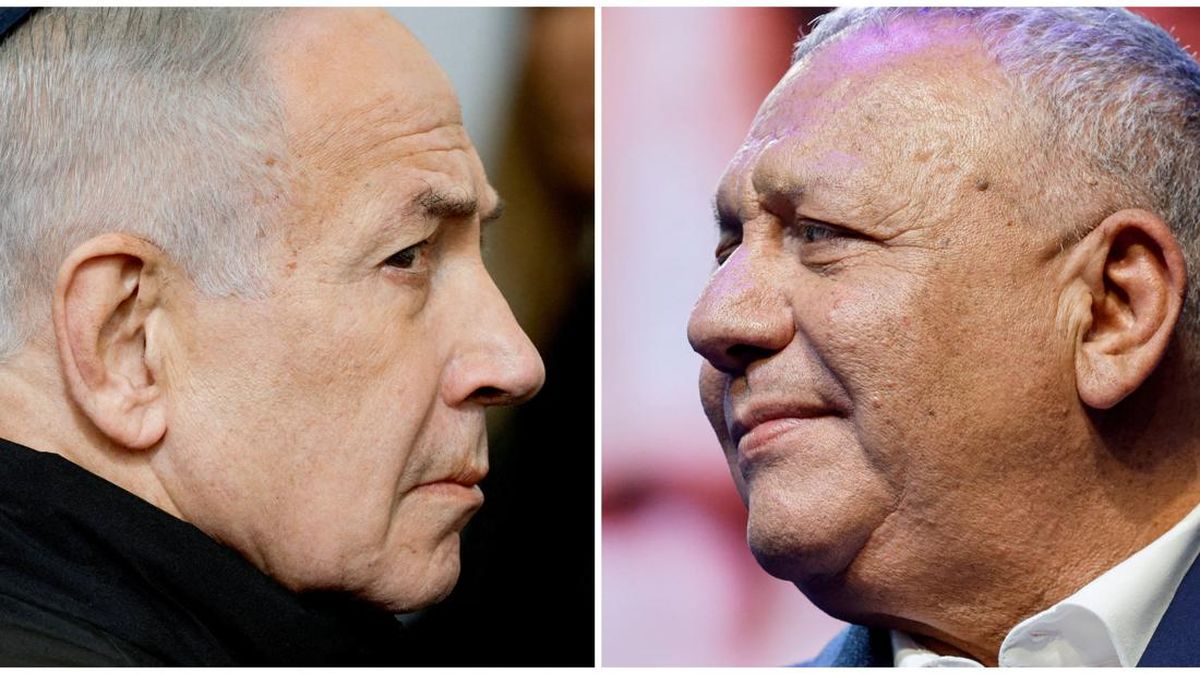
The political landscape of Israel remains in a state of flux following the latest parliamentary elections held on Tuesday, October 27. With over 99 percent of the votes counted as of Thursday, October 29, the results have confirmed a familiar narrative in Israeli politics: a profound fragmentation that leaves no single bloc with a clear path to a governing majority. Prime Minister Benjamin Netanyahu, despite emerging as the leader of the largest political force, has once again fallen short of the 61-seat threshold required to form a stable coalition in the Knesset.
The election results indicate that Netanyahu’s right-wing bloc secured 53 seats, while the opposition camp, spearheaded by former military chief Gadi Eisenkot and his Yashyar party, trailed with 48 seats. A significant development in this cycle is the record-breaking performance of Arab-aligned parties, which secured 19 seats. This outcome has effectively transformed these factions into the unlikely kingmakers of Israeli governance, creating a complex arithmetic that could either force a grand coalition or lead the country back to the ballot box for yet another round of snap elections.
Chronology of the Crisis: From October 7 to the Polls
This election cycle is uniquely defined by the shadow of the October 7, 2023, Hamas-led attacks and the subsequent, ongoing military campaign in the Gaza Strip. The trauma of that day, which resulted in the deaths of 1,200 Israelis and the abduction of hundreds more, served as the primary backdrop for the electorate.
For Netanyahu, the election was a survival test. Having served as Prime Minister for nearly two decades, his tenure has been marked by a series of electoral stalemates since 2019. The October 7 failure—often cited by critics as the greatest security collapse in Israel’s history—placed immense pressure on his administration. Despite this, Netanyahu’s ability to retain his base among Jewish voters suggests that his messaging on security and national resilience continues to resonate with a significant portion of the electorate, even as his approval ratings fluctuate due to the ongoing war and his personal legal entanglements.
The Mathematics of a Divided Knesset
The current distribution of power highlights the extreme volatility of the Israeli parliamentary system. To achieve a majority, a government requires 61 out of the 120 seats in the Knesset. With 53 seats, Netanyahu is far from this target. Conversely, the opposition’s 48 seats are insufficient to bypass the Netanyahu bloc without engaging in high-stakes negotiations with the Arab parties.
The rise of the Arab parties to 19 seats is a historic shift. Historically, these parties have been excluded from governing coalitions. However, their newfound strength makes them indispensable to any party seeking to form a majority, yet their participation in a coalition remains highly contentious. Right-wing figures like Naftali Bennett and Avigdor Lieberman have traditionally been unwilling to sit in a government that relies on the support of Arab factions, citing ideological differences regarding the nature of the Israeli state and the ongoing conflict with Palestinians.
Expert Analysis: Why Netanyahu Remains in the Game
Despite failing to secure a majority, political analysts suggest that Netanyahu is far from being politically sidelined. Aviv Bushinsky, a former advisor to the Prime Minister, argued that the results represent a "political resurrection" rather than a defeat. By consolidating the right-wing vote, Netanyahu has ensured that he remains the central figure in any potential government formation process.
Danny Citrinowicz, a former intelligence officer and current regional analyst, echoed this sentiment, suggesting that Netanyahu’s greatest achievement is his endurance. "He won because he did not lose," Citrinowicz remarked. In the eyes of many political observers, the inability of the opposition to form a coherent alternative—due to their own internal divisions—leaves the Prime Minister in a stronger position than his rivals.
The impasse creates two distinct paths: a national unity government or a move toward another election. The former is viewed by many as the most pragmatic, albeit difficult, solution. A unity government would likely require Netanyahu to sideline some of his more radical coalition partners, such as Itamar Ben-Gvir and Bezalel Smotrich, who have been central to his previous government’s hardline policies.
The Influence of External Actors: The Trump Factor
The role of the United States remains a critical, if indirect, factor in these negotiations. As Israel’s primary security and diplomatic partner, the U.S. wields considerable influence. Analysts like Dennis Ross, a veteran Middle East negotiator, have noted that the current political vacuum provides an opening for external pressure.
There is speculation that U.S. leadership, particularly under the influence of figures like Donald Trump, could pressure Netanyahu to broaden his coalition. By encouraging the inclusion of more moderate rivals, Washington could hope to stabilize the region and shift the focus away from the more extreme elements of the Israeli cabinet. However, relying on foreign intervention to solve domestic political gridlock is a strategy fraught with risk, as it can alienate the base that keeps Netanyahu in power.
Opposition Perspectives and Public Discontent
Gadi Eisenkot, the primary challenger, has framed the election as a referendum on Netanyahu’s fitness for office. Having suffered personal tragedy during the Gaza war, including the loss of his son and nephews, Eisenkot’s campaign was deeply rooted in the grief and anger of the Israeli public. He has actively called for a change in leadership, characterizing the current government as a "transitional" entity that has forfeited the public trust.
Beyond the ballot box, the government faces a myriad of domestic pressures. The trial of Netanyahu on corruption charges continues to loom over his political career. Furthermore, the rising tensions in the West Bank, characterized by increased settler violence, and the internal societal clash over the exemption of ultra-Orthodox Jews from mandatory military service, have created a fractured society. These issues will remain, regardless of which coalition—if any—eventually takes power.
Implications for the Future of Israeli Governance
The current deadlock is not merely a numbers game; it is a fundamental challenge to the stability of the Israeli political model. If a government cannot be formed, the prospect of a snap election becomes a looming reality. Yet, as analysts have pointed out, there is little appetite for another election among the public or the political class.
The most likely scenario involves a period of intense, backroom deal-making. Netanyahu will hold the advantage in these talks as the leader of the largest bloc. His ability to navigate the conflicting demands of his ideological partners and the necessities of a national unity government will determine whether he can extend his decades-long political career or if this term will mark his eventual exit from the stage.
As the dust settles, the fundamental question remains: can Israel produce a government that addresses the urgent security and social challenges created by the events of October 7, or is the country destined to remain trapped in a cycle of political paralysis? The answer lies in the hands of the Knesset members currently negotiating in Jerusalem, whose decisions over the coming weeks will shape the trajectory of the nation for years to come.
For now, the country remains in a state of watchful waiting. The record voter turnout, particularly among the Arab population, underscores a deeply engaged citizenry that is demanding clarity. Whether the political establishment can rise to meet that demand or continue to prioritize partisan survival will define the next chapter of Israel’s volatile democratic experiment.

