
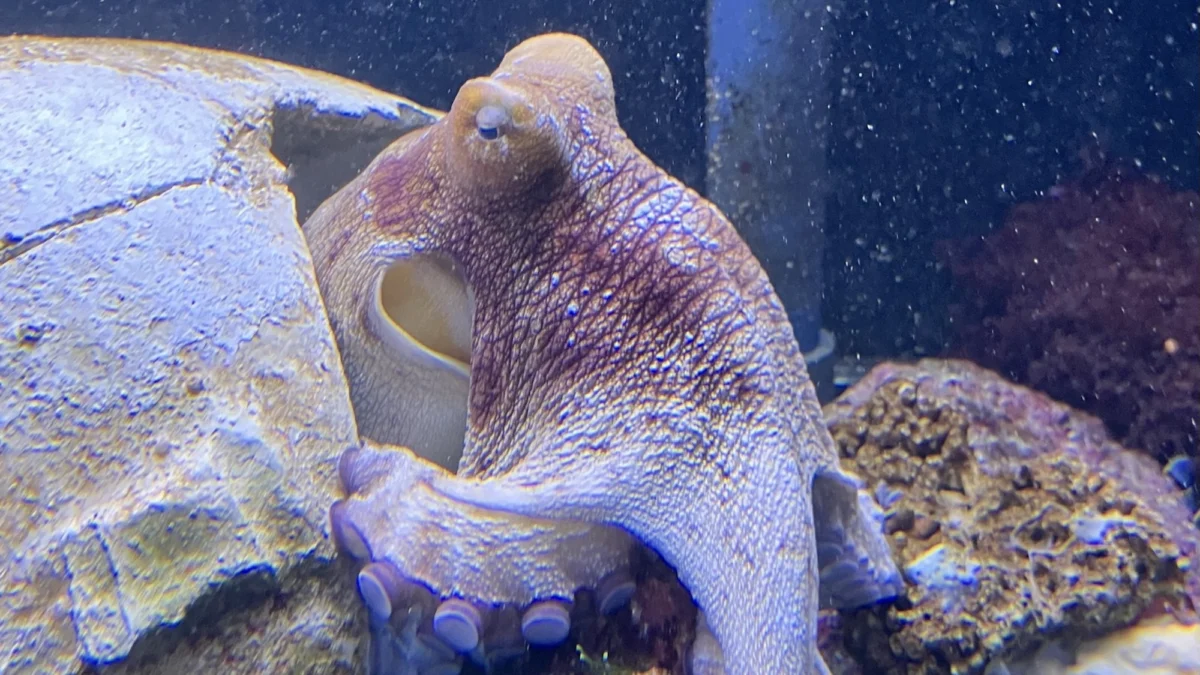
Octopuses have long captivated both marine biologists and the general public with their almost supernatural ability to slip through gaps that appear far too small for their bodies. While it is common knowledge that these intelligent cephalopods can compress their flexible forms to escape enclosures or navigate crevices in the wild, the specific biomechanical strategies they employ have remained largely unquantified until now. A new study published in the Journal of Experimental Biology has shed light on this phenomenon, revealing that the ability to navigate tight spaces is not merely a product of physical elasticity but a calculated, behaviorally complex process.
The Anatomical Challenge of the Cephalopod
The primary physical constraint for an octopus is its cranial cartilage—a relatively rigid, donut-shaped structure that protects the animal’s central nervous system and brain. Unlike the rest of their body, which is composed almost entirely of soft tissue, this cartilage provides a fixed point that cannot be compressed. Historically, researchers hypothesized that the width of this cranial case acted as the absolute limiting factor for an octopus’s ability to pass through a restricted opening.
To test this, Wenci Xin, a researcher at the National University of Singapore, led a team to measure the interocular distance—the space between the eyes—of their subjects. This measurement serves as a reliable proxy for the width of the cranial cartilage. The study utilized two distinct species: the Mayan octopus (Octopus maya) and the young common octopus (Octopus vulgaris). The interocular widths of the test subjects ranged between 0.6 and 1.3 inches. By establishing these baseline measurements, the team could precisely calibrate the apertures of experimental chambers to challenge the animals at their physical limits.
Experimental Methodology and Observation
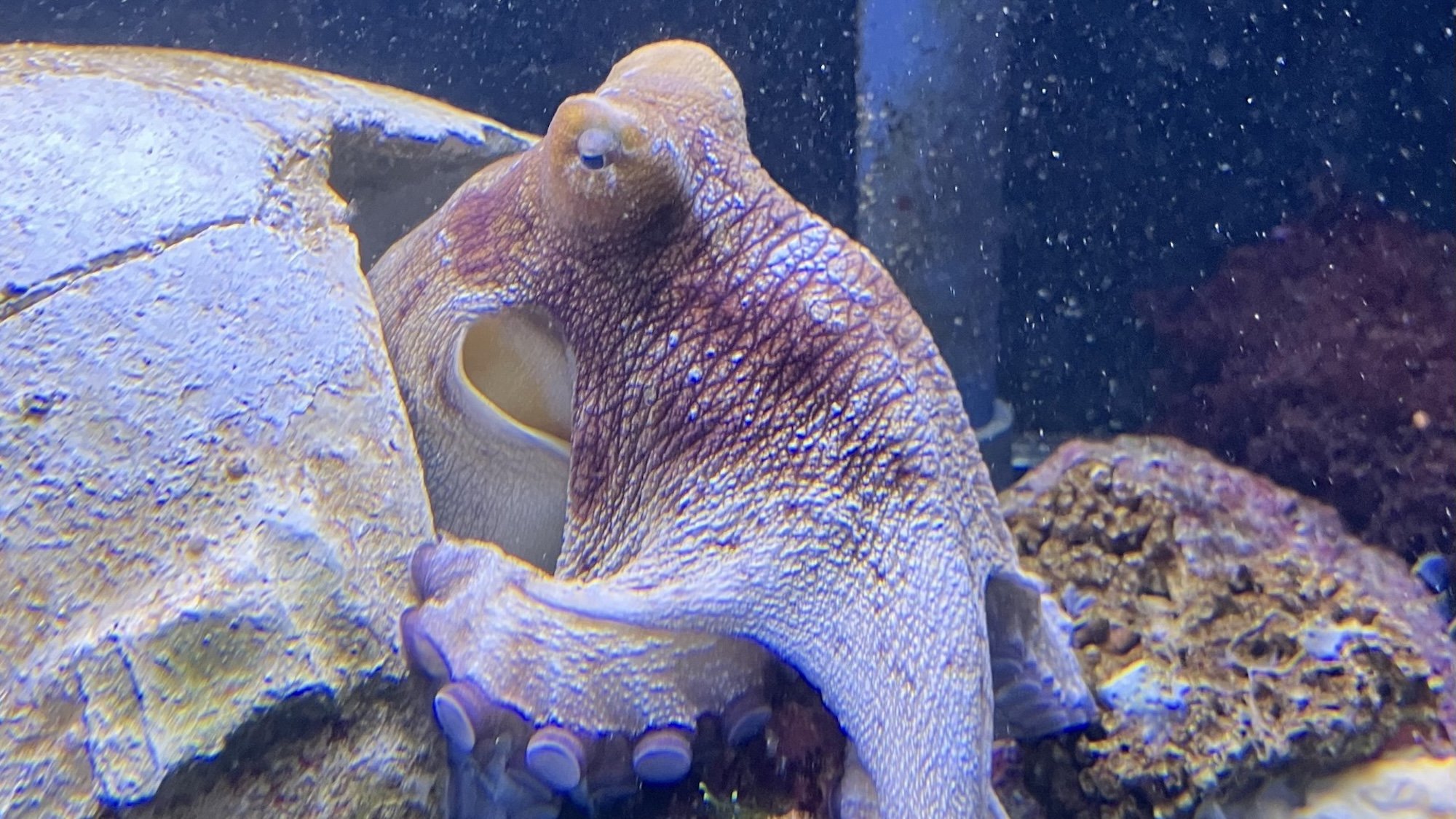
The experimental setup was designed to mimic the complex environments octopuses navigate in nature. The team constructed clear, modular plastic aquarium boxes, which were connected by circular portals. These portals were specifically engineered to be either slightly larger than or smaller than the interocular distance of each individual octopus. High-resolution cameras were positioned to capture every movement as the octopuses attempted to traverse the barriers.
The observations revealed a distinct, multi-stage strategy employed by the common octopus. When approaching a relatively wide hole, the animal would first perform a "testing phase." It would extend one or two arms—typically the front-left appendages—to probe the opening and verify the space. Once the path was deemed viable, the octopus would insert up to five arms through the aperture. To pull the rest of its body through, it would then use its suckers to anchor two of those arms to the wall of the initial chamber. By stiffening these anchored limbs, the octopus gained the leverage necessary to pull its mantle, head, and remaining limbs through the portal. This entire transition, from initial contact to full passage, was remarkably efficient, occurring on average within 20 seconds.
Divergent Behaviors: A Study in Species Strategy
A significant finding of the study was the difference in behavioral response between the two species when faced with extremely narrow apertures. When the researchers introduced "extreme" constraints, the common octopus (Octopus vulgaris) altered its strategy to compensate for the lack of space. Instead of attempting a single-motion pass, it divided the maneuver into two discrete phases: first, pulling all eight arms through the restricted gap, and second, compressing its mantle—the muscular sac housing its vital organs—to scoot the remainder of its body through the opening.
Conversely, the Mayan octopus (Octopus maya) exhibited a high degree of caution that bordered on refusal. When confronted with openings that were clearly too small to accommodate their cranial cartilage, these octopuses did not attempt to force their way through. Instead, they would retreat or simply remain in a corner of the box, showing no interest in the smaller portal. This suggests a sophisticated level of spatial awareness and risk assessment. The Mayan octopuses only initiated the "squeeze" maneuver when presented with a larger opening, demonstrating that they are capable of evaluating their physical dimensions against the size of the environment before committing to an action.

Broader Scientific Implications and Evolutionary Context
The implications of this research extend beyond the behavioral biology of cephalopods. By confirming that the cranial cartilage serves as the ultimate physical constraint, the study provides a clearer understanding of how octopuses interact with their habitat. This "cranial limit" dictates not only where an octopus can hide to avoid predators but also where it can search for prey.
Furthermore, this study challenges the assumption that there is a "one-size-fits-all" approach to navigation among invertebrates. The difference in risk-taking behavior between the Mayan and common octopuses indicates that personality, environmental pressures, or evolutionary history may play a significant role in how these animals solve spatial puzzles. For the common octopus, which is highly active and exploratory, the "squeeze" is a necessary skill for survival in complex reef environments. The more cautious approach of the Mayan octopus might be an adaptation to its specific ecological niche.
Analysis of Cephalopod Intelligence
The capacity for an octopus to recognize a gap, test it, and then adapt its physical approach based on the size of the opening provides further evidence of the advanced cognition found in coleoid cephalopods. This behavior requires a combination of proprioception—the ability to know where one’s body parts are in space—and executive function.
While researchers have long observed these animals solving puzzles, such as opening jars or navigating mazes, the ability to "size up" a physical barrier in real-time shows that the octopus is not merely relying on trial and error. It is processing sensory input and applying a logical, segmented solution to a physical problem. This level of plasticity in movement is a hallmark of an organism that has evolved to thrive in environments where rigid body plans would be a significant disadvantage.

Future Research Directions
The work of Xin and her colleagues provides a robust foundation for future studies in invertebrate biomechanics. Future research could investigate whether these strategies are learned or innate. Furthermore, scientists are interested in how environmental stressors, such as changes in water temperature or the presence of predators, might influence the threshold at which an octopus decides to attempt a "tight squeeze."
Additionally, the insights gained here have practical applications in the field of soft robotics. Engineers are currently developing "soft robots" inspired by the anatomy of octopuses, capable of navigating through rubble or confined pipes. Understanding the specific, sequential mechanics of how an octopus compresses its mantle and utilizes its arms as anchors can help researchers refine the control algorithms for these autonomous machines, making them more effective in search-and-rescue or industrial maintenance applications.
As we continue to observe these masters of escape, it becomes increasingly clear that the "squeeze" is not just a parlor trick of the aquarium world. It is a highly refined, evolutionarily advantageous behavior that underscores the adaptability and intelligence of one of the ocean’s most enigmatic creatures. The study serves as a reminder that even for creatures as flexible as the octopus, nature still imposes physical laws that must be navigated with precision, intelligence, and, above all, caution. By documenting these maneuvers, marine biologists are not only decoding the behavior of the octopus but are also gaining a deeper appreciation for the complex interactions between animal physiology and the physical environment.

