
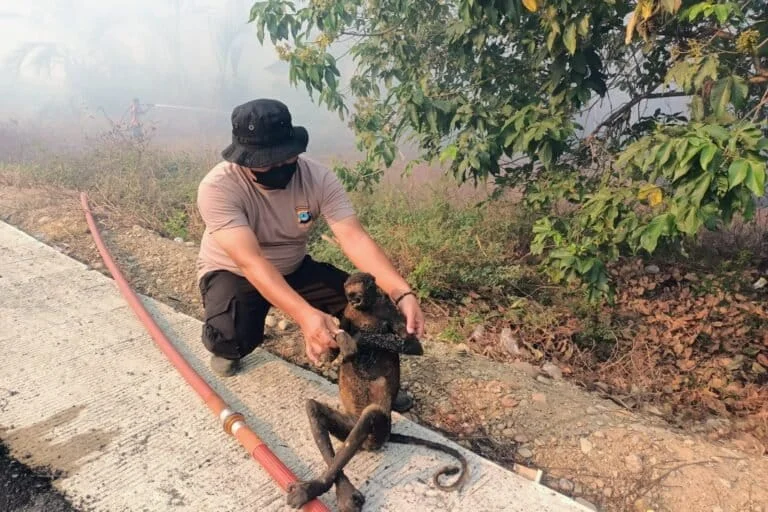
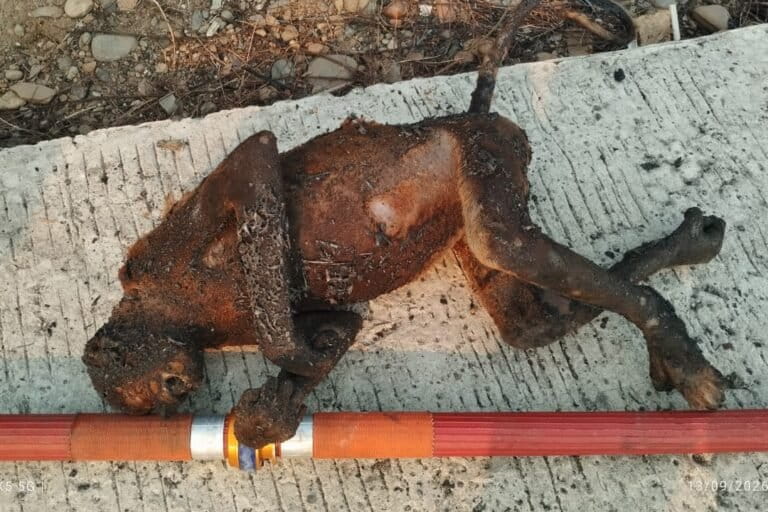
The escalating crisis of forest and land fires in South Kalimantan, Indonesia, has reached a harrowing threshold, claiming the lives of at least 11 endangered proboscis monkeys (Nasalis larvatus) in the village of Balimau, Hulu Sungai Selatan Regency. This catastrophic event, which unfolded on Sunday, September 13, 2026, serves as a grim indicator of the widening disconnect between rapid land-use changes and the survival of endemic wildlife. As the fire season intensifies, the intersection of uncontrolled blazes and the shrinking habitats of these iconic primates has created a dire situation for conservationists and local communities alike.
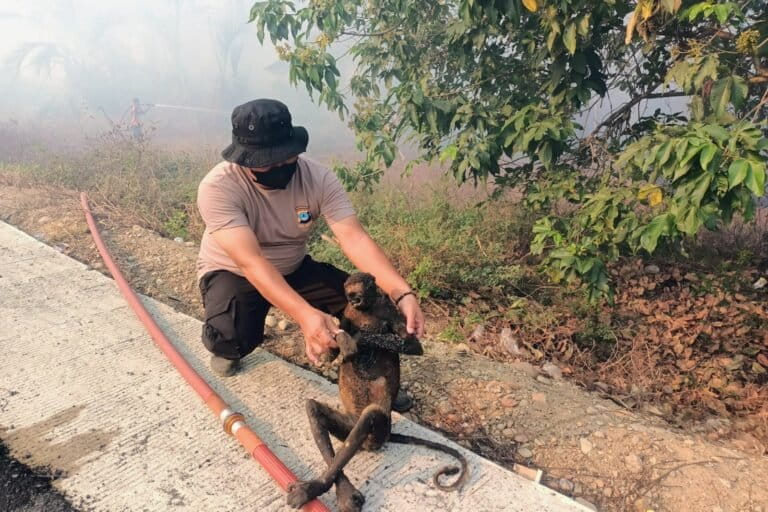
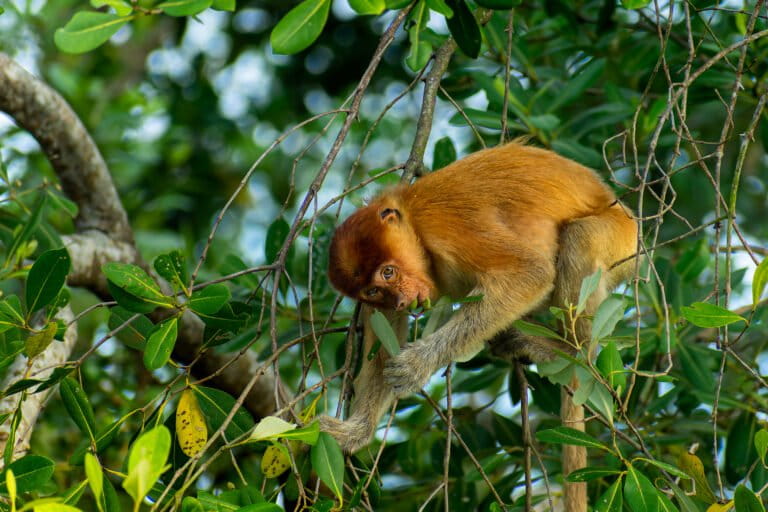
According to Alamsyah, the head of Balimau village, the discovery was made while local residents and emergency responders were desperately attempting to contain a fire that had breached the community’s borders. Among the 11 deceased individuals were ten adults and one infant. The discovery is particularly alarming given the species’ status on the International Union for Conservation of Nature (IUCN) Red List, where they are classified as endangered due to habitat fragmentation and environmental degradation.
Chronology of the Disaster
The fires in the region have been persistent throughout the dry season of 2026. Data from the Regional Disaster Management Agency (BPBD) of South Kalimantan indicates that between January and September 15, 2026, the province recorded 3,256 fire incidents, resulting in the destruction of approximately 21,696 hectares of land.
The incident in Balimau is believed to have originated from a neighboring area, the village of Karangpaci, separated by a river. Alamsyah noted that despite the natural firebreak provided by the water, the extreme dry conditions and powerful winds allowed "kelelatu"—burning embers or soot—to drift across the river. These embers ignited the dry vegetation on the Balimau side, specifically targeting the rumbia (sago palm) fields where the monkeys were sheltering.
The monkeys, known for their tendency to avoid human contact, found themselves trapped. As human responders approached from one side to extinguish the flames, the primates became disoriented, losing their escape routes and ultimately perishing in the encroaching inferno. The fires continued to spread, with at least six distinct ignition points reported as of September 15, exacerbated by a lack of water sources and reliance on basic, portable firefighting equipment.
Broader Ecological Impact and Wildlife Displacement
The tragedy in Balimau is not an isolated incident but part of a larger, systemic threat to biodiversity in the region. The provincial conservation agency, BKSDA, reported that the fire affected not only the proboscis monkeys but also other local fauna, including pythons and king cobras. The area serves as a vital corridor for other primates, such as the Bornean white-fronted langur and long-tailed macaques, whose survival now remains under close, albeit difficult, observation.
Similar scenes have played out in the villages of Sungai Rutas Hulu and Sungai Rutas, located in the Tapin Regency. In these areas, local residents have spent weeks battling fires that have consumed hectares of agricultural land and critical wildlife habitat. While no immediate fatalities among the primate populations were reported in these specific locations, the long-term impact on their food sources—such as the destruction of mangrove and rumbia shoots—poses a significant survival challenge for the coming months.
Conservation experts warn that the effects of these fires extend far beyond immediate physical death. The smoke haze generated by peatland fires contains high concentrations of fine particulate matter (PM2.5). Scientific research on other primates in Kalimantan, such as orangutans and owa-owa, has demonstrated that smoke exposure leads to reduced vocal activity, impaired respiratory health, and, in severe cases, reproductive failure and long-term physiological damage.

The Governance Gap in Conservation
A significant point of contention in the aftermath of the Balimau incident is the administrative divide regarding protected areas. Currently, the BKSDA manages conservation areas that house only a fraction of the total proboscis monkey population. According to 2025 census data, there are approximately 3,757 proboscis monkeys in South Kalimantan, yet only 1,281 reside within designated conservation zones. The remaining 2,476 individuals live in forest production areas, community lands, or zones designated for other uses (APL), where institutional oversight is fragmented.
Rudiono Herlambang, the Head of the Conservation and Natural Resources Protection Division at the South Kalimantan Forestry Office, stated that the agency’s primary approach is to provide "independent evacuation routes" for wildlife during fires. However, this relies on the assumption that wildlife can navigate away from fire lines in areas that are increasingly surrounded by industrial or agricultural developments.
Critics argue that this response is reactive rather than proactive. Professor Muhammad Arief Soendjoto, a leading conservationist at Lambung Mangkurat University, criticized the government’s tendency to prioritize fire suppression for the sake of human infrastructure while leaving wildlife to fend for themselves. "During these fires, the focus is exclusively on the flames. There is no tangible strategy for wildlife evacuation or mitigation," Soendjoto observed. He emphasized that the survival of these animals depends on changing the landscape of land management and engaging local influencers, such as religious leaders, to discourage the practice of land clearing via fire during the dry season.
Future Implications and Policy Recommendations
The death of the Balimau monkeys has reignited calls for a more robust conservation framework that moves beyond the boundaries of national parks. Environmental groups and local leaders are pushing for the implementation of "preservation areas" (areal preservasi) that recognize the movement patterns of wildlife regardless of land ownership status.
Furthermore, the socioeconomic factors driving these fires—including agricultural expansion and the proximity of industrial plantations—must be addressed through stricter law enforcement. The 2026 fire season has shown that when preventative measures fail, the environmental cost is borne by the most vulnerable, including the endemic species that define the ecological identity of Borneo.
As the smoke begins to clear in some parts of the province, the focus shifts to monitoring the remaining populations. In Balimau, the community continues to patrol the area, hoping to prevent further destruction. For the survivors of the Balimau fire, the loss of their habitat represents a permanent change in their environment. Without a paradigm shift that integrates wildlife protection into the core of disaster management policy, the recurring cycle of fire will continue to threaten the fragile existence of the proboscis monkey in the wild.

The tragedy serves as a final, urgent warning. If local governments, conservation agencies, and private landholders do not synchronize their efforts to protect these non-gazetted habitats, the risk of localized extinction for these populations remains alarmingly high. The death of these 11 monkeys is not just a statistical loss; it is a signal that the current environmental safeguards are insufficient against the increasing volatility of the climate and the encroachment of human activity into critical wildlife corridors. Moving forward, the integration of traditional knowledge, rigorous law enforcement, and a landscape-level approach to conservation will be essential to ensure that the iconic proboscis monkey remains a part of Kalimantan’s natural heritage.

