
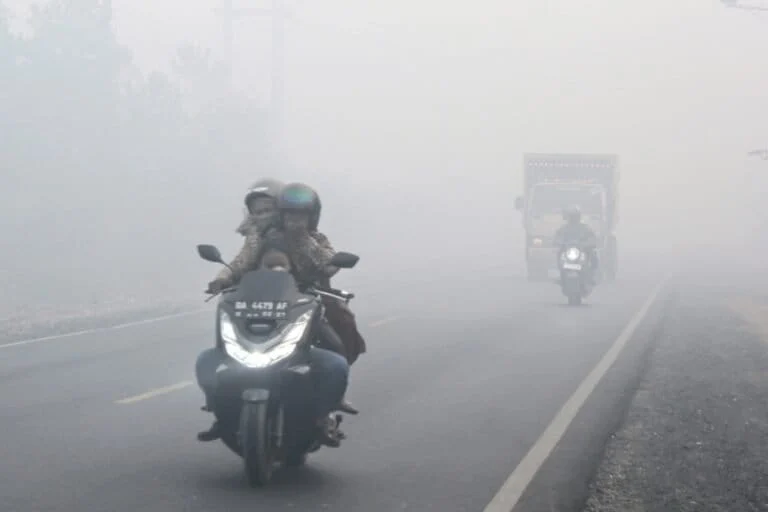
The ongoing forest and land fires in Kalimantan have transcended mere environmental destruction, evolving into a full-blown public health catastrophe that threatens the well-being of millions across Southeast Asia. As the smoke from vast peatland blazes blankets the region, health authorities are reporting a staggering surge in cases of Acute Respiratory Infection (ARI), known locally as ISPA. This crisis, which intensified following the official declaration of a state of emergency in Central Kalimantan on August 31, 2026, highlights the profound failure to manage ecological preservation, leading to a humanitarian situation that is increasingly difficult to contain.
The Epicenter of the Crisis: Central Kalimantan
Central Kalimantan has emerged as the most severely affected region. Data from the provincial health office confirms a total of 72,431 cases of ISPA, a direct consequence of the dense, toxic haze resulting from massive peat fires. Palangka Raya stands at the center of this medical emergency with 16,166 reported cases. The situation remains critical in other districts where extensive peatland conversion has left the landscape highly flammable; Kotawaringin Barat has reported 12,467 cases, followed by Kotawaringin Timur with 7,982, and Kapuas with 7,910.
Despite the deployment of emergency aid—including masks, portable oxygen supplies, and the establishment of "clean-air shelters"—local observers and health advocates note that the resources are vastly insufficient. The spike in illnesses, particularly after the late-August declaration of a state of emergency, suggests that existing mitigation strategies have failed to provide a safety buffer for the most vulnerable members of society.
The Invisible Killer: Particulate Matter Toxicity
The gravity of the health risk is rooted in the physical properties of the smoke produced by peat fires. Unlike standard wood smoke, peat fire emissions are rich in fine particulate matter (PM2.5). Fachrial Kautsar, a policy expert from the Center for Indonesia’s Strategic Development Initiative (CISDI), explains that these microscopic particles are particularly lethal. "The particulate matter generated by these fires is approximately ten times more damaging to the developing lungs of children compared to standard urban air pollution," Kautsar noted.
The health implications are severe and multifaceted. Infants, pregnant women, and the elderly represent the highest-risk demographic. Prolonged exposure to this haze has been linked to increased instances of asthma, chronic obstructive pulmonary disease (COPD), and, in cases of prenatal exposure, long-term developmental disorders. By the end of August 2026, the Ministry of Health reported over 50,891 cases of respiratory distress across seven provinces, underscoring the regional scale of the contamination.
A Landscape in Flames: The Scope of Destruction
The environmental footprint of the 2026 fire season is staggering. According to data provided by the Yayasan Auriga Nusantara, the total land area burned between January and June 2026 alone reached 190,546 hectares. To put this into perspective, the destruction covers a landmass roughly 2.6 times the size of Singapore.
The mechanism behind these fires is often anthropogenic. The draining of peatlands for agricultural expansion, coupled with the construction of roads that bisect sensitive ecosystems, has rendered the soil highly combustible. When these organic-rich peat soils dry out, they become susceptible to subterranean fires that are notoriously difficult to extinguish, often smoldering for months.
Transboundary Haze and Regional Tensions
The impact of the Indonesian fires is not contained within national borders. Satellite monitoring by Greenpeace from August 4 to September 6, 2026, confirms that the haze has drifted across the maritime border, affecting Malaysia, Singapore, Brunei Darussalam, and the Philippines.
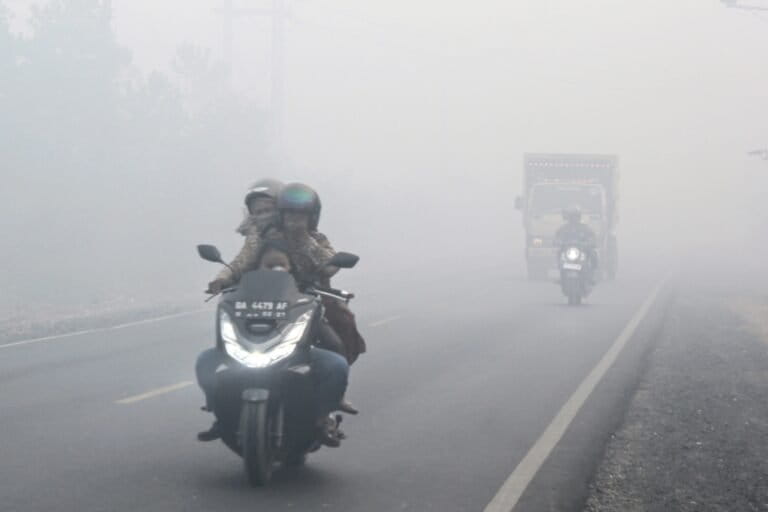
Malaysia, in particular, has faced the brunt of the atmospheric drift. Sarawak endured 34 consecutive days of hazardous air quality. On September 5, the Air Pollutant Index (API) in parts of Sarawak exceeded 500, a level classified as "hazardous" and capable of causing immediate health emergencies. The environmental fallout necessitated the closure of schools and mandated that citizens avoid all non-essential outdoor activities, echoing the regional haze crises of the early 2000s and 2015.
Emerging Threats in Papua
While Kalimantan captures the headlines, environmental monitors are sounding the alarm regarding Papua. The region, long considered a frontier of biodiversity, is seeing a rapid increase in fire activity. Greenpeace reports 97 distinct fire sources within areas designated for national strategic food and energy projects.
Furthermore, data from the "Pantau Gambut" monitoring group shows 9,536 hotspots within forest release areas in South Papua between January and August. The transformation of Papuan wetlands into agricultural zones involves large-scale vegetation clearing and drainage, which acts as a catalyst for future fire outbreaks. This pattern suggests that the systemic issues fueling the Kalimantan crisis are being replicated in the country’s eastern provinces.
The Corporate Accountability Gap
The legal and political debate surrounding the fires centers on the role of large-scale commercial operations. The Ministry of Environment and Forestry is currently investigating 19 companies whose concessions coincide with the areas suffering from the most intense fire activity, covering an estimated 11,046 hectares.
However, critics of the government’s enforcement policy argue that legal action is disproportionately directed at small-scale farmers and indigenous communities. While these local actors are often blamed for traditional slash-and-burn practices, the scale of the current devastation points toward corporate-scale land management failures.
Legal experts are now advocating for a shift in how accountability is enforced. Professor Andri Gunawan Wibisana, a scholar of environmental law at the University of Indonesia, suggests that the victims of the haze should pursue litigation against the corporations whose activities contributed to the fires. He points to the Supreme Court Regulation (Peraturan Mahkamah Agung) No. 1 of 2023 as a critical tool, as it establishes a framework for collective liability, allowing victims to seek compensation even when the smoke source is geographically fragmented across multiple concession sites.
Conclusion: A Looming Humanitarian Crisis
The 2026 fire season serves as a stark reminder that the management of forest ecosystems is a matter of public health security. The crisis is a failure of policy, enforcement, and sustainable land management. When the government fails to protect its peatlands, the result is an immediate, measurable surge in mortality and morbidity, the erosion of regional diplomatic relations, and the destruction of the natural carbon sinks essential for long-term climate stability.
As the fires continue to smolder, the path forward requires a transition from reactive emergency response to proactive, systemic reform. This includes the restoration of drained peatlands, the strict enforcement of "no-burn" policies for large corporations, and the institutionalization of mechanisms that allow citizens to hold polluters accountable in a court of law. Without these changes, the cycle of annual smoke and suffering is likely to continue, further deepening the divide between economic development goals and the basic right to clean air for millions of citizens.
The situation in Kalimantan and Papua is no longer just an environmental story; it is a critical litmus test for the Indonesian government’s ability to protect its population from the direct consequences of ecological mismanagement. As the haze persists, the cost is being paid in the lungs of children and the health of the broader regional community, marking a definitive humanitarian crisis that demands urgent international and national attention.

