
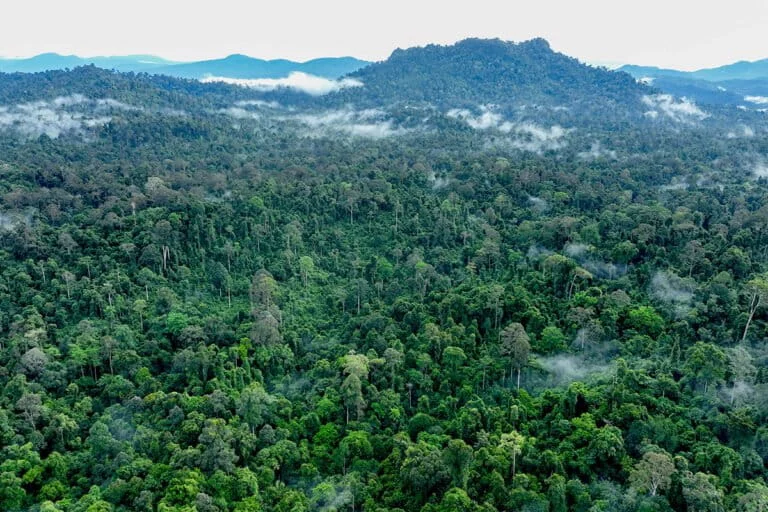
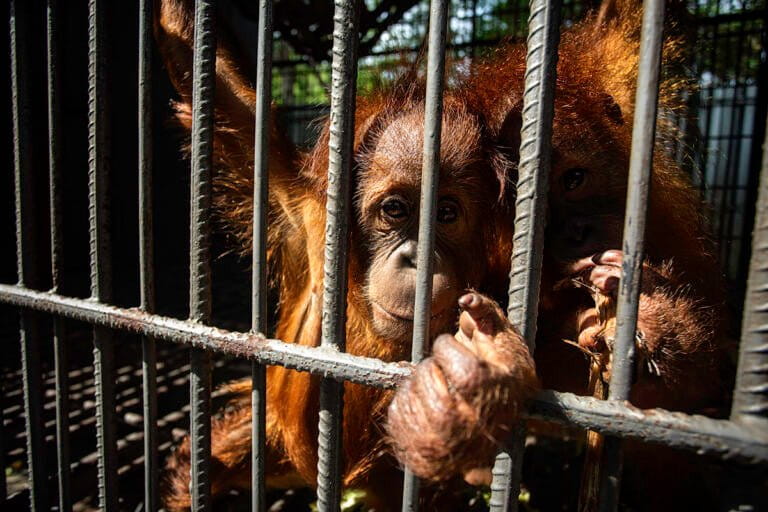
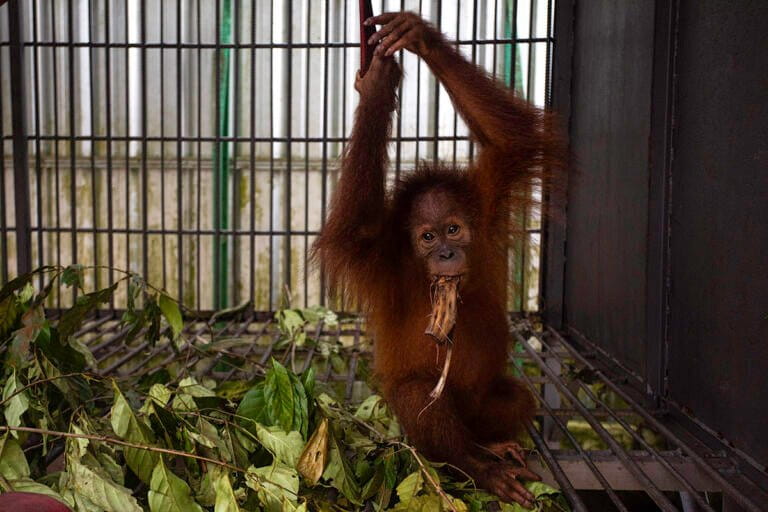
The discovery of five infant orangutans in India on Tuesday, September 8, 2026, has sent shockwaves through the global conservation community, reigniting concerns regarding a sophisticated, transnational wildlife trafficking network. The infants, currently housed at the Nandankan Zoological Park in Bhubaneswar, India, are suspected to be Sumatran orangutans (Pongo abelii). While initial morphological assessments by wildlife experts and rescue practitioners suggest their origin lies in the Indonesian archipelago, official confirmation is pending rigorous DNA analysis. This incident highlights a grim reality: despite international protections and increased scrutiny, the illegal trade of protected primates remains a lucrative and highly organized criminal enterprise.
A Complex Web of Smuggling Routes
The trafficking of wildlife from Indonesia to international destinations, particularly India, has evolved into a highly coordinated operation over the last several years. According to Dwi Nugroho Adhiasto, a senior advisor specializing in wildlife trade, the logistics involved in moving infants of this size require significant preparation. The path is rarely direct; instead, it relies on a series of transit hubs designed to evade customs and environmental monitoring.
The typical route often originates in the remote coastal regions of Aceh, Indonesia. From there, traffickers utilize high-speed vessels—frequently referred to as "speedboats"—to navigate across maritime borders into Thailand. Once in Thailand, the network shifts to overland logistics. The animals are transported through Myanmar, moved across the border into Bangladesh, and finally filtered into the eastern states of India, most notably Odisha and Mizoram. These states serve as critical transit points where animals are held in temporary, clandestine facilities before being moved to high-end buyers or black-market exotic pet auctions.
The scale of this operation suggests that it is not the work of individual opportunists but rather a structured syndicate. "Moving a group of orangutans requires a chain of logistics that includes handlers, transport specialists, safe houses, and, most importantly, a well-funded network of financiers," Adhiasto noted. He emphasized that the trade is multi-species, with traffickers often moving birds, siamangs, and other protected fauna alongside primates to maximize profit margins.
The Human Cost: Insights from the Underground
The mechanics of this trade were recently corroborated by testimonies from those involved in the lower rungs of the smuggling ladder. In late 2025, investigators interviewed an individual identified as Safri, who was serving time in an Aceh penitentiary for his role in wildlife trafficking. Safri revealed that he had personally transported Sumatran orangutans from the east coast of Aceh to Satun Province, Thailand.
His confession underscored the systemic nature of the trade: "The transport is never just about orangutans. It is a mixed cargo. We have ‘tokes’ (bosses) in both Indonesia and Thailand who communicate constantly to set schedules and confirm orders." This confirmation by an insider suggests that the demand for these animals is pre-arranged. The capture, in other words, is often demand-driven, making the role of the end-user as culpable as the poacher in the forest.
Official Responses and Investigative Efforts
In response to the discovery in India, the Indonesian Ministry of Forestry has initiated a high-level investigation. Ristianto Pribadi, the Head of Public Relations and Foreign Cooperation at the Ministry, stated that the government is working in close coordination with Indian authorities and the CITES (Convention on International Trade in Endangered Species of Wild Fauna and Flora) Secretariat.
"Our focus is not merely on the individuals who transported these animals to India, but on dismantling the entire chain," Pribadi explained. "We are tracing the source—from the poachers who remove them from their habitat, to the local collectors, the mid-level transporters, and the ultimate financial backers."
The Indonesian government has pledged to pursue legal action against anyone involved in the chain, should the investigation confirm their nationality or involvement. Furthermore, there is a commitment to repatriating the five infants once their genetic identity is confirmed. This process involves formal diplomatic channels to ensure that the animals, if proven to be of Indonesian origin, are returned to appropriate rehabilitation facilities within their native range.
The Ecological and Developmental Tragedy
Beyond the legal and criminal implications, the recovery of these infants represents a profound ecological loss. Syafrizaldi Jpang, Director of the Sumatran Orangutan Lestari Foundation (YOSL-OIC), highlighted the extreme vulnerability of the recovered infants. Estimated to be between one and one-and-a-half years old, these individuals are at a stage of life where their survival is entirely dependent on their mothers.
In the wild, a young orangutan remains with its mother for up to nine years. This period is not merely for sustenance but for the transfer of essential survival knowledge. They must learn how to build nests, identify seasonal fruits, navigate the complex forest canopy, and utilize basic tools. "A human caregiver, no matter how dedicated, cannot replicate the maternal bond, the emotional warmth, or the nuanced communication of an orangutan mother," Jpang stated.
The process of poaching often involves the killing of the mother, as she will instinctively fight to the death to protect her offspring. Consequently, every infant orangutan found in the illegal trade represents the loss of an entire family unit and a significant setback for the population stability of the species.
Long-term Recovery and Rehabilitation
The rehabilitation of these infants is a monumental task that spans nearly a decade. Experience from various rescue centers indicates that an orphaned orangutan requires between seven to ten years of intensive care and training before it can even be considered for potential reintroduction into the wild. This period corresponds to the natural weaning and learning age of the species.
The YOSL-OIC and other similar organizations face the daunting challenge of ensuring these infants do not become habituated to humans, which would render them unfit for release. The current situation, therefore, is a race against time and trauma. The infants at the Nandankan Zoological Park are currently under medical observation, but their long-term health prospects remain uncertain due to the stress of transit, malnutrition, and the lack of proper maternal care during their most critical developmental window.

The Broader Implications for Wildlife Policy
The case of the five orangutans serves as a stark reminder of the limitations of current wildlife enforcement in the region. The "secret" routes through Aceh’s waters have long been known to local communities and observers, yet the trade persists. Experts argue that law enforcement must shift from reactive responses to proactive surveillance.
"We need to monitor the key actors who are known to be part of these networks," Adhiasto urged. "The authorities must focus on the high-risk transit zones, specifically the maritime passages from Aceh to Thailand. Without a synchronized, transnational intelligence-sharing effort between Indonesia, Thailand, Myanmar, Bangladesh, and India, these networks will simply adapt and find new routes."
The incident has also highlighted the importance of CITES enforcement. While international agreements exist to ban the trade of endangered species, the lack of standardized border enforcement in transit countries allows for "leakage." For the Sumatran orangutan, a critically endangered species, every loss is catastrophic. The population of these great apes has dwindled significantly over the last decade, with habitat loss, fires, and poaching remaining the primary drivers of their decline.
Conclusion: A Call for Accountability
As the investigation into the five infants continues, the case stands as a litmus test for regional cooperation. The Indonesian government’s resolve to conduct DNA testing and trace the origin of the animals is a necessary first step, but it must be followed by meaningful, cross-border judicial collaboration.
The plight of these five infants is emblematic of a broader, systemic failure to protect the world’s most vulnerable species from the greed of the black market. Until the demand for exotic pets is addressed and the criminal networks facilitating their movement are dismantled at the source, the forests of Sumatra will continue to lose their most iconic inhabitants. The international community, led by the authorities in India and Indonesia, must now ensure that justice is served not only for the sake of the five infants but as a deterrent to the illicit industry that threatens to erase a species from the wild forever.

