
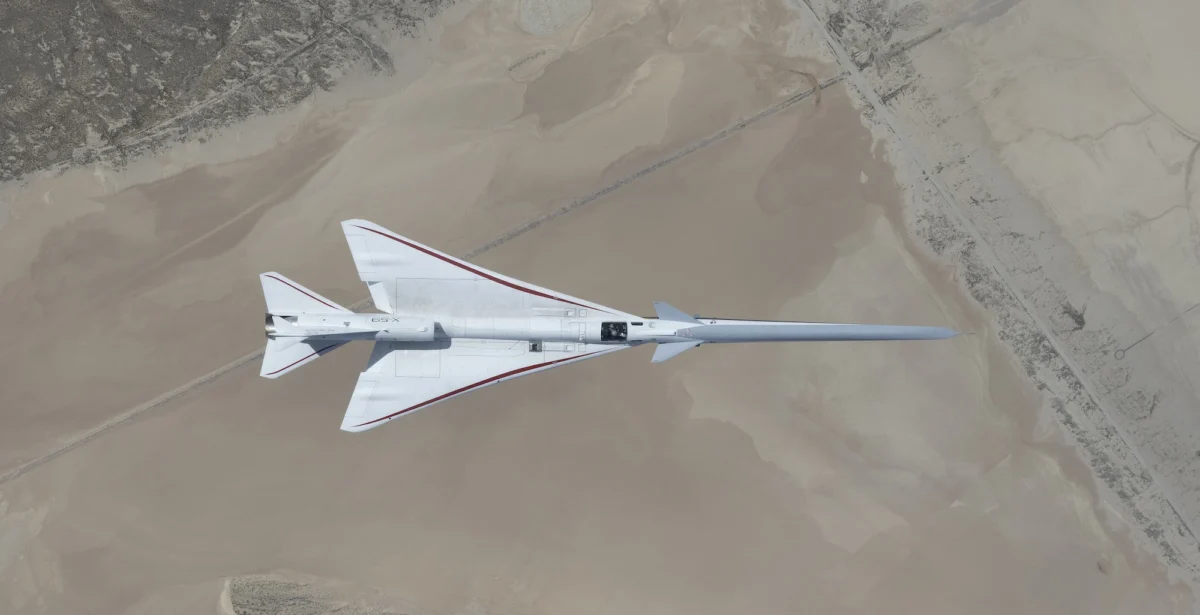
The landscape of international aviation is shifting as China enters the final assembly phase of its TMS-10 experimental supersonic demonstrator. This milestone, confirmed earlier this month by researchers at the Tianmushan Laboratory in collaboration with Beihang University, represents a significant escalation in the global race to revitalize supersonic passenger travel. As the United States continues to refine its own X-59 "Quiet SuperSonic Technology" (QueSST) aircraft through NASA’s flight test program, China’s entry into the arena underscores a broader, geopolitical drive to shorten travel times and dominate next-generation aerospace manufacturing.
A Chronology of Development
The TMS-10 program has followed a methodical, incremental development path that mirrors standard aerospace testing protocols. The project gained public visibility in June 2025, when researchers successfully flight-tested a 1:18-scale prototype. During these preliminary trials, the sub-scale model operated at low speeds—below Mach 0.2—providing engineers with critical telemetry regarding takeoff stability, low-speed maneuverability, and landing control systems.
Following the success of the 1:18-scale trials, the team moved toward the current full-scale demonstrator. The transition from a sub-scale model to a functional experimental aircraft is a high-risk stage in aviation engineering, involving the integration of sophisticated flight control laws and complex propulsion systems. According to project updates, the TMS-10 is on schedule for its maiden flight by the end of 2026. This timeline places China in direct competition with Western aerospace milestones, as both nations attempt to move from theoretical sonic boom mitigation to repeatable, high-speed flight.
Engineering the Sonic Boom Problem
The primary challenge in modern supersonic design is not merely the ability to break the sound barrier, but the ability to do so over populated landmasses without creating the disruptive "sonic boom" that effectively grounded the Concorde and other legacy supersonic transports.
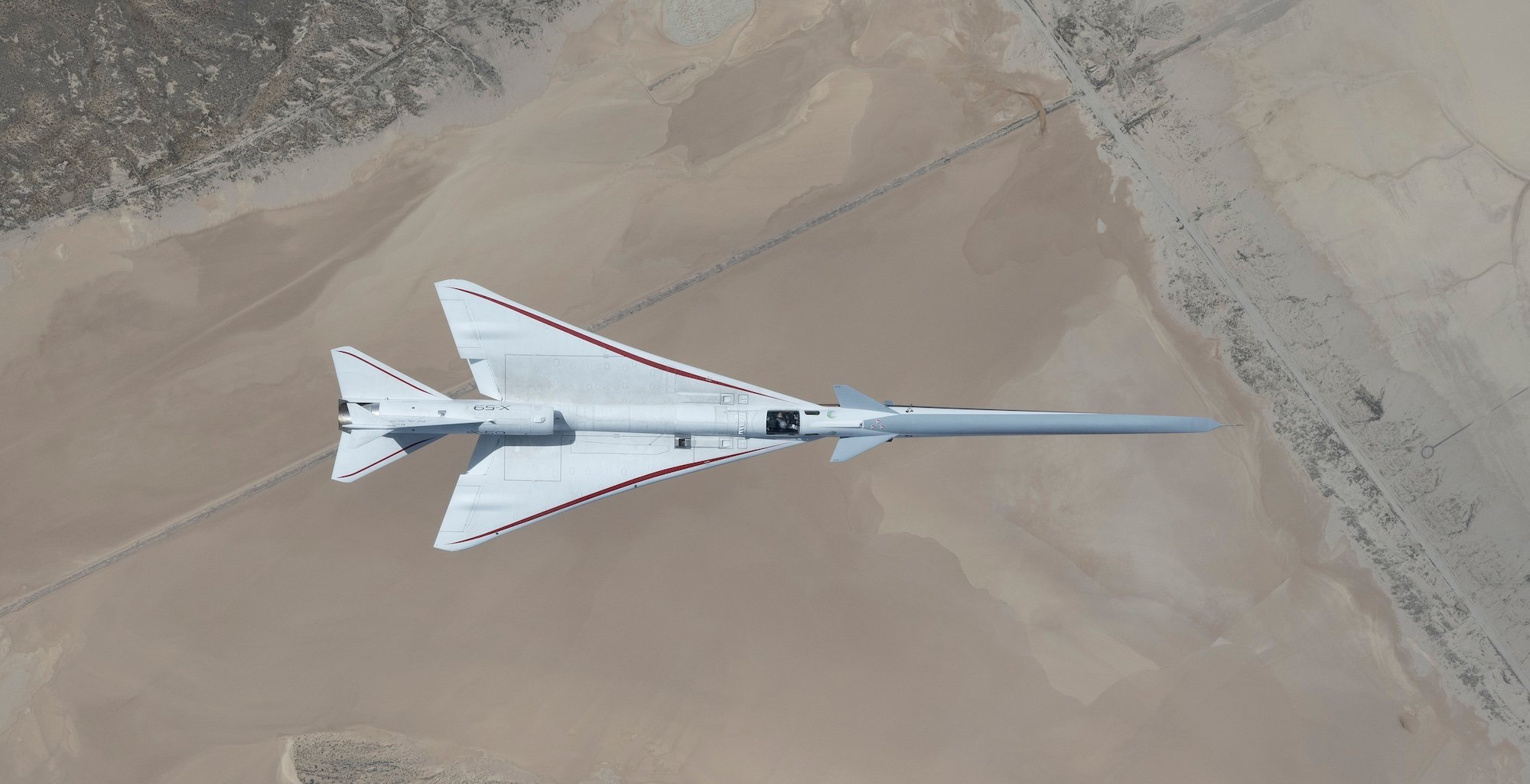
NASA’s approach with the X-59 involves a uniquely elongated fuselage and a sophisticated configuration designed to dampen the intensity of shockwaves. By carefully managing how pressure waves coalesce, the X-59 produces a "sonic thump"—a sound equivalent to a car door slamming in the distance—rather than a window-rattling boom.
In contrast, the TMS-10 team is pursuing a structural geometry solution. The aircraft utilizes a forward-mounted canard wing configuration combined with a distinctive T-tail assembly. The theoretical intent is to prevent the shockwaves generated by the nose and the main wings from coalescing into a single, high-intensity front. By utilizing the T-tail to redirect and disperse these pressure disturbances, the TMS-10 design aims to achieve noise levels within acceptable regulatory limits for over-land supersonic flight. If successful, this configuration could allow for a smaller, more efficient business-class aircraft capable of seating 10 to 15 passengers.
Technical Targets and Performance Metrics
The stated goals for the TMS-10 are ambitious, particularly given the engineering hurdles of high-speed thermodynamics. The design team has targeted a cruising speed of Mach 2, which translates to approximately 1,300 miles per hour at altitude. For domestic routes, the aircraft is also designed to operate at a high-subsonic cruise of Mach 0.95, or roughly 730 mph, to maximize fuel efficiency when supersonic flight is not required.
The implications for regional transit are significant. A flight between Beijing and Shanghai, which currently requires approximately two hours under standard commercial conditions, could theoretically be completed in just 30 minutes. However, the path to achieving these metrics remains fraught with technical challenges. Engineering teams must resolve issues related to engine core stability, inlet air management, and exhaust nozzle design—the "holy trinity" of supersonic propulsion. Furthermore, the airframe must be capable of enduring the intense kinetic heating that occurs at Mach 2, requiring advanced composite materials and thermal protection systems that are notoriously difficult to manufacture at scale.
Comparative Analysis: US and Chinese Trajectories
While China is making rapid progress, it is entering a field where the United States holds a lead in current, actionable flight data. NASA’s X-59 has already successfully demonstrated its ability to reach Mach 1.5 at altitudes of 55,000 feet during trials earlier this year. The US program benefits from decades of research into computational fluid dynamics (CFD) and a robust infrastructure for testing in the Mojave Desert, utilizing the resources of the Armstrong Flight Research Center.
The difference in approach between the two nations is also telling. The US program is heavily focused on the regulatory framework—specifically, gathering enough "quiet" flight data to convince aviation authorities to lift the bans on supersonic flight over land. China’s program appears focused on proving the viability of a smaller, business-class commercial platform, potentially targeting the high-net-worth executive travel market.
Economic and Strategic Implications
The push for supersonic travel is not merely a matter of convenience; it is a signal of industrial capability. Successfully fielding a commercial supersonic jet requires a mastery of advanced materials science, propulsion, and avionics that few nations possess. By investing in the TMS-10, China is signaling its intent to move up the value chain in the global aerospace industry, transitioning from a manufacturer of conventional commercial aircraft to a developer of high-performance, cutting-edge technology.
For the international aviation community, the competition is a net positive. The revitalization of supersonic research drives innovation in fuel efficiency, material durability, and noise reduction technology—all of which have spillover benefits for subsonic commercial aviation.
However, the path ahead for the TMS-10 remains long. Following the first test flight, engineers must conduct extensive post-flight analysis to validate the performance of the airframe against their digital models. Additional testing cycles, likely involving further iterations of the prototype, will be required to ensure that the engine core can sustain prolonged supersonic cruise without degradation.
The Road Ahead
Industry analysts note that while the "race" for supersonic flight is a useful framing, the reality is a long-term development cycle. The aviation industry is notoriously conservative regarding safety and certification, and the transition from an experimental demonstrator to a commercially viable, FAA- or CAAC-certified aircraft can take a decade or more.
As the TMS-10 moves toward its first test flight, the global aerospace sector will be watching closely. The data gathered from these flights will likely determine whether the "quiet supersonic" dream remains a laboratory experiment or becomes a staple of future global travel. For now, the successful integration of the TMS-10’s airframe and the upcoming engine validation tests remain the critical milestones. If China can maintain its current momentum, the prospect of a 30-minute commute between major international hubs may move from the realm of science fiction into the sphere of tangible engineering reality. The coming months will be decisive in determining whether the TMS-10 can match its ambitious performance targets or if it will encounter the same structural and economic headwinds that have historically limited the growth of supersonic aviation.

