
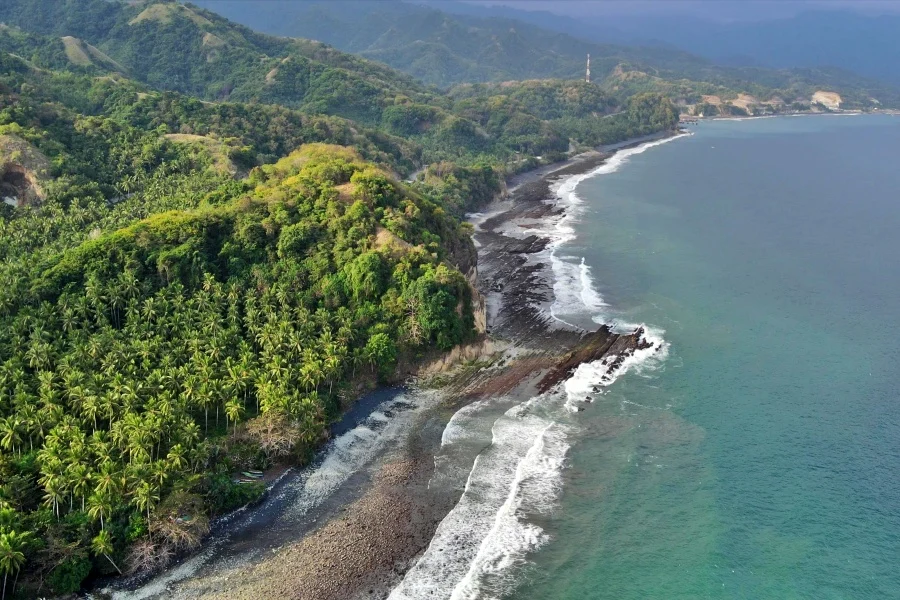
Imran Tabri gazes toward the horizon as dusk descends upon the Maurongga coastline in the Nangapanda District of Ende, East Nusa Tenggara. It is late July 2026, and the rhythmic, albeit menacing, sound of high-energy waves crashing against the shore serves as a constant reminder of the seasonal challenges facing the local fishing community. For Tabri and his fellow fishers, the southern coast of Flores has become a place of both economic promise and environmental uncertainty. As the monsoon winds intensify, leading to turbid waters and hazardous conditions, the traditional wooden boats are hauled onto the sand, marking a temporary cessation of the octopus harvest that has become the lifeline for this coastal village.
The Seasonal Shift and Economic Adaptation
The seasonal pattern of the Flores Sea dictates the rhythm of life in Maurongga. During the months of April through early August, the high swells make it nearly impossible for small-scale fishers to operate. For the octopus fishers, who rely on precision and calm waters to spot their prey, these months are a period of forced hiatus. During these intervals, the community demonstrates remarkable economic agility. While the men attend to boat maintenance and gear repairs, women and children venture to the shoreline to collect flat, green-hued stones. These minerals, sought after for their aesthetic value and demand in external markets, provide a vital supplementary income. Each 25-kilogram sack of these stones fetches approximately Rp20,000—a modest but essential buffer when the sea refuses to provide its bounty.
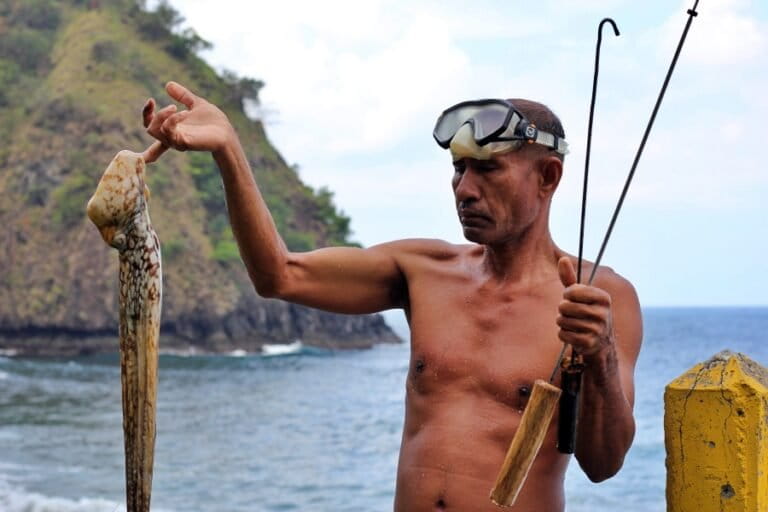
The transition to octopus fishing as a primary livelihood in Maurongga began in earnest around 2015. Tabri, who brought his expertise from his hometown on the southern coast of Ende, recognized the untapped potential of the local reefs. Before his arrival, the community relied predominantly on general fishing, largely ignoring the cephalopod populations thriving in the shallow waters. Today, the practice has evolved into a structured enterprise, with octopuses fetching between Rp15,000 and Rp20,000 per unit, depending on size and market demand.
From Destructive Practices to Sustainable Stewardship
The evolution of Maurongga’s fishing practices represents a microcosm of a larger, systemic shift within Indonesia’s coastal management. Historically, the region suffered from the prevalence of destructive fishing techniques, including the use of cyanide, potassium, and explosives. These methods, while providing short-term gains, decimated coral reef health and exhausted local fish stocks.
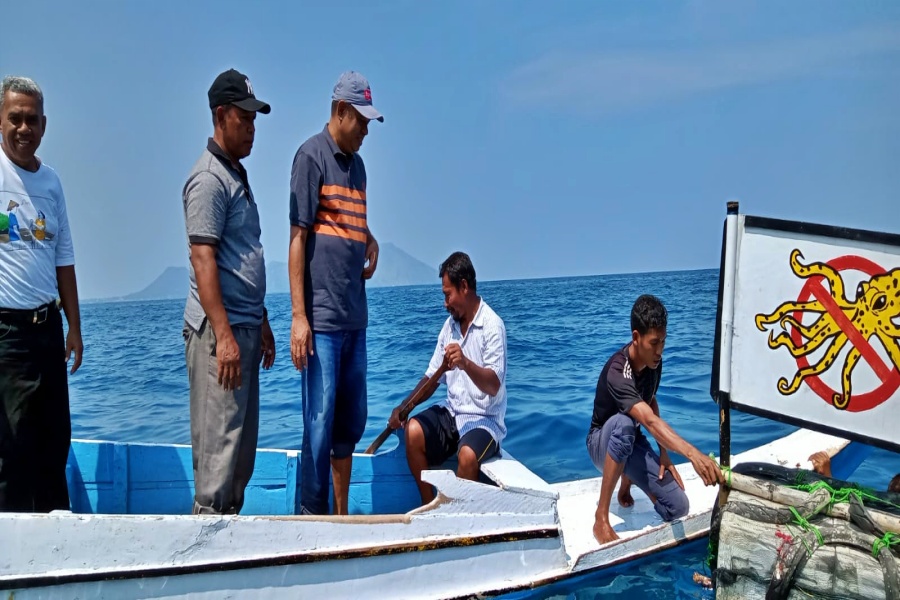
The turning point for the village arrived in 2019, when the Yayasan Tananua Flores (Tananua Foundation) initiated a series of training and capacity-building programs. These interventions were designed not only to improve catch techniques but to shift the community toward Locally Managed Marine Areas (LMMA). By organizing the fishers into groups—such as the Embo Angi collective—the foundation fostered a sense of collective ownership over the local 54.95-hectare marine territory.
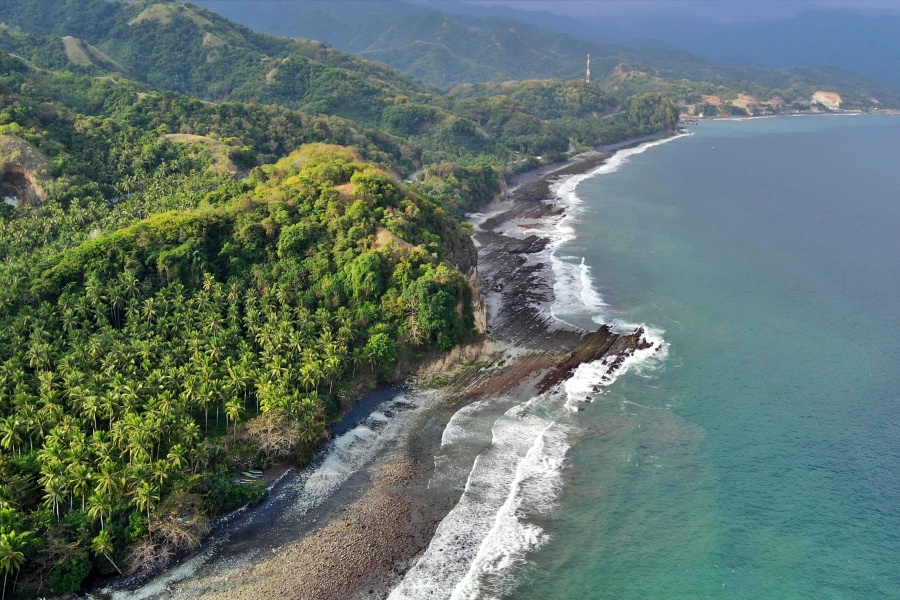
Central to this transformation is the "buka-tutup" (open-closed) system. By dividing the coastal waters into distinct zones and rotating periods of extraction and conservation, the community has allowed marine biodiversity to regenerate. According to local leaders like Ismail Isman, this rotation—where sections of the reef are closed for three months at a time—has directly correlated with an increase in the size and weight of individual octopuses. It is not uncommon now to find specimens weighing between 3 and 4 kilograms, a significant improvement over previous years.
Data-Driven Conservation and Production Trends
The economic significance of octopus production in Indonesia cannot be overstated. According to the Ministry of Marine Affairs and Fisheries (KKP), national octopus production in 2020 reached 55,913 tons, valued at approximately Rp1.2 trillion. East Nusa Tenggara stands as a provincial leader in this sector, contributing 19,102 tons to the national total. The financial data from Maurongga reflects this broader trend; in 2025, the total capture fisheries for the village reached 1,096 kilograms, with octopus accounting for nearly half of that total, generating over Rp16 million in direct revenue.
The longitudinal growth of the industry is evident in the government’s response. Recognizing the success of the community-led conservation efforts, the Ende Regency government provided seven 1-Gross Tonnage (GT) vessels to the fishers in 2022, followed by an additional eight units the following year. This institutional support validates the "bottom-up" approach to fisheries management, proving that community-led initiatives are often more effective than top-down enforcement in remote coastal regions.
The Ongoing Battle Against Illegal Fishing
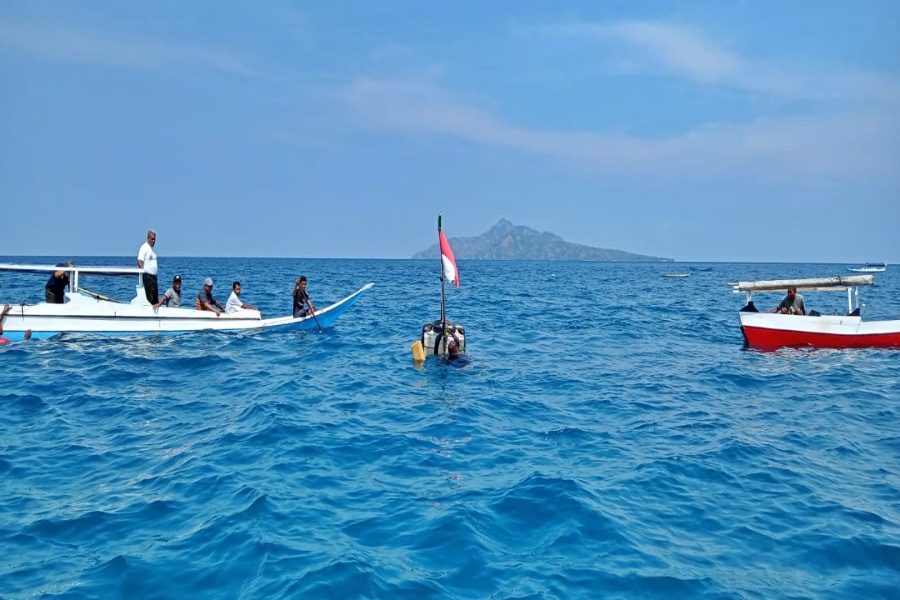
Despite these successes, the prosperity of Maurongga remains under constant threat from external actors. The primary challenge currently facing the Embo Angi group is the encroachment of illegal fishers from outside the region who remain unaware—or indifferent—to the locally established conservation rules. These outsiders frequently employ "danke," a potent insecticide used in local agriculture, as well as homemade explosives, to stun fish.
The environmental impact of these chemicals is devastating. When these substances are released into the water, they do not discriminate, killing coral polyps and non-target species, thereby unraveling years of conservation work in a matter of hours. The conflict has at times turned violent. Members of the local fishing community have reported instances where they were forced to intercept perpetrators, occasionally leading to standoffs where explosives were used as defensive weapons by the illegal fishers.
Muhammad Nuhu, a member of the Embo Angi group, describes the frustration of being on the front lines of marine protection. "We have to guard the sea; it is our bank account," Nuhu explains. The emotional toll is compounded by the fact that the fishers are often viewed with skepticism or jealousy by other local sectors who do not immediately see the long-term benefits of the "buka-tutup" system. However, the determination remains firm. The group continues to document illegal activity, report it to the authorities, and act as the primary stewards of their territorial waters.
Institutional Support and Future Outlook
Bernadus Sambut, Chairperson of the Yayasan Tananua Flores, emphasizes that the foundation’s role is to provide the legal and educational framework necessary for the community to sustain itself. The work goes beyond just prohibiting destructive tools; it involves holistic education on the impacts of plastic pollution and the importance of maintaining coral reef health as a natural barrier against climate change.
The implications of Maurongga’s model are significant for the wider archipelagic nation. As climate change increases the frequency of extreme weather events and sea-level rise, the ability of local communities to adapt their livelihoods—through both the diversification of income and the implementation of sustainable harvesting cycles—will be the deciding factor in their survival.
The story of the Maurongga octopus fishers is one of persistence against the elements and human greed. While the ocean may be rough and the threat of illegal fishing remains a persistent shadow, the success of the Embo Angi group offers a blueprint for sustainable coastal management. By integrating traditional knowledge with modern ecological practices, the fishers of Ende are ensuring that their "field of money" remains fertile for generations to come. The transition from exploiters of the sea to its protectors is not merely an environmental achievement; it is a profound socioeconomic evolution that secures the future of Flores’s southern coast. As the season turns and the waters eventually calm, the fishers of Maurongga will return to their nets, bolstered by the knowledge that their efforts have preserved a vital, living resource.

